How to Train a Belgian Malinois: The Complete Guide
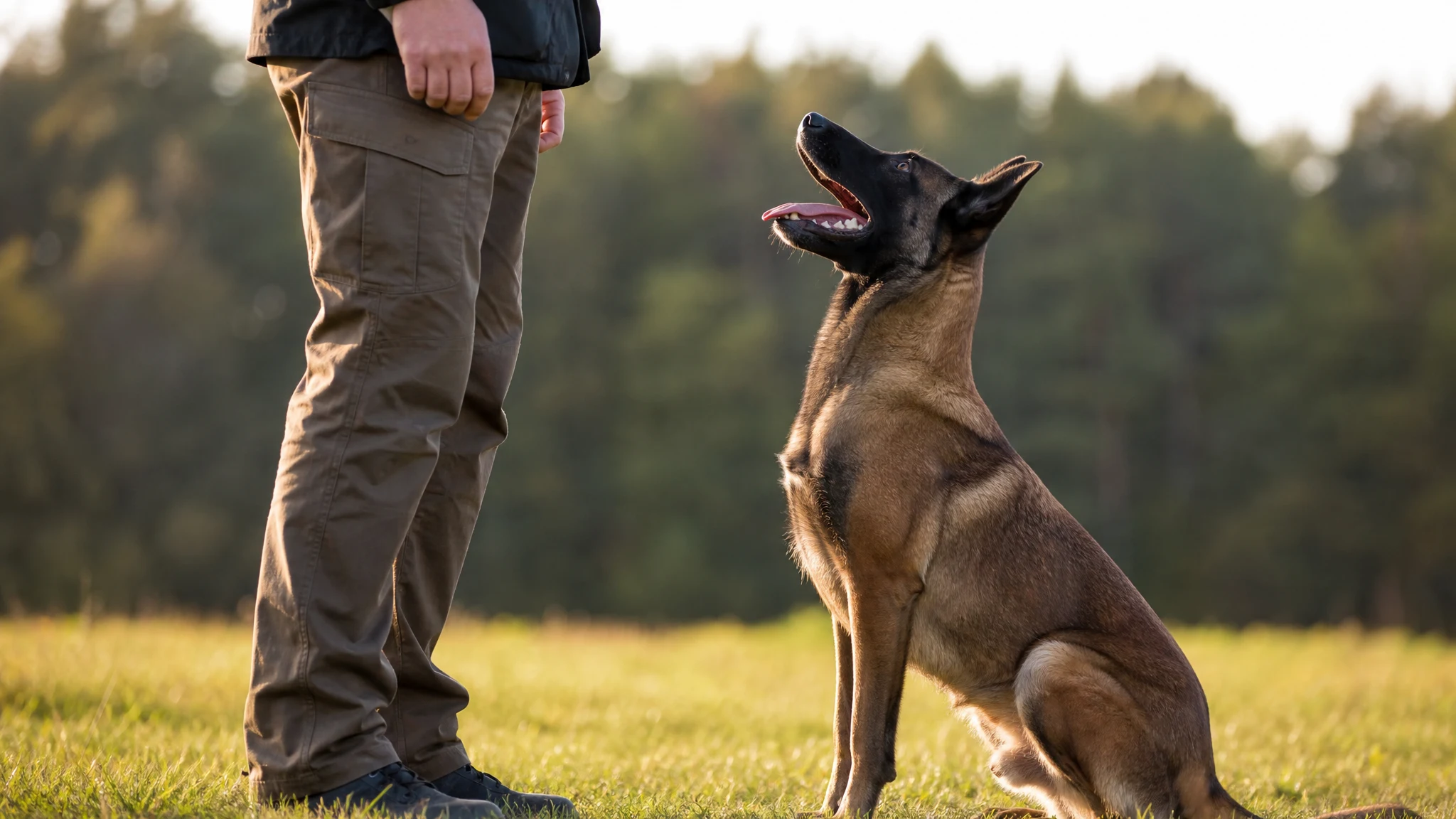
General training information. Every dog is an individual; for health or behavior concerns, see your veterinarian.
Belgian Malinois training is not like training the average family dog. This is a breed that learns fast, works hard and notices everything. That is a gift when you give it direction. It is a problem when you do not.
This guide covers how to train a Belgian Malinois from the ground up. We start with what the breed was made to do, because that explains almost everything about how these dogs behave. Then we move through the training stages, the motivation that works, the exercise and mental work they need, and the challenges you should plan for before you commit.
We love this breed, and we will be honest about it. Individual dogs vary, so treat everything here as a starting point and adjust to the dog in front of you.
Key takeaways
- The AKC rates the Belgian Malinois 5 of 5 for trainability, but the American Belgian Malinois Club (ABMC) says the breed does poorly with poor or insufficient training and is generally not a dog for the novice owner.
- The breed began as a herding and farm dog in Belgium. Its drive, focus and protectiveness come from that work.
- Early socialization and obedience training are musts, according to the AKC. The ABMC recommends puppy kindergarten and a formal group obedience class.
- Use humane, reward-based methods. The ABMC notes the breed is sensitive to corrections, and harsh corrections combined with poor technique cause trouble.
- Daily walks are not enough. Plan for real physical exercise and daily mental work.
- A bored or underemployed Malinois develops behavior problems. Be honest about your schedule before you bring one home.
In this guide
- What the Belgian Malinois Was Bred For
- Temperament and Traits That Shape Training
- Challenges to Plan For Before You Start
- Belgian Malinois Training Stages: Puppy to Adult
- Motivation That Works for This Breed
- Exercise and Mental Work
- Health, Weight and Common Training Mistakes
What the Belgian Malinois Was Bred For
You cannot train a dog well if you do not understand why it was built the way it was. The Malinois has a clear job history.
A Belgian herding dog
The AKC says the Belgian Malinois originated in Belgium and was first bred around the city of Malines. The AKC lists the breed in the Herding Group and recognized it in 1959. Its original work was herding livestock, sheep and cattle, in Belgium.
The American Belgian Malinois Club describes a herding and general farm dog that also protected the sheep and the farm. The AKC likewise calls the breed a herding dog and a protector of farm and family.
From the farm to police and military work
Today the breed is best known for demanding jobs. The AKC notes its use in police and military K-9 work. The ABMC lists law enforcement, border patrol and military roles, and adds a historical note: in World War I, Malinois served as police dogs, messenger carriers and ambulance dogs, and were used to pull machine guns.
Why this matters at home
A dog bred to work closely with a person, think on its feet and guard what matters will bring those habits into your living room. Here is how that tends to show up:
- Close attention to you. The AKC breed standard describes the Malinois as energetic yet highly responsive to the owner. That responsiveness is the foundation of good training.
- A need for work. The AKC rates mental stimulation needs at 4 of 5, on a scale where 5 means the dog needs a job or activity.
- Protectiveness. The AKC rates watchdog and protective nature at 4 of 5, and its breed standard calls the Malinois an exceptional watchdog.
Your job as a trainer is not to remove these instincts. It is to give them a place to go.
Temperament and Traits That Shape Training
What the breed standard says
The AKC Official Standard (approved July 13, 2021, effective October 6, 2021) describes the Malinois as alert, intelligent, inquisitive and confident, showing neither fear nor aggression. It calls the dog loyal to his people and says he may be indifferent with strangers. Fear or aggression is severely penalized in the standard.
The ABMC describes a dog that is active, alert and responsive, sensitive to changes in people and environment, reserved with strangers and affectionate with its own people. The club adds that the breed is naturally protective without being overly aggressive. In its FAQs, the ABMC says correct temperament ranges from bold and friendly to reserved and aloof with strangers, and that a fearful or aggressive temperament is always incorrect.
The AKC trait scores at a glance
The AKC rates traits on a 1 to 5 scale. These are the numbers that matter most for training:
| Trait | AKC score | What it means for training |
|---|---|---|
| Trainability | 5 of 5 | Eager to please and quick to learn |
| Energy level | 4 of 5 | Needs real daily exercise |
| Mental stimulation needs | 4 of 5 | Needs a job or activity |
| Watchdog and protective nature | 4 of 5 | Vigilant, so socialization matters |
| Barking level | 3 of 5 | Moderate; plan to teach quiet |
| Openness to strangers | 3 of 5 | Middle of the scale; do not assume friendliness |
| Good with children | 3 of 5 | Needs supervision and teaching |
| Good with other dogs | 3 of 5 | Needs careful, ongoing socialization |
| Shedding | 3 of 5 | Moderate |
Notice the 5 for trainability beside all those 3s and 4s. A highly trainable dog can learn the wrong things as quickly as the right ones. That is why the quality of your training matters so much.
Play drive
The ABMC FAQs say the breed has a high play drive, and that trainers describe everything as a game to these dogs. Use that. A trainer who can turn a recall, a heel or a retrieve into a game has a big advantage with this breed.
Challenges to Plan For Before You Start
Good Belgian Malinois training tips begin with an honest look at the hard parts. The ABMC and AKC are both direct about them.
High intensity
The ABMC says the breed has a high intensity that many new owners are not prepared for. It also says the Malinois is extremely trainable but does poorly with poor or insufficient training, and is generally not a dog for the novice owner.
If this is your first dog, that does not automatically rule you out. It does mean you should line up a good group class and an instructor who uses reward-based methods before the puppy comes home.
Prey drive
The AKC reports a high prey drive and a strong interest in moving objects. A Malinois may chase children, vehicles or other animals. The AKC says this drive should be directed into acceptable activities through training. In practice, that means:
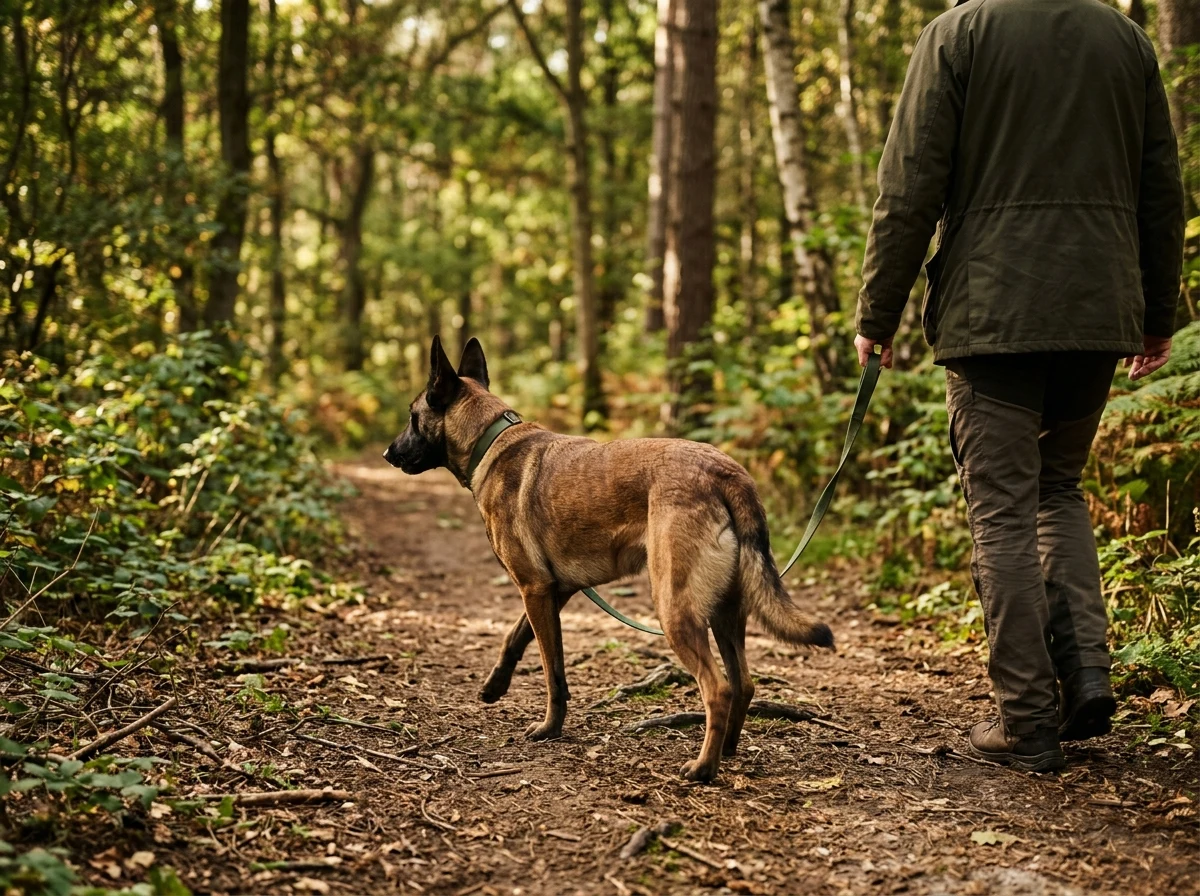
- Teaching a reliable recall and a solid leave-it early.
- Keeping the dog on a leash or in a secure fenced area until those skills are proven.
- Giving the chase instinct an outlet, such as fetch or a flirt pole game on cue.
Protectiveness and possessiveness
The ABMC says the Malinois can be protective, territorial, possessive and jealous. The club also says a large, very active, quick-to-respond dog should never be left unsupervised with very small or unruly children.
Socialization and clear household rules help here. Teach trading games for toys and chews, and do not leave guarding behavior to chance.
Shy-sharp behavior
The ABMC FAQs warn that poorly bred, poorly socialized or poorly trained dogs may be shy-sharp, meaning they snap or growl out of fear or aggression. If your dog shows this, bring in a qualified professional who uses reward-based methods. Ask your veterinarian for a referral if you are unsure where to start.
Time and lifestyle
The ABMC says the Malinois is not for owners who work extended hours or travel often, because boredom gets him into trouble. The club also says the breed does not do well in a kennel situation and forms a strong attachment to family. The ABMC notes behavior problems when the breed is underemployed or neglected.
Working lines versus family pets
The ABMC says IPO or protection-bred lines have higher energy and a sharper character, and may not suit a first-time owner or family pet. If you are choosing a puppy, ask the breeder plainly what the parents do and how they behave at home.
Belgian Malinois Training Stages: Puppy to Adult
Here is how to train a Belgian Malinois from the first week through adulthood. The sources we rely on do not give exact ages for each stage, so we describe the order of work rather than a calendar. Your veterinarian and a good instructor can help you judge what is right for your individual dog.
Stage 1: Settling in and early socialization
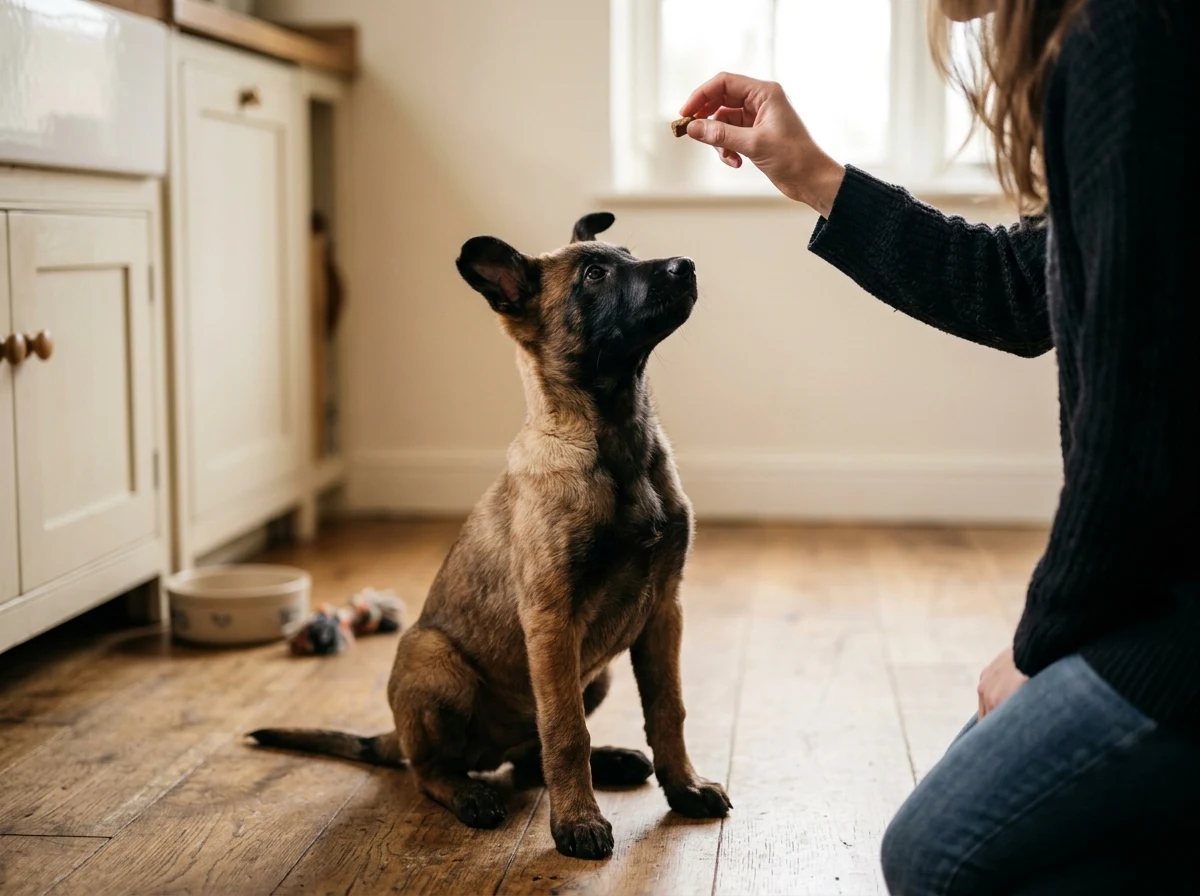
The AKC says early socialization and obedience training are musts. The ABMC recommends puppy socialization or a puppy kindergarten class. Start with:
- Meeting a range of friendly, calm people and dogs, so he accepts them as an adult. The ABMC FAQs describe this early exposure.
- New locations and people doing different things.
- Leash walks in both familiar and unfamiliar places, also from the ABMC.
- Varied sights and sounds. The ABMC says exposure to people outside the family and to varied sights and sounds should begin early and continue throughout life.
Keep every experience positive. Go at the puppy's pace, let him watch from a distance, and reward calm curiosity. Socialization does not mean forcing greetings.
Stage 2: Foundation skills
Once your puppy is settling in, build the basics with short, upbeat sessions:
- Name response and eye contact. Reward every look at you.
- Sit, down and stand. Lure first, then fade the lure.
- Recall. Make coming to you the best thing in his day.
- Leave it and drop it. Essential with high prey drive and play drive.
- Settle on a mat. Teach him to switch off. This one is easy to skip and costly to miss.
- Crate and alone-time skills. Build these gradually, since the ABMC notes this breed bonds strongly to family.
- Handling. Practice gentle touching of paws, ears and mouth for grooming and vet visits.
Stage 3: Group classes and distractions
The ABMC advises a formal group obedience class. A class gives you a controlled place to practice around other dogs and people, with an instructor watching your technique.
Choose a class that uses reward-based methods. Visit first and watch. If you see equipment or handling meant to hurt or frighten dogs, walk away.
Stage 4: The exuberant first year
The ABMC FAQs say some puppies go through temporary emotional phases in the first year. They may seem silly, out of control, overly exuberant, fidgety or suspicious. The club says a well-bred, well-socialized dog outgrows these phases. It also says fear or aggression in an adult is never acceptable.
In plain terms: expect some wobbles, stay consistent, keep socializing and keep rewarding the behavior you want. If a phase looks like genuine fear or aggression, do not wait it out. Talk to your veterinarian and a qualified reward-based trainer.
Stage 5: Adolescence into adulthood
Training does not end when the puppy looks grown. Go back over the basics in new places. Add duration, distance and distraction one at a time. Keep up socialization, because the ABMC says exposure should continue throughout life.
This is also when many owners add a dog sport or a job (see below). A Malinois with a task is easier to live with than one waiting for something to happen.
If you are short on time or experience
The ABMC notes that owners short on time or expertise may prefer an older puppy or young adult. Ask your breeder or rescue about the dog's history and temperament. We could not find specific puppy growth or joint-care guidance for the breed from the AKC or ABMC, including an age to start jumping or hard running. Ask your veterinarian before you begin high-impact exercise.
Motivation That Works for This Breed
Reward-based training is the standard
Good Belgian Malinois training uses rewards and clear communication. This is in line with the approach supported by the American Veterinary Society of Animal Behavior (AVSAB). The ABMC FAQs give a breed-specific reason: the Malinois learns very quickly and is sensitive to corrections, and harsh corrections combined with poor technique cause trouble.
So keep the tools and the tone humane. Skip shock, prong and choke collars, alpha rolls, scruffing and any dominance-based handling. They are not needed, they can create fear or defensive behavior, and they work against the responsive partner this breed wants to be.
Find what your dog loves
Since the ABMC says trainers describe everything as a game to these dogs, play is often your strongest reward. Try a mix:
- Food. Small, soft treats for teaching new skills. Count them into the daily meal (see the weight section below).
- Toys. A tug or ball for energy-heavy work like heeling and recall. The ABMC notes many Malinois enjoy retrieve games.
- Praise and touch. Useful, but rarely enough alone with a drive-heavy dog.
- Life rewards. Releasing him to sniff, greet, go through a door or chase a ball after a good sit or a good recall.
Keep sessions short and clear
A fast learner gets bored with repetition and may start inventing his own games. Aim for brief sessions with a clear goal. End while he is still keen. Change the reward, the location or the exercise before frustration builds.
Teach the off-switch
A dog with high drive needs to learn calm as a skill. Reward quiet lying down, relaxing on a mat and calm behavior around exciting things. The ABMC says the breed requires training to control high energy and exuberance and channel them into useful activities. Calm is one of those useful activities.
Be consistent and fair
Everyone in the home should use the same cues and the same rules. Reward what you want, manage the environment so the dog cannot practice what you do not want, and keep your own emotions level. A sensitive dog notices when you are tense.
Exercise and Mental Work
How much exercise?
The AKC says the Malinois needs to be actively engaged mentally and physically, and that daily walks are not enough. It recommends plenty of exercise, ideally alongside the owner, and calls the breed a good running, hiking and biking companion.
The ABMC is even more direct: daily walks will not satisfy the breed unless the owner runs about 5 miles a day with the dog, and a fenced yard is necessary. Treat that as a signal of scale, not a target for every dog. Ask your veterinarian how much and what type of exercise suits your individual dog, especially a young one.
Mental work counts as much as physical work
A tired body with an unused brain still gets into trouble. Add mental work every day:
- Short training sessions using new skills.
- Food puzzles and scatter feeding.
- Nose work, such as hiding treats or a favorite toy.
- Retrieve games with rules, like sit, wait, then release to fetch.
- Trick training. Tricks are fun, and a Malinois often learns them quickly.
Dog sports and jobs
Sports give the breed's drive a legitimate job. The AKC lists agility, tracking, herding, obedience and Schutzhund (protection) competitions. The ABMC FAQs add flyball, showing, other protection sports, search and rescue, police work and lure coursing. The ABMC's breed overview also mentions conformation, sledding, therapy work and IPO protection training.
The ABMC Working Dog Sport Committee notes that AKC records working dog titles earned at American Working Malinois Association (AWMA) trials, through a partnership between the ABMC and the AWMA. If you are interested in a particular sport, check with the ABMC, the AKC or the sport's own governing body for current rules, eligibility and age requirements.
Protection sports and bite work are specialist activities. They require a qualified, reputable instructor, and they are not a substitute for basic obedience and socialization.
Structure your day
A sample day might look like this. Adjust it to your dog and your schedule:
- Morning: a purposeful walk or run, followed by a short training session.
- Midday: a food puzzle or chew, then rest.
- Afternoon: play, such as fetch or tug, with obedience cues built in.
- Evening: a calm walk or sniff time, plus settle practice on a mat.
Health, Weight and Common Training Mistakes
Health basics that affect training
Questions about your dog's health belong with your veterinarian, and we cannot diagnose a dog or advise on medication or supplements. We can tell you what the breed organizations recommend asking about.
The OFA CHIC program lists these recommended tests for the Belgian Malinois:
- Hip dysplasia: an OFA radiographic hip evaluation or a PennHIP evaluation, with results registered with OFA.
- Elbow dysplasia: an OFA radiographic elbow evaluation.
- An ACVO eye examination, with results registered with OFA.
OFA also requires a permanent ID, either a microchip or a tattoo, for any CHIC number. The ABMC Health Statement lists hip and elbow dysplasia and inherited eye problems such as cataracts and PRA as concerns. It also suggests discussing epilepsy, cancer (hemangiosarcoma), thyroid and cardiac history with a breeder. The ABMC's breed overview, by contrast, describes a limited incidence of hip dysplasia, elbow dysplasia and epilepsy. Ask any breeder to show you the test results for both parents.
On lifespan, the sources disagree. The AKC gives 14 to 16 years, while ABMC pages give figures from 10 to 12 years up to 14 to 16 years. We would not treat any single number as settled. Your veterinarian can talk through what to expect for your dog.
Watch the calories
The AKC notes the breed is prone to being overweight and says to watch calories and the treats used in training. Count training treats as part of the daily food allowance, use small pieces, and ask your veterinarian what a healthy weight looks like.
For reference, the AKC gives 24 to 26 inches and 60 to 80 pounds for males, and 22 to 24 inches and 40 to 60 pounds for females.
Common training mistakes
- Too little exercise and mental work. The ABMC and AKC both say this breed needs more than daily walks.
- Skipping socialization. The AKC calls early socialization a must, and the ABMC says exposure should continue throughout life.
- Using harsh corrections. The ABMC warns that this breed is sensitive to them.
- Letting rough play slide. Fast, fun games can get out of hand. Teach start and stop cues, and keep play with children closely supervised.
- Not teaching calm. Constant excitement wears everyone out.
- Leaving the dog alone too much. The ABMC says boredom gets him into trouble, and long work hours or frequent travel make the breed a poor fit.
- Waiting too long to get help. If you see fear, snapping or growling, ask your veterinarian for advice and find a qualified reward-based trainer.
Final thoughts
The Belgian Malinois can be an extraordinary partner. It is confident, smart and hardworking, as the AKC summarizes. It rewards owners who give it structure, exercise, a job and fair, humane training.
It is also a demanding breed, and no training guide can promise how any one dog will turn out. If you do the work, start early and stay patient, you give your dog the best chance of becoming the steady companion this breed can be.
Sources
- AKC Belgian Malinois breed page
- AKC Official Standard of the Belgian Malinois
- American Belgian Malinois Club, About the Malinois
- American Belgian Malinois Club, FAQs
- American Belgian Malinois Club, Is the Malinois Right for You?
- American Belgian Malinois Club, Malinois & Children
- American Belgian Malinois Club, Working Dog Sport Committee
- American Belgian Malinois Club Health Statement
- OFA / CHIC Program, Belgian Malinois recommended tests