Belgian Malinois Sports and Jobs: Putting the Breed's Instincts to Work
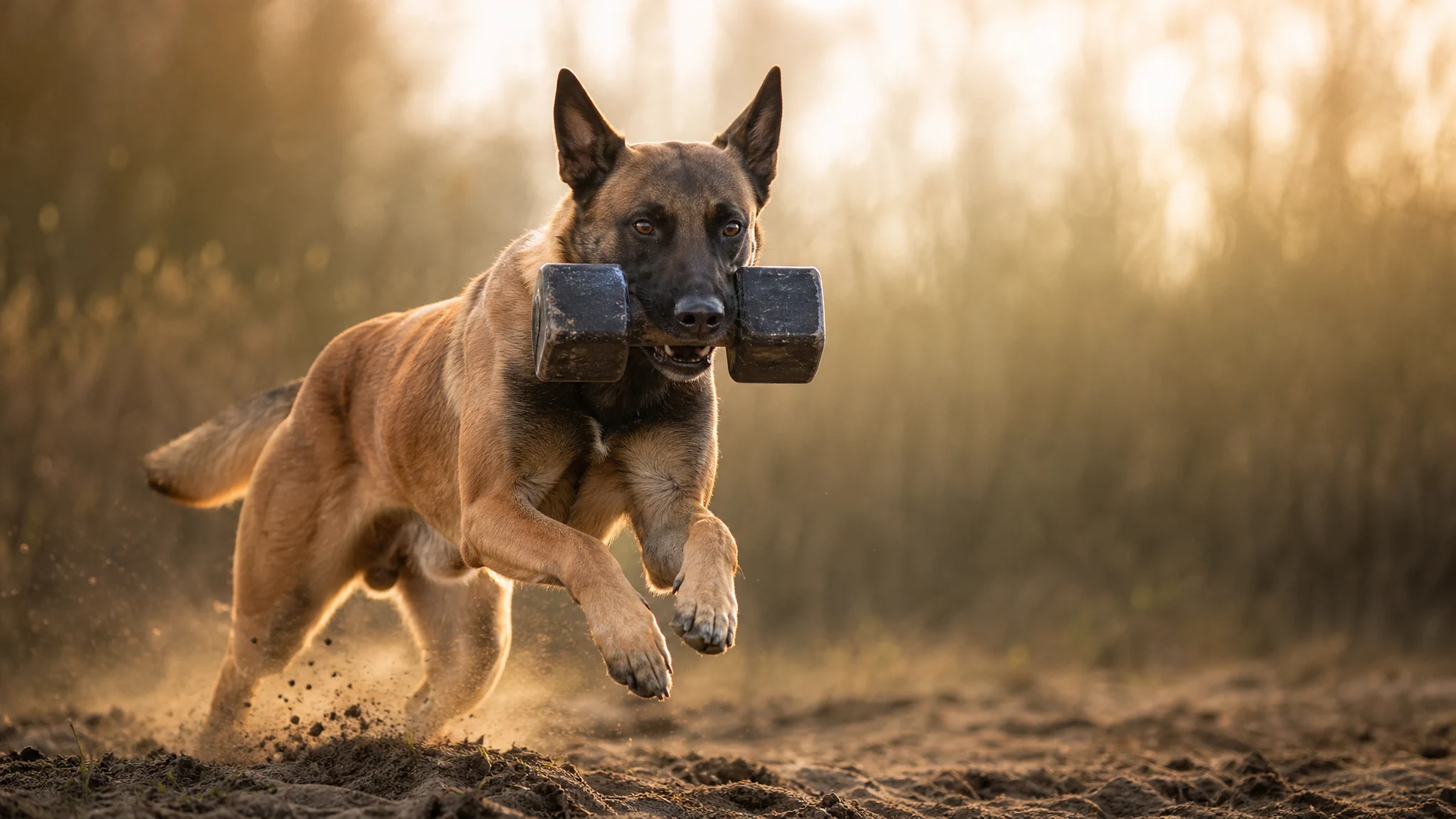
General training information. Every dog is an individual; for health or behavior concerns, see your veterinarian.
A Belgian Malinois without a job tends to invent one. The American Belgian Malinois Club (ABMC) says the breed can develop behavior problems when underemployed or neglected. The AKC rates the breed 4 of 5 for mental stimulation needs, on a scale where 5 means the dog needs a job or activity.
The good news is that the breed has plenty of options. This guide walks you through choosing and starting a sport for a Belgian Malinois, and explains what each one asks of your dog. It also covers the mistakes that trip up new handlers.
Why the Belgian Malinois Is Built for Work
The AKC says the breed was first bred around the city of Malines in Belgium. It was a livestock herding dog, working sheep and cattle. The ABMC adds that it was also a general farm dog that protected the sheep and the farm.
The AKC Official Standard describes a dog that is alert, intelligent, inquisitive and confident, and energetic yet highly responsive to the owner. That combination of drive and responsiveness is what makes a Belgian Malinois working dog so appealing to sport handlers.
The AKC places the breed in the Herding Group and recognized it in 1959. It lists the temperament as confident, smart and hardworking, and rates trainability 5 of 5 and energy level 4 of 5. Individual dogs vary, so treat these as a starting picture and not a promise.
What Jobs and Sports Fit the Breed?
The AKC and the ABMC name a wide range of activities. Here is what they list, grouped so you can see the options.
AKC-style events
- Agility: a timed obstacle course that rewards speed, focus and handler teamwork.
- Obedience: structured exercises that build on the breed's responsiveness to the owner.
- Tracking: following a scent trail, which gives a busy mind real work.
- Herding: the breed's original job, still listed by the AKC as a competition option.
- Showing (conformation): listed by the ABMC for dogs that fit the breed standard.
Other sports the parent club lists
- Flyball and lure coursing: fast, chase-driven games.
- Sledding: named by the ABMC among the breed's activities.
- Schutzhund and IPO: protection sports. The AKC and ABMC both mention them.
Working roles
- Police and military K-9: the AKC lists both. The ABMC also names law enforcement and border patrol.
- Search and rescue: listed by the ABMC.
- Therapy work: listed by the ABMC.
The ABMC also notes the breed's history in World War I, where dogs served as police dogs, messenger carriers and ambulance dogs. That history helps explain why people still look to the breed for demanding work.
What You Will Need
You do not need much gear to begin. Keep it simple and humane.
- A flat collar or well-fitted harness and a standard leash. Avoid prong, choke and shock collars. The ABMC says the breed is sensitive to corrections, and that harsh corrections combined with poor technique cause trouble.
- Small, soft training treats. The AKC notes the breed is prone to overweight, so count training treats as part of the daily food.
- One or two favorite toys. The ABMC says many Malinois enjoy retrieve games, and trainers describe the breed as treating everything like a game.
- A securely fenced yard. The ABMC says one is necessary.
- Time. The ABMC says the breed is not for owners who work extended hours or travel often.
Step-by-Step: Getting Started in a Sport or Job
Step 1: Be honest about your own experience
The ABMC FAQs say the Malinois is extremely trainable but does poorly with poor or insufficient training, and is generally not a dog for the novice owner. The club also notes that IPO and protection-bred lines have higher energy and a sharper character, and may not suit a first-time owner or a family pet.
Ask yourself how much time you can give each day, and whether you have a good local instructor to lean on. If you are new to the breed, start with the basics in our complete guide to training a Belgian Malinois before you add a sport.
Step 2: Check in with your veterinarian
Sports ask a lot of a dog's body. The ABMC Health Statement lists hip and elbow dysplasia and inherited eye problems such as cataracts and PRA among the breed's health topics. The OFA's CHIC program lists hip evaluation, elbow evaluation and an ACVO eye exam as recommended tests for the breed.
Ask your veterinarian whether your dog is ready for the activity you have in mind. Questions about pain, limping or fitness belong with them. Ask your breeder which screens the parents had.
Step 3: Build the foundation first
The AKC calls early socialization and obedience training musts for this breed. The ABMC recommends puppy kindergarten or a socialization class, then a formal group obedience class.
The ABMC describes socialization as early exposure to different people and dogs, new locations, people in various activities, and leash walks in familiar and unfamiliar places. It says exposure should begin early and continue throughout life.
Every sport rests on this. A dog that cannot settle near other dogs will struggle in a class full of them.
Step 4: Match the sport to your dog and your goals
Use what you see in your own dog. Does your dog love to chase and retrieve? Look at flyball, lure coursing or agility. Is your dog happiest with its nose down? Try tracking. Do you want a structured partnership? Obedience or herding may fit.
The AKC lists the breed's prey drive as a challenge. It says the dog has a strong interest in moving objects and may chase children, vehicles or other animals. Chase-based games can give that drive a safe outlet, but only if your dog still listens when excited.
Protection sports like Schutzhund and IPO are a bigger step. They call for an experienced club and a sound, well-socialized dog. The ABMC warns that poorly bred, socialized or trained dogs may be shy-sharp, meaning snapping or growling from fear or aggression.
Step 5: Find a club or class
Start with the official sources. The ABMC is the AKC parent club for the breed. Its Working Dog Sport Committee notes that the AKC records working dog titles earned at American Working Malinois Association (AWMA) trials. The AKC website is the place to look up its events, such as agility, tracking, herding and obedience.
For local clubs, check with the national organizations first. Then ask any local training group about its instructors and its methods. Contact them directly to confirm schedules and fees, because we cannot list local programs for you.
Make sure the instructor uses reward-based methods. The American Veterinary Society of Animal Behavior (AVSAB) supports humane, reward-based training. Walk away from any club that uses shock, prong or choke tools, or dominance tactics.
Step 6: Watch a class before you join
Go without your dog the first time. Watch how handlers treat their dogs. Look for relaxed dogs, clear rewards and calm correction of mistakes by changing the exercise, not by punishing the dog.
Ask what the first sessions look like. A good instructor will let you start small.
Step 7: Start with short, upbeat sessions
Keep early sessions brief and end while your dog still wants more. Use treats and toys to reward what you want to see. The ABMC says the breed learns very quickly, so mistakes can be learned as fast as good habits. Pay attention to what you are rewarding.
Keep your dog's weight in check by trimming meals to account for training treats.
Step 8: Add daily exercise outside of class
One class a week will not use up a Malinois. The AKC says daily walks are not enough and that the dog needs to be actively engaged mentally and physically. The ABMC says daily walks will not satisfy the breed unless the owner runs about 5 miles a day with the dog.
The AKC lists running, hiking and biking as good companion activities. Ask your veterinarian what level of exercise suits your dog's age and health. We have no breed-specific age from the AKC or ABMC for starting jumping or hard running, so do not guess. Your veterinarian can advise you.
Step 9: Keep growing, and rotate skills
Once the basics are solid, add new skills. Many handlers cross-train, for example obedience plus tracking. This keeps a smart dog interested and gives you more than one outlet.
Tips for Success
- Channel, do not suppress. The ABMC says the breed needs training to control its energy and exuberance and channel them into useful activities.
- Expect teenage phases. The ABMC says some puppies pass through temporary phases in the first year, such as being silly, overly exuberant, fidgety or suspicious. A well-bred, well-socialized dog outgrows them. Fear or aggression in an adult is never acceptable.
- Consider an older dog. The ABMC says owners short on time or expertise may prefer an older puppy or young adult.
- Keep the family involved. The breed has a strong attachment to its family and does not do well in a kennel situation, according to the ABMC.
- Supervise around children. The ABMC says never to leave this large, very active dog unsupervised with very small or unruly children.
Common Mistakes to Avoid
- Skipping the foundation. Jumping into a sport before basic obedience and socialization often leads to frustration for both of you.
- Using harsh corrections. The ABMC specifically warns that this breed is sensitive to corrections.
- Doing too little. A single weekly class does not replace daily exercise and mental work.
- Letting the games get out of hand. The AKC says prey drive should be directed into acceptable activities through training. Chasing games need clear start and stop cues.
- Overfeeding on treats. The AKC says the breed is prone to overweight.
- Choosing a club by hype. Pick instructors by their methods and their handling of dogs, not by the biggest names.
What Results Can You Expect?
Results vary with the dog, the line, the instructor and how much you practice. With steady, reward-based work, many owners find that a Belgian Malinois becomes more settled at home, because the dog gets a real outlet for its energy. A well-matched sport may also deepen your bond and help your dog focus around distractions.
Progress usually comes in small steps, and some dogs will take longer than others. Not every dog will suit every sport, and some may enjoy only one or two. If your dog seems stressed, sore or unsure, pause and check with your veterinarian and your instructor.
The breed's own parent club puts the goal plainly: the right match is a dog with a purpose and an owner who can provide it.
Sources
- AKC Belgian Malinois breed page
- AKC Official Standard of the Belgian Malinois
- American Belgian Malinois Club, About the Malinois
- American Belgian Malinois Club, FAQs
- American Belgian Malinois Club, Is the Malinois Right for You?
- American Belgian Malinois Club, Working Dog Sport Committee
- American Belgian Malinois Club Health Statement
- OFA / CHIC Program, Belgian Malinois recommended tests