Crate Training a Belgian Malinois and Preventing Separation Anxiety
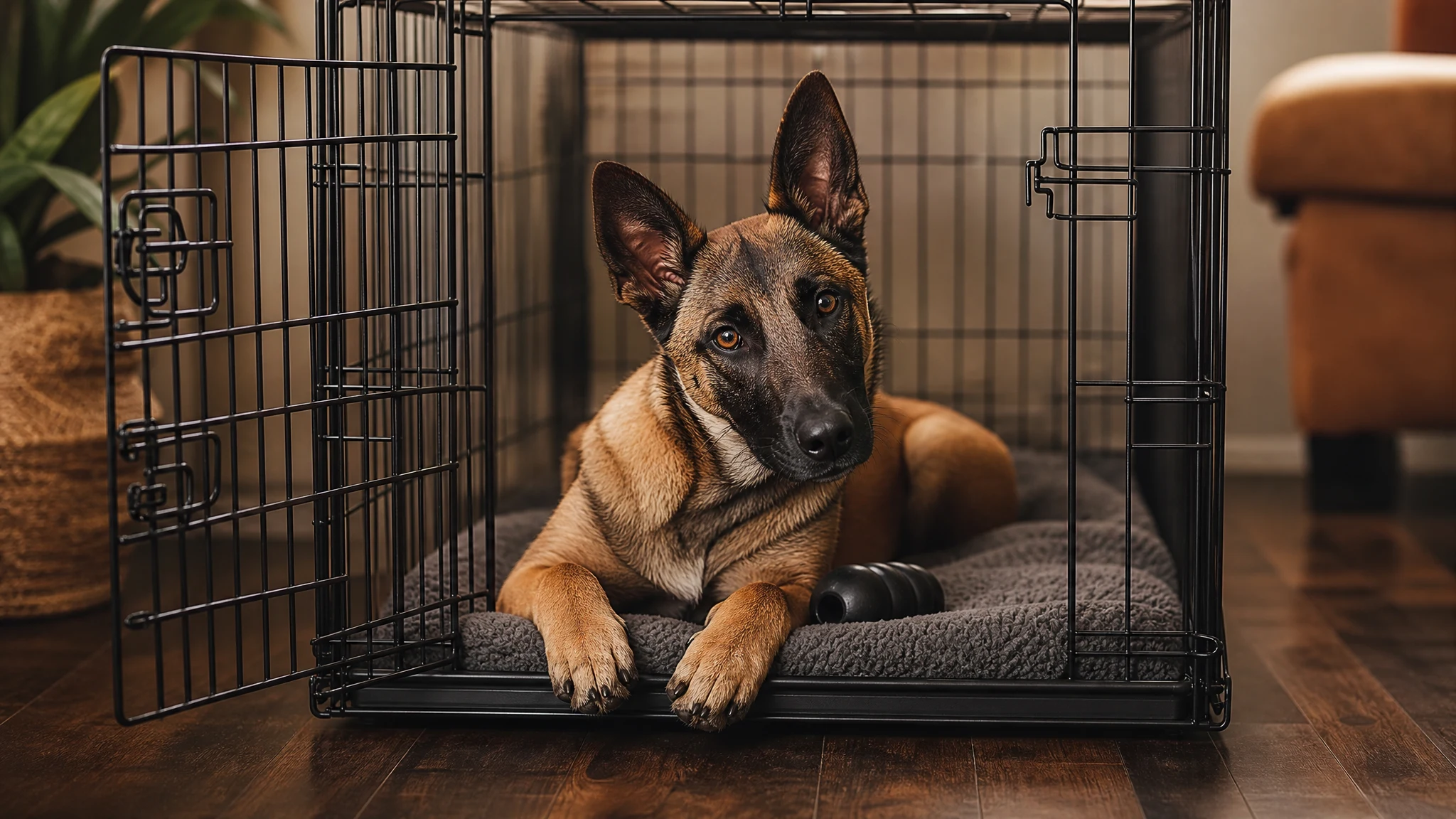
General training information. Every dog is an individual; for health or behavior concerns, see your veterinarian.
A Belgian Malinois attaches hard to the people in the house. That is part of the charm. It is also why crate training a Belgian Malinois is worth doing early and doing slowly.
The American Belgian Malinois Club (ABMC) says the breed has a strong attachment to family and does not do well in a kennel situation. It also warns that boredom gets the breed into trouble. A calm, well-introduced crate gives your dog a quiet place to rest. It also gives you a way to build alone time in small steps.
This guide covers sizing, a step-by-step introduction, how to build alone time, and the signs of separation distress. It also covers when to call your veterinarian. For the wider picture, see the complete guide to training a Belgian Malinois.
Why the crate matters for this breed
The AKC rates the Belgian Malinois 4 of 5 for energy and 4 of 5 for mental stimulation needs. The ABMC says the breed shows behavior problems when underemployed or neglected. A dog with that profile does not settle easily by accident.
A crate is not a place to park a bored dog all day. It is a tool for short rests, safe supervision breaks and travel. Used well, it teaches your dog that quiet time is normal and that you always come back.
Individual dogs vary. Some Malinois take to a crate in days. Others need weeks of patient work.
Materials you will need
- A crate that fits your dog. See the sizing section below.
- Soft bedding that you can wash. Some puppies chew bedding, so watch closely at first.
- Small, soft treats. The AKC notes the breed is prone to overweight, so count training treats as part of the daily food.
- Safe chew items or a food-dispensing toy that suits your dog's size and chewing style.
- An exercise pen or baby gate for practicing short separations outside the crate.
- A timer or phone to keep sessions short and track progress.
- A daily exercise plan. A tired, mentally worked dog rests more easily.
Choosing the right crate size
The AKC lists adult males at 24-26 inches tall and 60-80 pounds. Females are 22-24 inches tall and 40-60 pounds. That is a large, athletic dog, so plan for the adult size, not the puppy in front of you.
The breed sources do not give a crate size, so check the sizing chart from the crate maker. Measure your own dog and compare. In general, an adult should be able to stand up, turn around and lie down stretched out without crowding.
If you buy a crate for a growing puppy, choose one with a divider. That lets you shrink the space now and open it up as your dog grows. A crate that is too roomy can make a young dog feel less settled. A crate that is too tight is uncomfortable. Ask your veterinarian or the crate maker if you are unsure.
Step-by-step: introducing the crate
Step 1: Make the crate a good place
Set the crate in a room where your family spends time, such as the living room. Prop the door open or remove it for now. Add bedding and toss a few treats inside.
Let your dog wander in and out. Do not push or lure with force. Mark and reward any interest. The goal is simple: the crate predicts good things.
Step 2: Feed meals near and then inside the crate
Put your dog's meal bowl just outside the crate door. Over several sessions, move it a little farther in. When your dog eats comfortably all the way inside, you are ready to close the door.
The ABMC points out that Malinois are quick learners. Keep sessions short and upbeat so you build a habit you want, not one you have to undo.
Step 3: Add a cue and short door closures
Pick one cue, such as "bed" or "crate." Say it once, toss a treat in, and reward your dog for stepping inside. Then close the door for a few seconds, reward through the bars, and open it before your dog protests.
Build the time slowly. Open the door while your dog is calm, not while your dog is whining or pawing. If you open it during the fuss, your dog may learn that fussing works.
Step 4: Stay close while the door is shut
Once your dog relaxes with the door closed, sit nearby and read or scroll your phone. Offer a chew or food toy. Stand up, walk around the room, and come back. Reward calm behavior.
This is where a high-drive dog learns that movement in the house does not require action from them.
Step 5: Practice short trips out of the room
Step out of sight for a few seconds, return, and reward calm. Then stretch it a little at a time. Vary the length so it does not follow a predictable pattern. Keep your comings and goings low key, with no big greetings.
Step 6: Use the crate through the day
Practice at different times, not just when you leave. Use it for short rests after exercise, during meals and while you work nearby. Most of the time your dog spends in the crate should be rest, not punishment or waiting.
Building alone time without panic
Crate training and alone-time training are related, but they are not the same skill. A dog can love the crate and still struggle when the family walks out the door. Teach them separately, then combine them.
- Start with presence. Practice calm settling while you are home, in the crate and on a mat or bed.
- Add distance. Use a gate or pen so your dog can see you at first, then move out of sight for a moment.
- Add the door. Step outside and return before your dog gets worried. Gradually extend the time.
- Exercise first. The ABMC says daily walks will not satisfy a Malinois unless the owner runs about 5 miles a day with the dog. Plan real exercise and mental work before longer absences.
- Keep departures boring. A quiet "see you later" and a chew item are enough.
Move forward only when your dog is relaxed at the current level. If your dog starts to struggle, go back to an easier step. Slow progress is still progress.
Signs of separation distress
Not every unwanted behavior is separation anxiety. Boredom, unspent energy and a lack of training can look similar. Watch for patterns that happen mainly when you are gone or about to leave:
- Constant barking, howling or whining that does not settle
- Pacing, panting or drooling when you pick up keys or a coat
- Destructive chewing or digging at doors, windows or the crate
- Toileting indoors in a dog that is otherwise house-trained
- Refusing food or treats when alone
- Frantic greetings that take a long time to calm down
A dog that injures itself trying to escape a crate needs a different plan right away. Stop using the crate for alone time and talk with your veterinarian.
When to see a veterinarian
Call your veterinarian if your dog shows distress that is intense, getting worse or hard to interpret. Also call if the signs appear suddenly in a dog that was settled before. Pain, illness and other medical issues can cause changes in behavior and house-training, and only a veterinarian can sort that out.
Do not give any medication or supplement to calm your dog unless your veterinarian tells you to. Ask whether a referral to a veterinary behaviorist or a qualified trainer who uses reward-based methods makes sense. That approach matches what the American Veterinary Society of Animal Behavior (AVSAB) supports.
Common mistakes to avoid
- Using the crate as punishment. Your dog should want to go in. The ABMC notes the breed is sensitive to corrections, and harsh handling combined with poor technique causes trouble.
- Leaving a young dog for long stretches. The ABMC says the breed is not for owners who work extended hours or travel often. If your schedule is long, plan for midday help, such as a trusted person or a daycare you have visited yourself.
- Skipping exercise. A crate does not replace activity. The AKC says daily walks are not enough for the breed.
- Making departures dramatic. Big goodbyes and returns can raise excitement.
- Letting a protesting dog out. Wait for a calm moment, even a brief one.
- Moving too fast. Jumping from minutes to hours is a common reason training stalls.
- Skipping socialization. The AKC calls early socialization and obedience training musts for the breed. The ABMC recommends puppy kindergarten and a formal group class.
Tips that help
- Cover part of a wire crate with a breathable blanket if your dog seems to prefer a den feel. Leave airflow open.
- Rotate chews so they stay interesting.
- Keep the crate in a place that is not cut off from the family at first.
- Take training treats out of the daily meal to keep weight in check.
- Keep a short log of sessions so you can see small gains.
What to expect
With steady, reward-based practice, many dogs learn to rest in the crate and tolerate short absences. Some may get there in a few weeks. Others may take longer, especially if they are very attached, high energy or have a history of poor early experiences. Results are not guaranteed, and every dog is different.
The ABMC says some puppies go through temporary emotional phases in the first year, such as being silly, overly exuberant or suspicious. A well-bred, well-socialized dog usually outgrows them. If you hit a rough patch, go back a step and stay consistent.
The ABMC also notes that owners short on time or expertise may prefer an older puppy or young adult. If crate and alone-time work feels overwhelming, a qualified trainer using reward-based methods can help you build a plan for your dog.