Leash Training a Belgian Malinois: Pulling, Lunging and Loose-Leash Walking
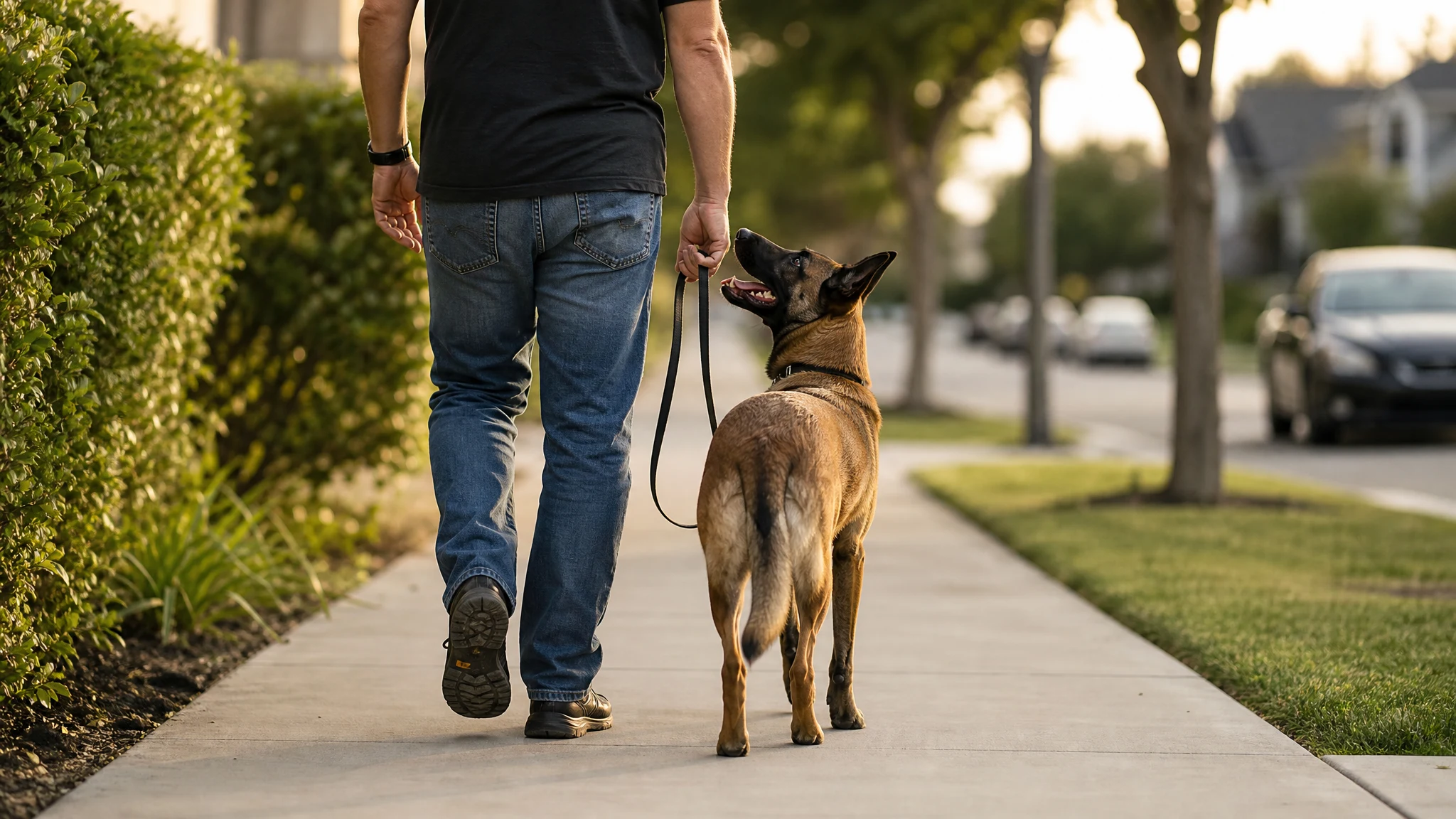
General training information. Every dog is an individual; for health or behavior concerns, see your veterinarian.
Belgian Malinois leash training is a different job from teaching a calm, low-key breed to walk nicely. This is a dog that wants to move, work and watch everything. A walk that looks like a stroll to you can feel like a starting gate to them.
The good news is that the breed is bright and responsive. The American Kennel Club (AKC) rates the Malinois 5 of 5 for trainability. The catch is that the American Belgian Malinois Club (ABMC) says the breed does poorly with poor or insufficient training and is generally not a dog for the novice owner. This guide shows how to leash train a Belgian Malinois step by step, using rewards and clear habits.
For the bigger picture, see our complete guide to training a Belgian Malinois.
Why a Belgian Malinois pulls on the leash
Belgian Malinois pulling on leash is rarely stubbornness. It usually comes from how the breed was built and how much the dog has to burn off.
- Herding and working roots. The AKC says the breed was first bred around the city of Malines in Belgium to herd sheep and cattle. The ABMC adds that these dogs also protected the sheep and the farm. A dog bred to move with purpose will not naturally dawdle at your pace.
- High energy and a need for a job. The AKC scores the breed 4 of 5 for energy and 4 of 5 for mental stimulation needs. It says daily walks are not enough. The ABMC says a daily walk will not satisfy the breed unless the owner runs about 5 miles a day with the dog.
- Prey drive. The AKC notes a high prey drive and a strong interest in moving objects, and says the dog may chase children, vehicles or other animals. A squirrel, a bike or a jogger can pull a Malinois forward in a hurry.
- Underemployment. The ABMC says behavior problems show up when the breed is underemployed or neglected. A dog that has had no outlet all day may treat the leash as the only release valve.
Individual dogs vary. Still, if your Malinois hauls you down the street, the first fix is often more exercise and more mental work, not a stronger grip.
Materials you will need
- A flat collar that fits well, with ID tags.
- A front-clip harness as an option. The leash attaches at the chest, so a forward lunge turns the dog toward you instead of rewarding the pull. Ask a local trainer or a veterinarian to check the fit.
- A standard 4 to 6 foot leash made of nylon or biothane. Skip retractable leashes. They teach a dog that pulling makes the leash longer.
- Small, soft treats that the dog can swallow fast. The AKC notes the breed is prone to overweight, so watch calories and treats used in training. Take them out of the daily meal portion where you can.
- A favorite toy for dogs that work harder for play than for food. The ABMC says trainers describe everything as a game to these dogs, and many enjoy retrieve games.
- A treat pouch so rewards are quick to reach.
Gear to leave out
Do not use prong, choke or shock collars. They rely on pain or discomfort, and the American Veterinary Society of Animal Behavior (AVSAB) supports reward-based training. They also fit the breed badly. The ABMC says the Malinois learns very quickly and is sensitive to corrections, and that harsh corrections combined with poor technique cause trouble.
Before you start: burn off the extra energy
Loose-leash work is hard for a dog that is bursting. Start sessions after a game of fetch, a sniff-and-search game in the yard, or a short run alongside you. The AKC lists the breed as a good running, hiking and biking companion, and the ABMC says a fenced yard is necessary.
Teach the first steps in a boring place, like your hallway or backyard. Take the skill to busier streets only after it holds up at home.
How to leash train a Belgian Malinois: step by step
Step 1: Teach the dog to like the gear
Let your dog sniff the collar or harness, then feed a treat. Put it on, feed a few more treats, and take it off. Do this for a few short sessions so the gear predicts good things. Clip on the leash indoors and let the dog drag it a little while you supervise.
Step 2: Mark and reward attention
Pick a marker word like "yes," or use a clicker. Say it the instant your dog looks at you, then deliver a treat. Repeat until your dog checks in with you on their own. The AKC standard describes the breed as highly responsive to the owner, and this step builds on that.
Step 3: Reward position next to you
Choose a side, left or right, and stay with it. With a treat in hand, lure your dog to your side. Mark and feed whenever their shoulder is near your leg. Feed at your seam, low and beside you, so the dog stays in place instead of leaping up or swinging in front.
Step 4: Take one step, then two
Walk one step, mark and feed while the leash is slack. Then two steps, then three. Keep sessions short, a few minutes at a time. Quit while the dog is still keen. If your dog gets stuck in front, stop and begin again.
Step 5: Add the stop-and-stand rule
This is the main rule of the whole plan: when the leash goes tight, you stop moving. Stand like a tree. When the dog turns, steps back or the leash slackens, mark, reward and move on. The dog learns that tension stops the walk and slack makes it continue.
Stay calm and quiet. Do not yank, jerk or shout. A Malinois may treat a sharp reaction as part of the game.
Step 6: Use turns to reset
If the dog charges ahead, say a cue like "this way," turn the other direction and walk off. When the dog catches up and the leash relaxes, reward at your side. Turns keep the dog thinking about where you are going.
Step 7: Raise the difficulty slowly
Move from the hallway to the yard, then to the driveway, then to a quiet street. The more distractions there are, the better the rewards should be. If your dog stops taking food, you are too close to the distraction. Add distance.
Loose-leash games that suit a Malinois
A dog with this much drive often does best with a game, not a drill. Because the ABMC says the breed has a high play drive, these tend to keep them engaged.
- Follow me. Walk briskly in a zigzag path. Each time your dog catches up with a slack leash, mark and reward.
- Treat scatter. Toss a few treats on the ground and let your dog hunt, then walk on. This gives the nose a job.
- Red light, green light. Stop on "red," walk on "green." Reward when the dog stops with you.
- Toy reward. After a stretch of good walking, mark and release the dog to a quick game of tug or a thrown toy.
- Sniff breaks as a reward. A cue like "go sniff" tells the dog it can explore for a moment. Sniffing is real work for a dog, and it makes the rest of the walk easier.
Handling lunging at triggers
Lunging is not the same as simple pulling. It tends to happen when your dog sees a trigger, such as another dog, a bike, a skateboard or a squirrel. The reason may be prey drive, excitement or worry. The AKC notes a strong interest in moving objects. The ABMC says poorly bred, socialized or trained dogs may be shy-sharp, meaning they snap or growl from fear or aggression, and that individuals can be protective, territorial or possessive. If your dog growls, snaps or shows fear, contact a qualified, reward-based trainer in person. Ask your veterinarian to rule out pain or other health causes.
A simple plan for triggers
- Find your threshold distance. This is the distance at which your dog notices the trigger but can still eat a treat and think. Stay at or beyond it.
- Mark and feed when the dog looks, then looks away. A glance at the trigger followed by a glance back to you is progress. Reward it.
- Move away calmly if needed. Turn and walk off before the dog is over threshold. Do not wait for a lunge.
- Use the environment. Cross the street, step behind a parked car or use a driveway to make space.
- Close the distance a little at a time. Over many sessions, ask for a bit less distance. Go back if the dog tenses up.
Keep walks on the shorter side while you work on this. Try quieter times of day. Do not allow greeting on leash, since it often builds frustration.
Socialization matters
The AKC says early socialization and obedience training are musts. The ABMC recommends puppy socialization or puppy kindergarten and a formal group obedience class. Its advice includes early exposure to different people and dogs, new locations, people in various activities, and leash walks in familiar and unfamiliar places, continuing throughout life. Ask any class to use reward-based methods only.
Tips and common mistakes
- Rewarding the pull by accident. If you keep walking while the leash is tight, the dog learns that pulling works. Be consistent every time.
- Skipping exercise. A Malinois that has had no outlet will be hard to train on leash. Meet the physical and mental needs first.
- Sessions that run too long. A sharp dog can get frustrated or sloppy. Several brief sessions beat one long one.
- Using corrections. Leash pops and harsh gear may suppress the behavior for a moment, but they carry risks and conflict with AVSAB guidance. They are not part of this plan.
- Letting everyone use different rules. If one person allows pulling and another does not, the dog gets mixed messages. Agree on one set of rules.
- Over-treating. The AKC notes the breed is prone to overweight. Use tiny treats and count them in the day's food.
- Expecting a finished dog too early. The ABMC says some puppies go through temporary emotional phases in the first year, such as being silly, out of control, overly exuberant, fidgety or suspicious. Plan for ups and downs.
- Taking on too much alone. The ABMC says owners short on time or expertise may prefer an older puppy or young adult, and that the breed is generally not for the novice. Get help early if you feel stuck.
What results to expect
Progress varies with the dog's age, background, daily exercise and how consistent everyone is. With regular short sessions, many owners find their dog pulls less in quiet places within a few weeks. Busy streets and strong triggers usually take longer, and some dogs may always need extra management around them.
Loose-leash walking can help make outings calmer and safer, but results are not guaranteed. Expect setbacks during excitement, new places and the adolescent months. Keep rewarding the behavior you want, and keep the dog's exercise up between lessons.
If your dog's behavior gets worse, or you see signs of pain, limping or sudden changes, call your veterinarian. For lunging that includes growling or snapping, bring in a qualified reward-based trainer or a veterinary behavior professional.
A quick routine to follow
- Give your dog a burst of exercise or play first.
- Do two or three short loose-leash sessions in a quiet place each day.
- Take walks that mix training with sniffing breaks.
- Stay beyond your dog's threshold distance from triggers.
- Finish with a game or a job so the dog ends on a high note.
A Belgian Malinois on a loose leash is not about control. It is about teaching a smart, driven dog that walking with you is the best game going.