Socializing a Belgian Malinois With Kids, Dogs and Strangers
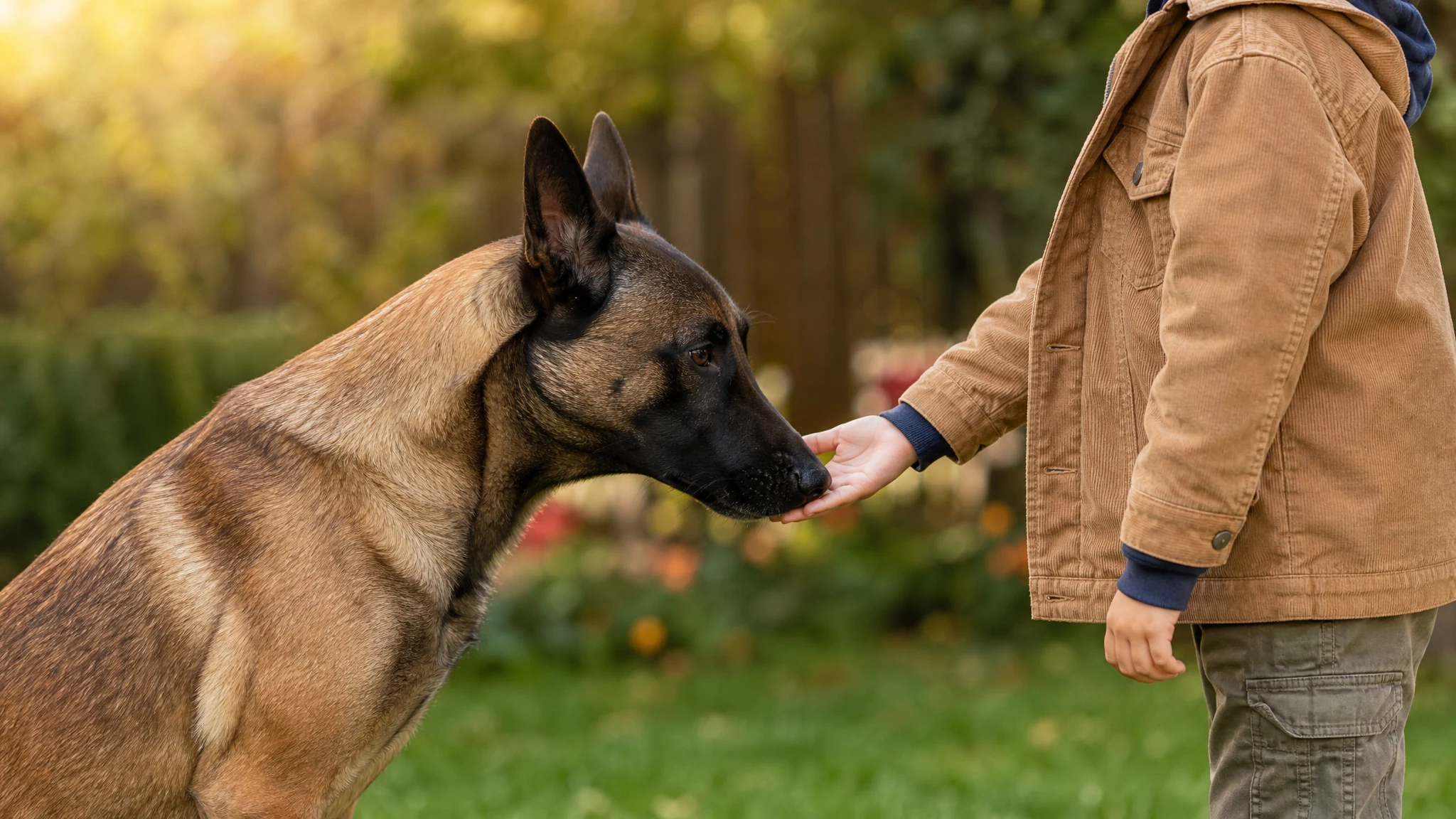
General training information. Every dog is an individual; for health or behavior concerns, see your veterinarian.
A Malinois that is calm around visitors, polite with other dogs and safe near children does not happen by accident. It comes from planned, patient exposure, started early and kept up for life.
This guide walks you through a practical socialization plan. It covers children, other dogs and strangers, plus the breed-specific risks you need to manage along the way. Every dog is an individual, so treat the steps as a framework, not a timetable.
What the Breed Sources Say First
Before you start, it helps to know where the breed tends to land. On the AKC breed page, the Belgian Malinois scores 3 of 5 for good with children and 3 of 5 for good with other dogs. On the AKC scale, that is the middle of the range, not the top. It scores 3 of 5 for openness to strangers and 4 of 5 for watchdog and protective nature.
The AKC breed standard describes the temperament as alert, intelligent, inquisitive and confident, showing neither fear nor aggression. It also says the dog is loyal to his people and may be indifferent with strangers. The American Belgian Malinois Club (ABMC) describes the breed as reserved with strangers, affectionate with its own people and naturally protective without being overly aggressive. It adds that correct temperament ranges from bold and friendly to reserved and aloof, and that fearful or aggressive temperament is always incorrect.
In plain terms, a mid-range score means socialization decides a lot. The ABMC says a poorly bred, socialized or trained dog may be shy-sharp, meaning snapping or growling from fear or aggression. Your job is to give your dog the best chance of growing into the confident, stable adult the standard describes.
Are Belgian Malinois Good With Kids?
Sometimes, with work and supervision. The honest answer is that it depends on the dog, the lines it comes from, the training and the household.
Here is what the sources flag:
- The AKC notes a high prey drive and a strong interest in moving objects. A Malinois may chase children, vehicles or other animals.
- The ABMC says the breed can be protective, territorial, possessive and jealous.
- The ABMC also advises never leaving this large, very active, quick-to-respond dog unsupervised with very small or unruly children.
- The ABMC says IPO or protection-bred lines have higher energy and sharper character, and may not suit a first-time owner or a family pet.
None of that means a Malinois cannot live well with a family. It means you manage the setup, teach both sides the rules and keep your expectations realistic. If your household includes very young children, the ABMC suggests owners short on time or expertise may prefer an older puppy or young adult. Ask the breeder or rescue about the individual dog's temperament.
Materials You Will Need
- Small, soft treats. The AKC says the breed is prone to overweight, so count training treats as part of daily food.
- A flat collar or well-fitted harness and a standard leash. No prong, choke or shock collars. They have no place in socialization.
- A baby gate or exercise pen to give your dog a safe retreat and give you a way to separate dog and child.
- A mat or bed for settling practice.
- A fenced yard or secure space. The ABMC says a fenced yard is necessary for the breed.
- A group class. The ABMC recommends puppy socialization or puppy kindergarten, followed by formal group obedience.
- A helper or two who are calm and willing to follow your instructions.
Step-by-Step Socialization Plan
Step 1: Build a base of calm and focus at home
Start in a quiet place. Teach your dog to settle on a mat, to look at you when you say its name and to take treats gently. These skills give you something to ask for when things get exciting.
The ABMC says the breed requires training to control its high energy and exuberance and channel them into useful activities. Daily exercise matters here too. A tired, mentally satisfied dog finds calm behavior easier. For the full foundation, see our complete guide to training a Belgian Malinois.
Step 2: Start broad, early exposure
The ABMC recommends early exposure to different people and dogs, new locations, people in various activities, and leash walks in familiar and unfamiliar places. It says exposure to people outside the family and to varied sights and sounds should begin early and continue throughout life.
Keep sessions short and upbeat. Let your dog look at something new from a comfortable distance, then pay it with a treat for staying relaxed. Do not force a greeting. If your dog is tense, add distance and try again another day.
Step 3: Socialize with strangers
The AKC standard says the breed may be indifferent with strangers, so your goal is not a dog that adores everyone. Your goal is a dog that stays neutral and relaxed.
- Ask a friendly helper to stand at a distance where your dog notices them but stays calm.
- Reward your dog for looking at the person and then back at you.
- Move a little closer over several sessions, only as fast as your dog stays loose and relaxed.
- Have the helper ignore the dog at first. No staring, no reaching over the head, no forced petting.
- If your dog chooses to approach, the helper can offer a treat from a low, open hand.
Vary the helpers: different ages, hats, jackets, umbrellas and voices. Practice at doors and on walks, not just in the yard.
Step 4: Introduce other dogs carefully
With a mid-range score for getting along with other dogs, plan on deliberate introductions. Belgian Malinois with other dogs often do best with calm, stable, well-mannered partners, and poorly managed greetings can teach bad habits fast.
- Start with parallel walks. Walk two dogs in the same direction with space between them. Reward each for calm behavior.
- Close the gap slowly. Only reduce distance while both dogs look loose and relaxed.
- Keep greetings short. A few seconds, then call your dog away and reward. End on a good note.
- Use a neutral space before bringing a new dog into your home or yard.
- Take a class. A well-run group class gives controlled practice around other dogs.
Watch for stiffness, hard staring, raised hackles or intense fixation. Calmly create distance and let things settle. Because the AKC notes a strong interest in moving objects, fast-moving, noisy play between dogs can also tip into overexcitement. Interrupt early.
Step 5: Introduce children with structure
Supervision is the heart of this step. The ABMC says never leave the dog unsupervised with very small or unruly children, and that is the rule to build everything else on.
- Teach the children first. No hugging, chasing, grabbing, climbing on or bothering the dog while it eats, chews or sleeps.
- Let your dog watch from behind a gate. Reward calm behavior while children play nearby.
- Do short, leashed sessions. Have the child stand or sit calmly while you reward the dog for staying relaxed.
- Let the child help in safe ways. An older child can toss a treat or ask for a sit under your direction.
- Separate when you cannot watch. Use a gate, pen or another room whenever you are distracted.
Teach children not to run and squeal around the dog. Running children trigger chasing in many dogs, and the AKC specifically notes the breed may chase children. Give the dog a calm outlet, such as a retrieve game, which the ABMC says many Malinois enjoy.
Step 6: Watch for guarding, possessiveness and chasing
Because the ABMC lists possessive, territorial and jealous tendencies, keep an eye on food, toys, beds and favorite people. Warning signs include stiffening, freezing, staring, lip-lifting, growling or snapping when a child approaches a resource.
- Feed the dog and give chews in a space the children cannot enter.
- Pick up high-value toys when children are around.
- Never punish a growl. It is a warning. Punishment can hide the warning without fixing the cause. Instead, increase distance and get help.
- If chasing, circling or grabbing at moving children starts, separate the dog calmly and redirect to a toy or a trained behavior.
Serious guarding, snapping or fear-based reactions call for a qualified, reward-based professional and a check with your veterinarian to rule out pain or other medical causes. Do not wait for it to pass.
Step 7: Keep going through adolescence and beyond
The ABMC says some puppies go through temporary emotional phases in the first year, such as being silly, out of control, overly exuberant, fidgety or suspicious. A well-bred, well-socialized dog outgrows them. The same source is clear that fear or aggression in an adult is never acceptable.
Keep exposing your dog to new people, places and dogs for life. Socialization is not a one-time window you finish and forget.
Tips for Better Results
- Quality beats quantity. A few calm, positive encounters teach more than a crowded, stressful outing.
- Reward what you want to see. Pay for calm eye contact, loose leashes and settling.
- Exercise first. The ABMC says daily walks will not satisfy the breed unless the owner runs about 5 miles a day with the dog. Meet the energy needs so training sessions are productive.
- Keep corrections gentle. The ABMC says the breed learns very quickly and is sensitive to corrections, and that harsh corrections combined with poor technique cause trouble. Reward-based training is the safer path.
- Do not leave the dog bored. The ABMC notes behavior problems when the dog is underemployed or neglected.
Common Mistakes to Avoid
- Flooding. Dragging a nervous dog into a crowd does not build confidence.
- Forced greetings. Letting every stranger and dog rush up teaches your dog that it has no say.
- Trusting the dog too soon. A calm week does not mean you can drop supervision around young children.
- Using harsh tools. Prong, choke and shock collars, alpha rolls and scruffing can increase fear and aggression. Avoid them.
- Skipping the plan after puppyhood. Exposure needs to continue for life.
- Overfeeding treats. Since the AKC notes the breed is prone to overweight, count the calories.
What Results to Expect
With consistent, reward-based practice, many owners find their Malinois becomes calmer and more confident around new people and dogs. Your dog may learn to look to you for guidance in exciting situations. It may also become easier to read and easier to manage around children. How far this goes depends on the individual dog, its breeding, its early experiences and how steadily you keep up the work.
Realistic goals are a dog that is neutral with strangers, polite on leash around other dogs and safely supervised around children. Not every Malinois will become a social butterfly, and the AKC standard does not ask it to be. Results vary, and progress is rarely a straight line.
The ABMC calls the breed generally not a dog for the novice owner. If you feel out of your depth, a qualified trainer who uses humane, reward-based methods can help. Ask about their methods before you book.