 Malinois
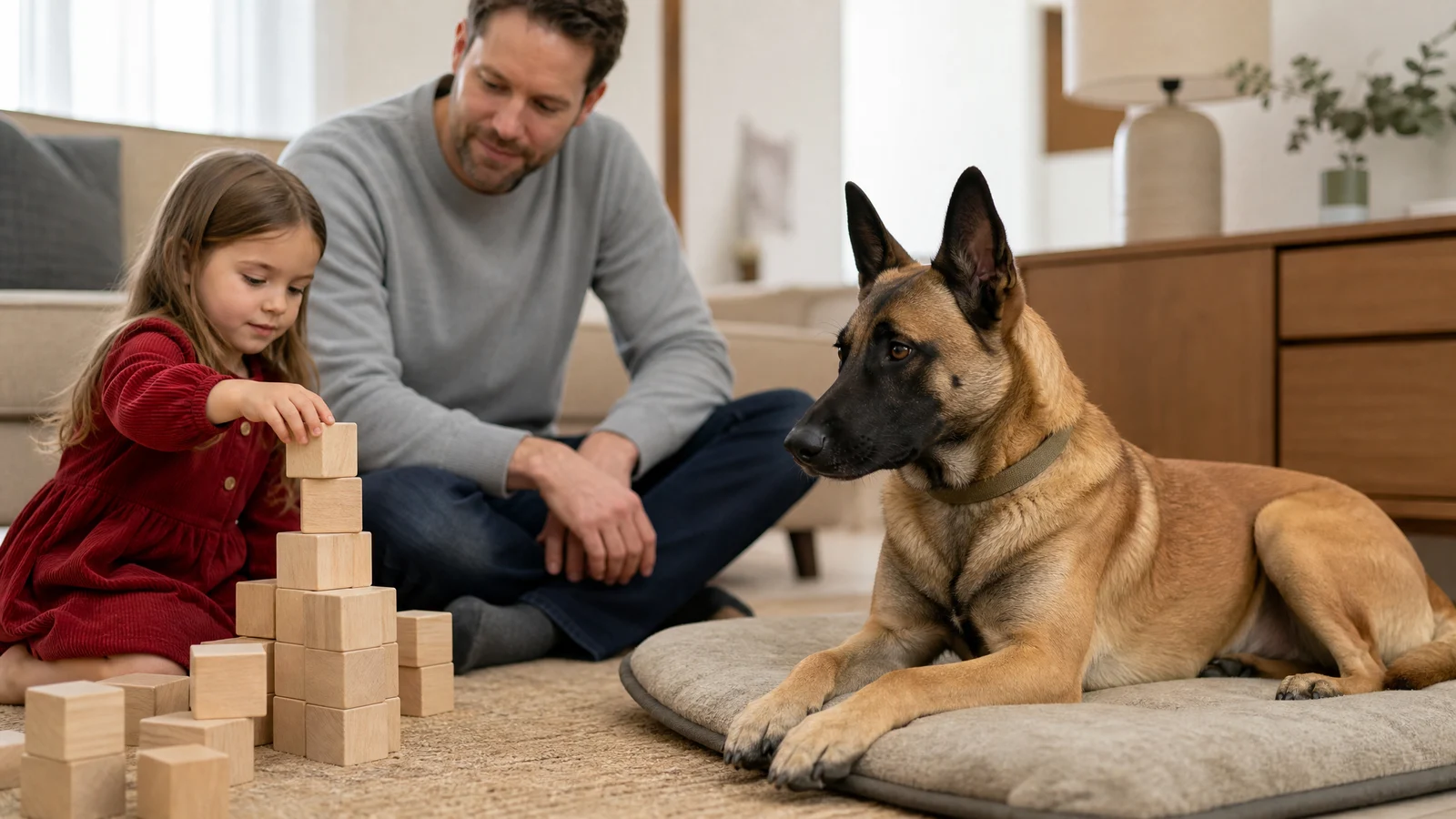
The mistake to avoid is assuming a family-raised Belgian Malinois will sort things out with the kids alone. The dog is smart and devoted, so the adults relax while children run and squeal, and nobody is watching when a fast herding dog starts to chase.
The fix is structured supervision: clear rules for children, places where the dog can step away, and rewards for calm on both sides. Done well, it gives the whole family a devoted partner. Done badly, it teaches a high-drive dog that moving children are a game.
This article looks at socializing your Malinois with children and shows you how to set house rules, build safe zones, reward calm, choose gear, shape daily routines, and handle the baby stage, so you can tell early whether the plan is working.
House Rules for Socializing Kids
A close call can start when a small child runs at a resting Malinois with arms out, because moving children can trigger the breed's chase instinct. The AKC rates the breed 3 of 5 with young children, a score its scale labels "With Supervision." That label sits behind every rule below, because it means an adult is watching, every time.
Malinois have a high prey drive, and moving objects interest them strongly, which can lead to chasing children. The rules below remove the running and squealing that start a chase.
Toddlers and Preschoolers
A toddler cannot hold up their end of any agreement, so the adult does the work. Keep a grown-up within arm's reach whenever child and dog share a room, and close a gate the moment you have to look away. Teach the child one short routine, standing still like a tree while the dog comes to them, and practice it with a stuffed toy first.
No hugging, riding, or cornering the dog, and no carrying food or toys near them. A running toddler is exactly the movement that can set off a chase.
School-Age Kids
School-age children can follow a written list, which makes them real helpers. Post it where they will see it: walk past the dog, never run, give the dog space during meals, chews, and naps, and check with an adult before starting any game. Children this age also enjoy teaching simple tricks, which turns their attention into useful practice.
Teens
Teens can take on real jobs, such as short training sessions and leash walks, once an adult has watched them work and seen the dog respond calmly. Add freedom slowly as the dog stays relaxed. Teens also bring friends home, and visiting kids are the weakest point in any plan. Tell friends the rules at the door and move the dog to a safe zone during roughhousing.
Bring the dog back once the house is calm. Wrestling and loud chase games can pull a Malinois into the action, so end them before the dog joins in.
Safe Zones for Your Belgian Malinois
Watch where a Malinois goes when the house gets loud. A dog with no retreat hovers at the edge of the action, tracking every child who runs past, and that constant tracking is tiring for a breed this alert. A safe zone gives the dog an off switch that the whole household respects.
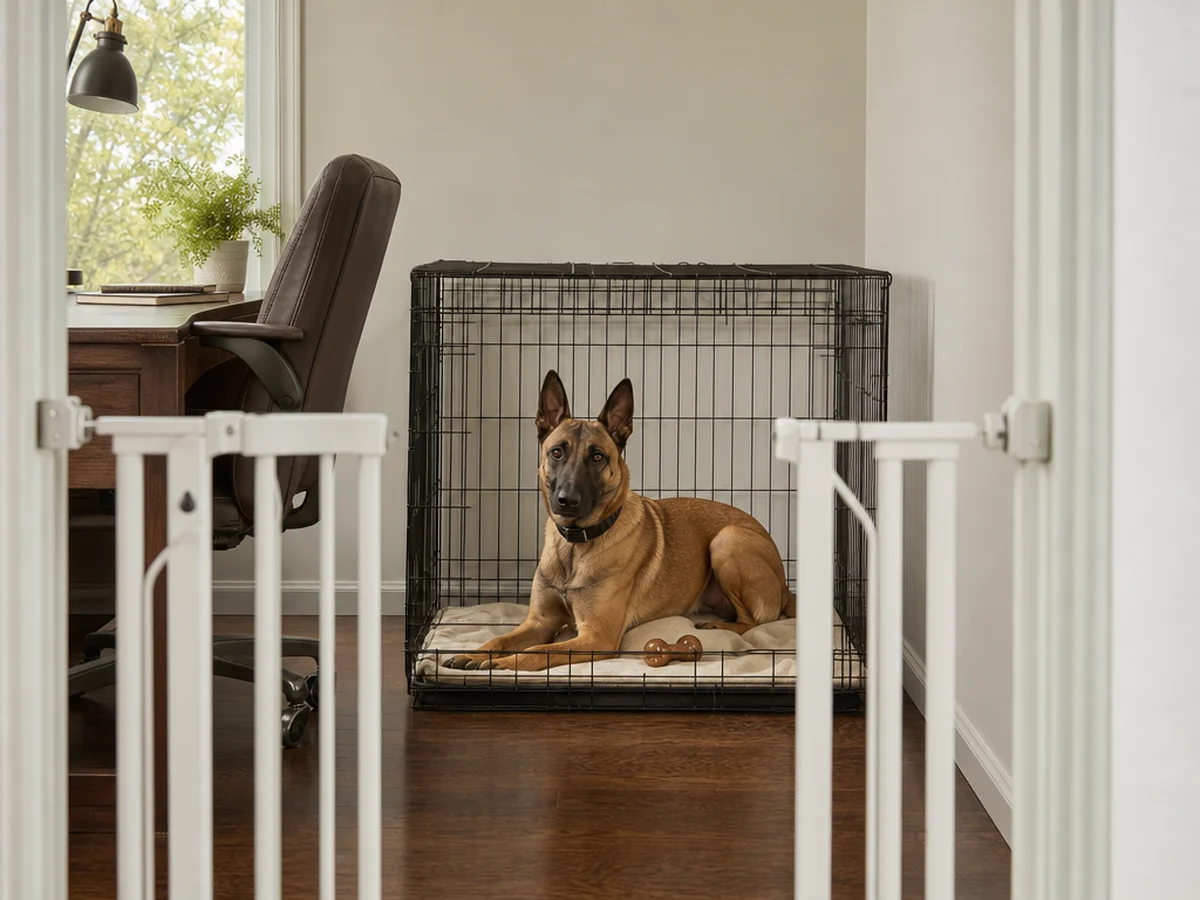
Build both kinds of space. A gate or closed door keeps dog and young children apart when you cannot supervise. Then give the dog a bed or crate tucked into a quiet corner, a retreat that only they use. We have trained this breed for many years, and the pairing works better than either alone.
Make the retreat a rule for kids too. When the dog is in their spot, nobody reaches in, calls them out, or sits in the crate to play.
Teach the spot with treats before you need it. Toss a treat onto the bed, say a marker word the instant the dog steps on, and reward again for staying. Build up the time slowly, and use the spot at calm moments, never as a punishment. The same space also protects meals, bones, and naps, so children learn that a dog on their bed is off limits.
Rewards That Teach Calm Socializing
Notice the quiet moments: the dog lying on the rug while children play across the room, or glancing at a running child and then looking away. Most households ignore these moments and react only to trouble. Rewarding them is the cheapest socializing you can do, and it suits a breed that learns fast and works hard for a payoff.
Current evidence backs reward-based methods as the approach to use throughout dog training. Treats, praise, and play are all you need.
Treats for the Dog
Keep a small container of soft, tiny treats on a high shelf in each room where kids and dog mix. Reward the dog for lying down when children enter, for looking at a child and then back at you, and for choosing their bed over the action. Hand over the treat yourself at first, and let a child take over only when the dog takes treats gently and stays calm.
Use a marker word the instant the dog settles, then deliver the treat. Timing matters more than size, because the word tells the dog exactly which behavior earned it.
Praise for Kids and Dog
Children need rewards too, and the best one is your attention. Notice a child who walks calmly past the dog, who asks before petting, or who leaves the dog alone at a food bowl, and praise that child by name right away. Kids repeat what gets noticed, so catching good behavior teaches faster than nagging about the bad.
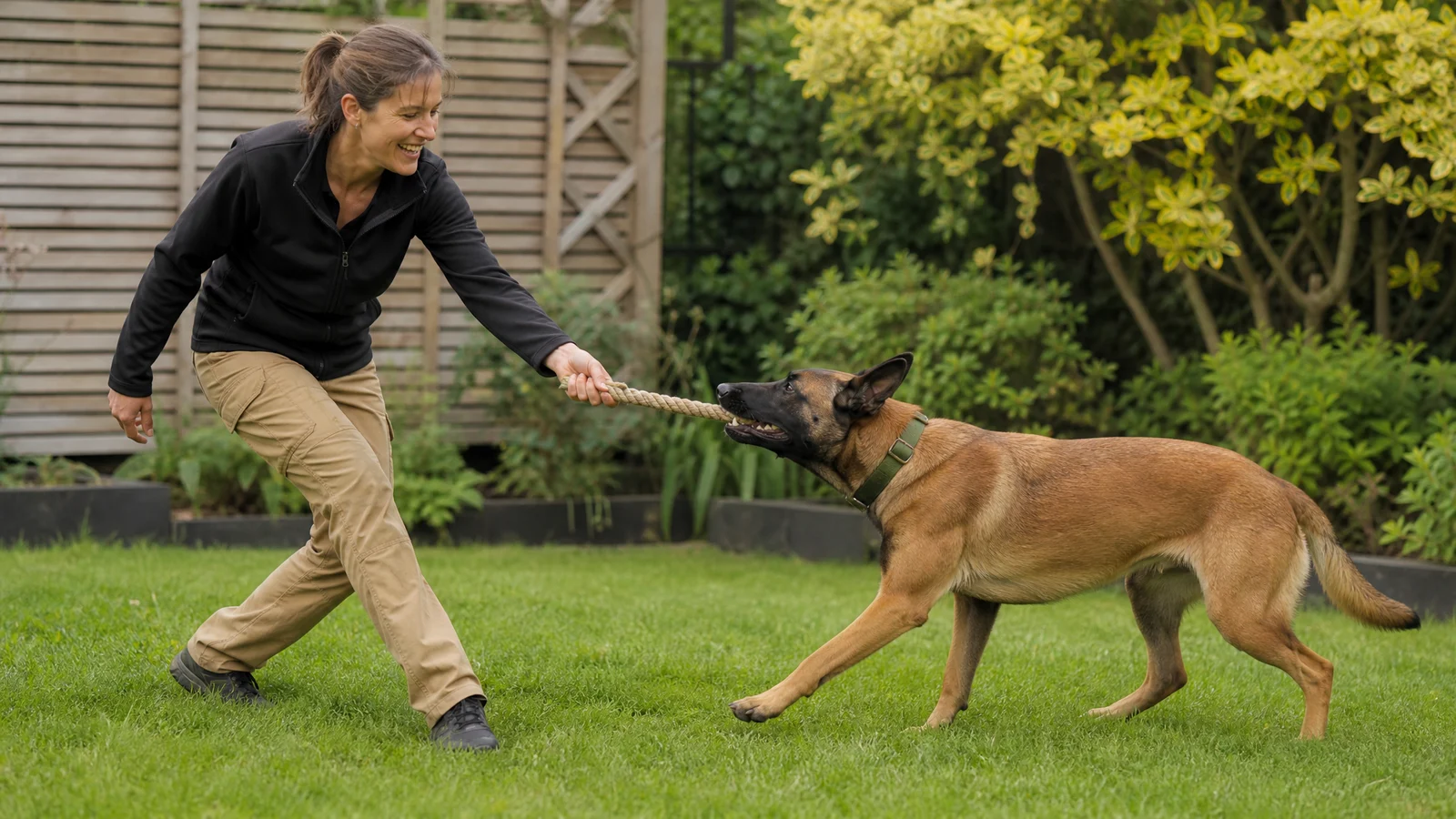
Praise works for the dog as well, in a quiet voice. A Malinois who gets excited by squealing and clapping learns to ramp up, so keep praise low and slow near children. Save lively play for a separate game with an adult, such as tug in the yard, with a clear start and end.
Gear for a Belgian Malinois Household
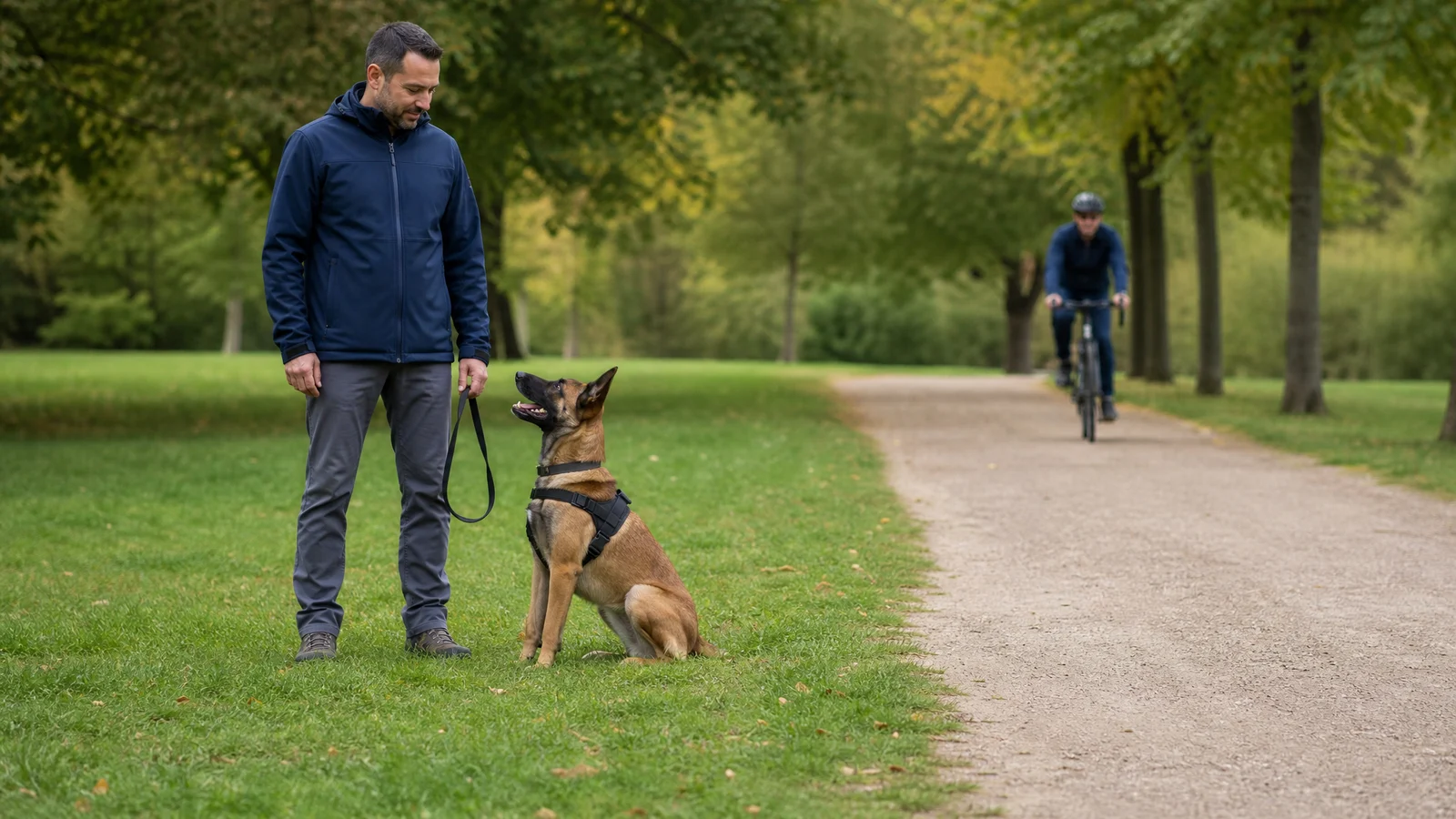
Picture the moment a visiting child opens the front door and the dog bolts toward a passing bike. A gate or a leash is the only thing between a good day and a bad one. Gear does not replace supervision, but it makes supervision workable, so pick each piece for a specific job.
Leashes and House Lines
A leash indoors sounds odd, but a light house line clipped to a harness is a strong tool in the first weeks with kids around. It lets you stop a chase before it starts by calmly picking up the end, and the dog still shares the room. Reward every time the dog turns toward you instead of toward a running child.
Pair that with a reliable recall built on treats. Calling the dog away from a game of tag is the skill that matters most.
Tethers for Calm Settling
A tether is a sturdy, dog-safe line anchored to heavy furniture or a wall hook, used with a comfortable bed within reach. It keeps the dog in the room during homework and playdates without isolating them.
Offer a chew or stuffed toy while the dog is tethered, release for calm, and stay in the room. Never leave a tethered dog alone.
Gates, Pens, and Doors
Baby gates, exercise pens, and solid doors are the workhorses of a household with kids and an athletic dog. Choose gates tall enough that a Malinois cannot clear them, and check that latches sit beyond a child's reach and a dog's nose. Place them at the kitchen, the stairs, and the entrance to the children's rooms, and treat them as the default whenever supervision lapses.
Daily Socializing Routines With Children
Chasing is most likely at busy, high-movement moments, such as the door at school pickup, the burst of kid energy after dinner, and the rush to the car. A breed rated 4 of 5 for both energy and mental stimulation needs spills over at exactly these points.
The parent club puts it plainly: "an underutilized dog is a frustrated dog, and a frustrated dog is not a good housemate." Give the dog real work before the busiest hours, such as a training walk or a puzzle feeder, and the house gets calmer. For a wider picture of what this breed asks of a family, see living with a Malinois.
Greetings are where chasing often starts, so give them a script. Use the same steps every time a child comes through the door.
- Keep the dog behind a gate or on a leash while the child comes in, drops the bag, and sits down.
- Ask for a sit or a down, then mark and reward the moment the dog complies.
- Let the dog greet the calm child with their feet planted on the floor, and pay the dog for staying relaxed.
- End the greeting with a chew or puzzle toy on the dog's bed, so the household moves on.
Mealtimes need their own rule: the dog eats in a quiet spot behind a gate, and children never approach bowls, bones, or chews. At family dinners the dog settles on a mat with a chew, so nobody has to defend a plate or a snack from a hopeful dog.
Play with kids is structured too: adult-led tug or a puzzle game with a clear start and end, never a free-for-all. Stop the game and give the dog a break if excitement climbs.
If a Malinois still paces after a full day of work, the dog may simply struggle to switch off. Our guide to pacing and circling quirks covers that in detail.
Babies and a Belgian Malinois
A newborn changes the house in ways a Malinois notices fast: new smells, odd sounds, long stretches of the family sitting still, and hands-full moments when the dog's routine slips. Dogs with high prey drive pay close attention to small, noisy things that move, so the baby stage needs its own plan, started before the baby arrives. If other animals share your home, our piece on training a prey-driven Malinois covers the same chase instinct.
Never leave a baby and a Malinois alone together, even briefly, asleep or awake. A closed door or gate between them is the rule, every time.
Preparing the Dog Beforehand
Before the baby comes home, rehearse. Play recordings of baby sounds at low volume while rewarding the dog for lying down, carry a doll or bundled blanket around the house, and practice settling on a mat while you sit with the doll in your lap. Let the dog sniff a worn blanket from the hospital first, and reward calm.
Once the baby is home, keep the dog's exercise and training going. A tired, mentally busy Malinois copes better than one whose routine collapsed. Use the tether or a gate during feeds and diaper changes, give the dog a chew during those times, and hold short daily training sessions so the dog still has a job and a partner.
When the baby starts crawling, the toddler rules above apply, with an adult within reach and no chase games. A crawling baby moves low and fast, which can catch a prey-driven dog's eye, so keep the gates in place.
Signs Socializing Works, Signs to Call a Pro
Progress with a Malinois shows up in small, quiet changes rather than dramatic ones. You stop managing every second, the dog starts choosing the rug over the chase, and the kids start remembering the rules on their own. Check your household against these signs each month:
- The dog moves away from running children, or watches them and then looks to you, without staring or stalking.
- The dog goes to their bed or crate on their own when the house gets loud, and stays there undisturbed.
- Children follow the house rules without reminders, including leaving the dog alone at meals and rest.
- Greetings at the door end with a sit or a settle, not with jumping, circling, or nipping at heels.
- The dog stays loose in the body when kids play nearby, and takes treats gently.
When Malinois Socializing Around Children Needs Help
Some signs mean it is time for a professional, and sooner is better. Choose a trainer or veterinary behaviorist who uses only reward-based methods, and call if you see any of these:
- The dog stiffens, freezes, stares hard, or growls when a child approaches, touches, or passes their food or bed.
- The dog chases, nips, or grips children despite gates, a leash, and consistent rewards.
- Any bite or snap at a person, including a near miss.
- Protectiveness over food, toys, or favorite spots that keeps increasing despite your management.
- Behavior that shifts abruptly, which deserves a vet check first and a behavior professional after that.
Everything here comes back to what a Malinois is: a working dog bred to be taught and assigned tasks. A household that supplies structure, daily jobs, and rewarded calm gets a devoted partner for the children. One that leaves the dog to sort things out alone gets a bored dog with a strong chase instinct.
So keep an adult close as the foundation, keep the dog's body and mind busy every day, and keep regular vet visits on the calendar. If warning signs appear, tighten the plan and call for help early. Children and dog can each learn what is expected of them, as long as a grown-up stays near enough to guide both.
 BehaviorFamily Pet or Full-Time Job? Living With a Malinois
 BehaviorBelgian Malinois Tug Games With Rules for a Strong Grip
 BehaviorA Steady Sit for a Belgian Malinois When Wheels Go By