Belgian Malinois Puppy Training Timeline: 8 Weeks to 2 Years
General training information. Every dog is an individual; for health or behavior concerns, see your veterinarian.
A Malinois puppy is a joy and a handful, often in the same five minutes. Bright, fast and tuned in to people, this is a breed that learns quickly, and that cuts both ways. It picks up good habits fast. It picks up bad ones just as fast.
This guide walks through Belgian Malinois puppy training in stages, from the day you bring your puppy home to full maturity. It works as a flexible Belgian Malinois puppy training schedule, not a rigid calendar. Individual dogs vary, so use the ages as signposts and watch your own dog.
Key Takeaways
- The AKC says early socialization and obedience training are musts for this breed, and the American Belgian Malinois Club (ABMC) recommends a puppy class followed by formal group obedience.
- Daily walks are not enough. Both the AKC and the ABMC describe a dog that needs real physical and mental work every day.
- Reward-based methods fit this breed well. The ABMC notes that Malinois are sensitive to corrections, and that harsh corrections combined with poor technique cause trouble.
- Expect a long adolescence. Some puppies go through temporary phases in the first year that a well-bred, well-socialized dog outgrows.
- Ask your veterinarian, not a forum, about vaccines, safe exercise limits and joint care for a growing puppy.
In This Guide
- What to Know Before You Start
- Weeks 8 to 16: Foundations and Socialization
- Months 4 to 6: Bite Inhibition and Self-Control
- Months 6 to 12: Adolescence
- Months 12 to 24: Maturity
- A Sample Daily Schedule and Timeline Table
- Common Mistakes and When to Get Help
- Sources
What to Know Before You Start
Good Belgian Malinois puppy training starts with understanding what the breed was built to do. According to the AKC Belgian Malinois breed page, the breed was first bred around the city of Malines in Belgium and was used for herding sheep and cattle. The American Belgian Malinois Club adds that the Malinois was also a general farm dog that protected the sheep and the farm.
That history shows up in the living room. The AKC rates the breed 5 of 5 for trainability and 4 of 5 for both energy and need for mental stimulation. The ABMC describes the breed as extremely trainable, but one that does poorly with poor or insufficient training. It also says the Malinois is generally not a dog for the novice owner.
The ABMC lists several challenges worth knowing now:
- High intensity that many new owners are not prepared for.
- Behavior problems when the dog is underemployed or neglected.
- Trouble for owners who work extended hours or travel often, because boredom gets the dog into trouble.
The AKC adds that the breed has a high prey drive and a strong interest in moving objects, and may chase children, vehicles or other animals. Training is how you point that drive at acceptable activities.
If you have not yet read the basics, our complete guide to training a Belgian Malinois covers the core methods. This page focuses on timing.
Choose Reward-Based Training from Day One
The American Veterinary Society of Animal Behavior (AVSAB) supports humane, reward-based training. That matches what the ABMC says about this breed: it learns very quickly and is sensitive to corrections. Pay your puppy for what you like, manage the environment so mistakes are rare, and keep sessions short and upbeat. Skip pain, fear and intimidation entirely.
The AKC also notes the breed is prone to being overweight, so watch calories. Count the treats you use in training as part of the daily food, and use small pieces.
Weeks 8 to 16: Foundations and Socialization
Most puppies come home around eight weeks. The first weeks set the pattern for everything after. Keep goals small and wins frequent.
Socialization
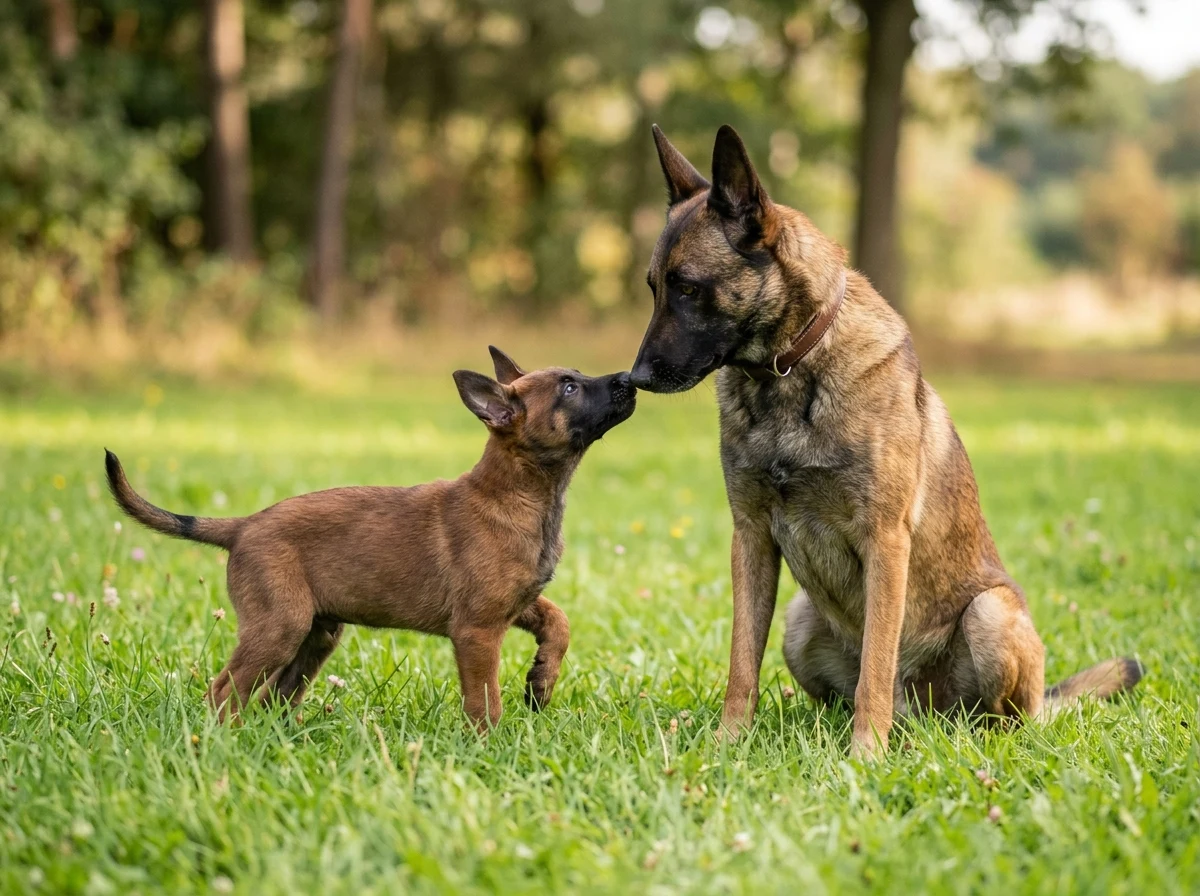
The ABMC FAQs recommend early exposure to different people and dogs, new locations, people in various activities, and leash walks in familiar and unfamiliar places. The goal is a dog who accepts these things calmly as an adult. The ABMC also says exposure to people outside the family and to varied sights and sounds should begin early and continue throughout life.
That matters for this breed. The AKC standard describes a dog that may be indifferent with strangers, and says fear or aggression is severely penalized. The ABMC says poorly bred, poorly socialized or poorly trained dogs may become shy-sharp, meaning snapping or growling from fear or aggression.
Good socialization is calm and positive, not a flood. Try this:
- Let your puppy watch new things from a comfortable distance and pay for calm curiosity.
- Introduce a mix of people: different ages, hats, uniforms, umbrellas, people carrying boxes.
- Practice short car rides, new floor surfaces and household noises.
- Arrange controlled greetings with friendly, vaccinated adult dogs.
- End each outing while your puppy is still doing well.
Your veterinarian can tell you which places are safe before vaccines are complete. The ABMC recommends a puppy socialization or kindergarten class, which is a structured way to meet people and dogs.
House Training
House training is mostly management. Puppies cannot hold it long, and a Malinois is quick enough to disappear mid-play and leave a puddle. A routine solves most of it.
- Take your puppy out first thing, after every meal, after naps and after play.
- Go to the same spot and wait quietly.
- Reward the moment your puppy finishes, right there, with a treat and calm praise.
- Supervise indoors. When you cannot watch, use a crate, a pen or a tethered spot near you.
- If an accident happens, clean it with an enzymatic cleaner and move on. Never scold after the fact.
A crate works well as a short rest space. Keep in mind the ABMC says the breed does not do well in a kennel situation and has a strong attachment to family, so a crate is a place for naps and quiet, not a place to live.
First Skills
Start with the basics, in tiny sessions:
- Name recognition and eye contact.
- Sit, down and a reliable recall in the house.
- Settling on a mat. This one is worth gold with a high-energy breed.
- Handling practice: paws, ears, collar, and a gentle brush.
The ABMC notes trainers describe everything as a game to a Malinois. Use that. Make training feel like play and your puppy will ask for more.
Months 4 to 6: Bite Inhibition and Self-Control
This is when puppy mouthing becomes a real topic, and when many owners notice the breed's drive for the first time.
Bite Inhibition
Every puppy uses its mouth to explore. Your job is to teach what is allowed, not to punish the instinct. The AKC points to the breed's high prey drive, and the ABMC says a large, very active, quick-to-respond dog should never be left unsupervised with very small or unruly children. Treat mouthing seriously, calmly and early.
- Redirect. Keep a tug toy or chew in reach. When teeth touch skin, offer the toy.
- Pause the game. If the biting continues, calmly end play for a moment and let your puppy settle. Calm returns the fun.
- Reward gentleness. Pay for soft mouths and for taking treats politely.
- Teach a release. Practice trading: offer a treat for the toy, then give the toy back. Games with rules build impulse control.
- Manage kids. Supervise every interaction between your puppy and children, and teach children to stay calm and not wave hands or squeal at the puppy.
Never use rough handling, scruffing or physical punishment. It can scare a sensitive dog and, as the ABMC warns, harsh corrections combined with poor technique cause trouble.
Impulse Control
The ABMC says the breed requires training to control its high energy and exuberance and channel it into useful activities. Add these skills now:
- Wait at doors and before meals.
- Leave it, with treats on the floor and later with toys.
- Loose-leash walking in quiet places first.
- Recall on a long line in safe, fenced areas.
Teething often runs through this stage too, so have plenty of appropriate chews. Questions about teething pain or loose teeth belong with your veterinarian.
Keep Socializing
Do not let socialization stop because your puppy now seems confident. Keep adding new people, places and surfaces. Rotate experiences so each one stays mildly interesting instead of becoming a stress test.
Months 6 to 12: Adolescence
Many owners find this the hardest stretch. The ABMC FAQs say some puppies go through temporary emotional phases in the first year. A puppy may look silly, out of control, overly exuberant, fidgety or suspicious. A well-bred, well-socialized dog outgrows these phases. The ABMC is also clear that fear or aggression in an adult is never acceptable, so do not wave away behavior that looks like real fear.
A dog that knew a cue perfectly last month may suddenly act like it never heard it. That is normal for adolescence. Stay patient and consistent.
What Helps in Adolescence
- Go back to easier steps. Lower distractions, raise rewards, and rebuild.
- Keep sessions short and frequent. Several brief sessions beat one long one.
- Give a job. The AKC rates the breed 4 of 5 for needing mental stimulation. Nose work, trick training, food puzzles and retrieve games fit well. The ABMC notes many Malinois enjoy retrieve games.
- Stay on the long line. Do not test recall in open, unfenced areas until it is rock solid, and with a prey-driven breed, that may take a long time.
- Watch for fear periods. If your dog suddenly seems wary, do not force it. Keep things light and ask your trainer or veterinarian for advice.
Prey Drive and Protective Behavior
The AKC lists the breed's watchdog and protective nature at 4 of 5, and the ABMC says a Malinois can be protective, territorial, possessive and jealous. Teach polite greetings, reward calm behavior around visitors, and avoid encouraging guarding. For moving targets such as bikes, joggers and squirrels, work at a distance your dog can handle and reward attention to you.
Exercise and Joint Care
This is where a firm rule matters. The AKC and the ABMC both stress that this breed needs plenty of exercise. We did not find breed-specific guidance from the AKC or the ABMC on when to begin hard running, jumping or other impact work in a growing puppy, so do not guess. Ask your veterinarian what is safe for your puppy's age and build, and ask your breeder what they recommend.
It also helps to know that the ABMC lists hip and elbow dysplasia among the health topics for the breed, and the OFA CHIC program recommends hip, elbow and eye screening for breeding dogs. Those are good questions to put to a breeder, and a good reason to check in with your vet about how your puppy moves.
Months 12 to 24: Maturity
A first birthday does not mean a finished dog. Many owners are surprised that their Malinois still acts like a teenager well into the second year. The sources we relied on do not give a firm age for full maturity, so watch your dog and talk with your breeder and veterinarian. The ABMC does say owners short on time or expertise may prefer an older puppy or young adult, which tells you how much work the early months can be.
Proofing and Real-World Skills
Now you build reliability. Practice every skill in new places, with new distractions and for longer periods:
- Stay, recall and loose-leash walking around people, dogs and traffic.
- Calm behavior at cafes, vet offices and busy sidewalks.
- Settling on a mat for longer stretches.
- Polite greetings with guests at the door.
The AKC standard describes a dog that is energetic yet highly responsive to its owner. That responsiveness is the payoff for the work you did earlier, so keep reinforcing it.
Giving the Breed a Job
This is the stage where many Malinois find their sport. The AKC lists agility, tracking, herding, obedience and Schutzhund competitions. The ABMC also names flyball, lure coursing, search and rescue, therapy work and more. The AKC also records working dog titles earned at American Working Malinois Association (AWMA) trials, through the ABMC and AWMA partnership.
The ABMC FAQs and the AKC also note that Malinois serve in police and military K-9 work. That is a specialized path for professionally trained dogs and handlers. The ABMC cautions that IPO and protection-bred lines have higher energy and a sharper character, and may not suit a first-time owner or family pet. If you want a sport dog, ask the breeder about the lines before you commit.
Even if you never compete, the AKC calls the breed a good running, hiking and biking companion. The ABMC says daily walks will not satisfy the dog unless the owner runs about 5 miles a day with the dog, and that a fenced yard is necessary. Build up to this slowly with your veterinarian's approval.
Keep Training for Life
Training does not end at two years. The ABMC says exposure to varied people, sights and sounds should continue throughout life. Plan refresher sessions, new tricks and new activities, and keep up a regular veterinary schedule.
A Sample Daily Schedule and Timeline Table
Use this as a template for your Belgian Malinois puppy training schedule, then adjust to your dog and your veterinarian's advice. Ages are signposts, not deadlines.
| Stage | Main Focus | Daily Rhythm |
|---|---|---|
| Weeks 8 to 16 | Socialization, house training, crate and mat, handling | Frequent potty trips, several very short sessions, supervised outings, long naps |
| Months 4 to 6 | Bite inhibition, impulse control, leash basics | Short training bursts, tug and chew time, puppy class, continued exposure |
| Months 6 to 12 | Adolescence, recall, self-control, jobs | Daily structured exercise, brain games, long-line practice, rebuilding cues |
| Months 12 to 24 | Proofing, sports, lifelong habits | Exercise and activity planned with your veterinarian, regular refreshers |
A Sample Day
- Morning: Potty trip, breakfast, a short training session, then a walk or play.
- Midday: Potty trip, a nap in the crate or pen, and a short game or puzzle.
- Afternoon: Outing for socialization or a class, then another potty trip.
- Evening: Dinner, a training session, a mat settle and some calm time with the family.
- Bedtime: Last potty trip and quiet rest.
Rest matters as much as activity. A tired, overstimulated puppy is a biting, bouncing puppy. Plan nap time into the day.
Common Mistakes and When to Get Help
Mistakes to Avoid
- Too little to do. The ABMC says behavior problems show up when the dog is underemployed or neglected. A bored Malinois invents its own jobs.
- All exercise, no thinking. The AKC says the dog needs to be engaged mentally and physically. Running alone does not teach calm.
- Skipping socialization. Early exposure shapes an adult who accepts new people and dogs.
- Harsh methods. Pain and fear tools harm trust and clash with AVSAB guidance. The ABMC warns about harsh corrections with this sensitive breed.
- Unsupervised time with young children. The ABMC advises against it with very small or unruly children.
- Too many treats. The AKC says the breed is prone to overweight.
When to Get Professional Help
Call a qualified, reward-based trainer or certified behavior professional if you see growling, snapping, fear that does not ease, or obsessive chasing. Bring in your veterinarian first for any sudden change in behavior, since pain and illness can affect temperament. Health questions, including diet, supplements and medication, are for your veterinarian alone.
Look for a trainer who uses food, toys and play, and who is willing to explain their methods. The ABMC recommends formal group obedience classes, which are a good starting point.
Final Thoughts
A Belgian Malinois can be an outstanding companion for an owner who has the time, energy and patience. The first two years ask a lot. Go stage by stage, keep it positive, keep it varied, and stay honest about what your dog needs. For the full method behind each stage, read our Belgian Malinois training guide, and check with the American Belgian Malinois Club or your veterinarian when you are unsure.
Sources
- AKC Belgian Malinois breed page
- AKC Official Standard of the Belgian Malinois
- American Belgian Malinois Club, About the Malinois
- American Belgian Malinois Club, FAQs
- American Belgian Malinois Club, Is the Malinois Right for You?
- American Belgian Malinois Club, Malinois & Children
- American Belgian Malinois Club, Working Dog Sport Committee
- OFA / CHIC Program, Belgian Malinois recommended tests