 Malinois
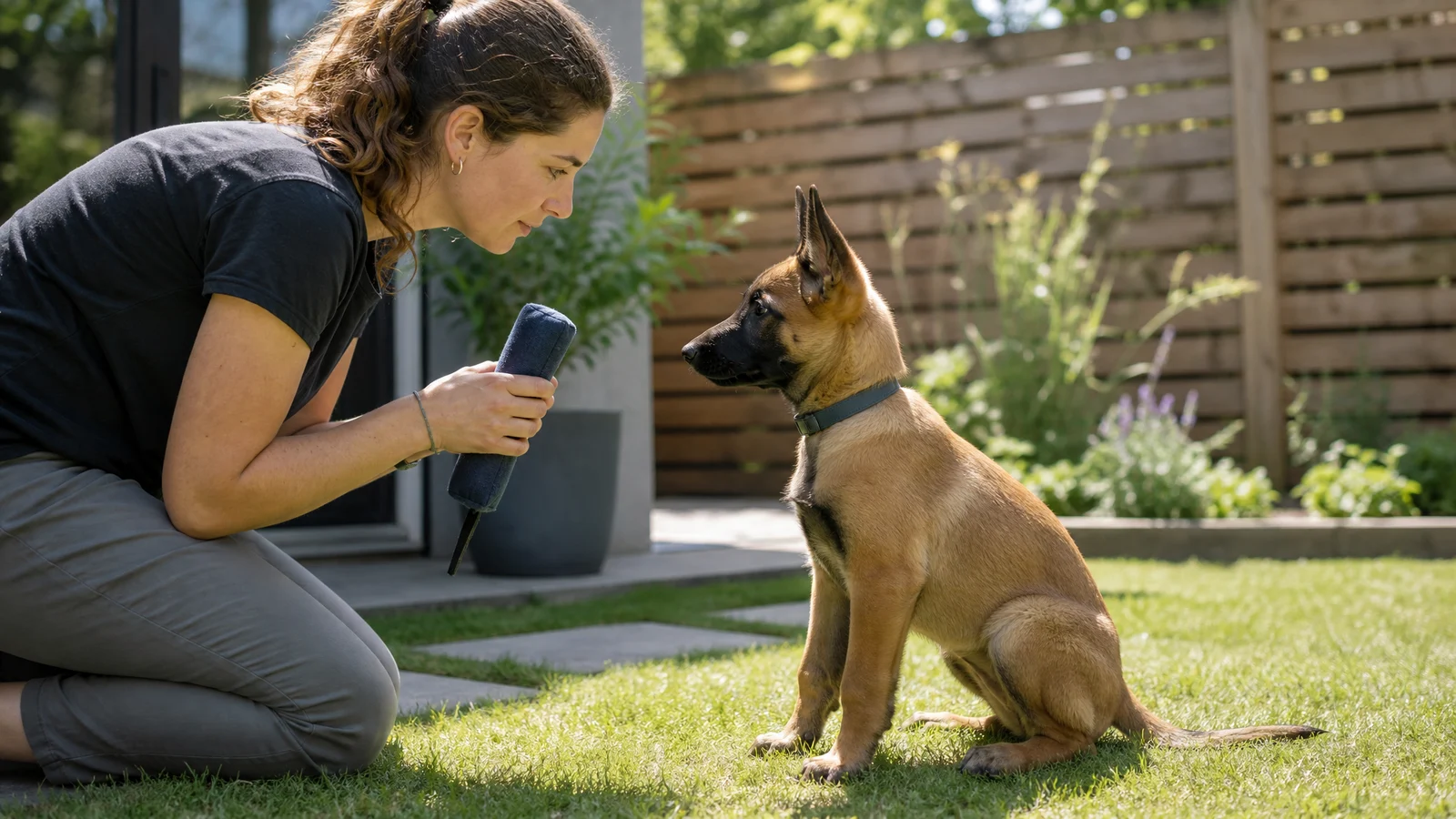
A Belgian Malinois puppy usually looks trained weeks before they behave trained. Simple cues stick fast, some owners report a wild phase in the first nine months or around age two, and those dogs settled with training and maturity. Owners ask about the brain, yet the brain is the quick part.
This guide covers what makes the Malinois so smart and what the AKC's Trainability rating of 5 of 5 really promises at home, from learning speed and the daily mental work they need to boredom habits, sensitivity and the teen months. Handled well, the breed gives you a focused and often snuggly housemate. Handled badly, a quick learner picks up bad habits just as fast.
Belgian Malinois Intelligence
Smart means something specific in this breed. They learn quickly, solve problems without being shown, and read the people around them closely. The parent club describes a highly intelligent dog bred to be taught and assigned tasks and to perform them at the highest levels. Our verdict: intelligence makes training fast, but it does not make training easy.
Learning Speed
Quick learning shows up as cues that stick after only a few rewarded repeats. A sit before the bowl goes down becomes automatic, and a wait beside a toy becomes a dependable habit. The catch is that speed has no sense of right and wrong.
Habits you never meant to teach stick at the same pace, usually because something paid off by accident:
- Whining at the crate brings you across the room, so the whine becomes a doorbell.
- Grabbing a sock starts a chase, and the puppy remembers exactly which objects start the best games.
- Barking at the door earns a trip outside, which makes barking the fastest route to the yard.
Self-Directed Thinking
The second kind of smart is independent, and it is the kind that wears owners out. A Malinois left without direction does not wait politely for instructions. They work out which of your routines predict a walk, which objects make you react, and what gets your attention fastest.
You will often hear that a smart dog more or less trains themselves. We think the opposite is closer to the truth. A smart dog teaches themselves constantly, and the lessons are whatever your household happens to reward, so direction is what turns that brain into an asset.
Eager-to-Please Temperament
The 5 of 5 Trainability mark sits at the top of a scale whose far end is labeled eager to please. It describes willingness to work with you. It says nothing about how much effort you must supply. Our verdict: the rating promises a willing partner, not a finished one.
What Motivates Them
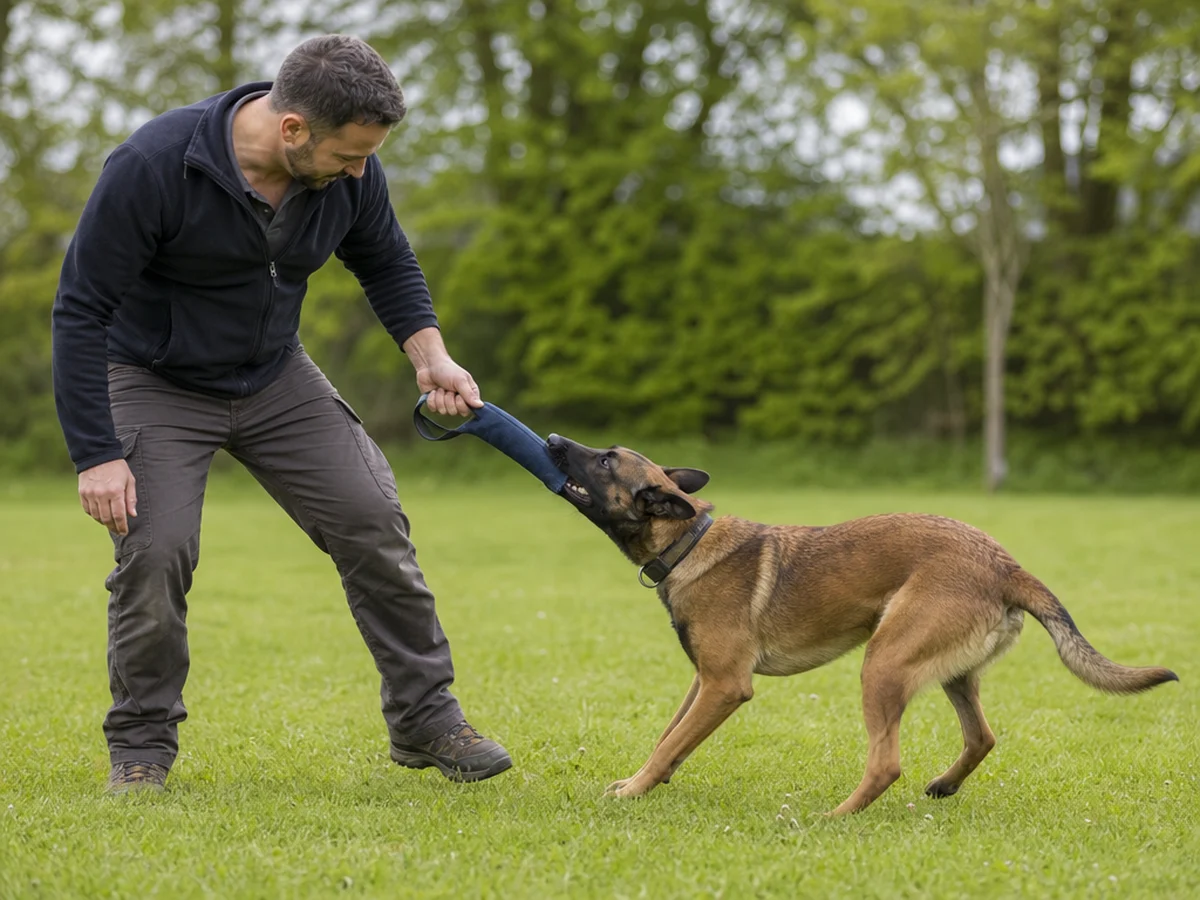
Many Malinois work harder for a ball, a toy, play or praise than for food, so owners often make the toy the main reward. Reward-based training works because a dog repeats whatever pays off, and for this breed the paycheck is often play.
Toy drive needs managing. Owners restrict access to the favorite toy, use two toys for fetch, and build a wait cue before the release. Dogs who care less about food can be coaxed along with hand feeding, scatter feeding or high-value treats such as chicken.
Focus on the Handler
This is where the rating earns its reputation. The breed standard calls the dog energetic and ready for action, yet highly responsive to the owner's direction. Malinois also form a close bond with their human partner, so most of what you do together counts as training.
Several owners report good recall and loose-leash focus despite high prey drive, including dogs who stop mid-chase when called. They credit training rather than luck, and that is the encouraging part of the rating.
Mistakes Learned Just as Fast
Intense ball drive is the clearest example of a habit going wrong. Some owners see shaking from adrenaline, barking, jaw snapping and other unwanted tendencies once play ramps up. Short sessions with rest between them help keep arousal manageable, and ending while the dog still wants more leaves them eager for the next round.
Temperament and Mental Work
The same breed page that gives the top trainability mark rates mental stimulation needs at 4 of 5, near the end of a scale that finishes at needs a job or activity. Our verdict: this temperament expects brain work every day, not as an occasional treat. Work means anything that makes them think and finish a task alongside you.
Owners point to several kinds of work that satisfy the breed:
- Scent work, tracking, agility and dock work, which suit many Malinois well.
- Everyday tasks such as helping with farm chores or keeping the household on schedule, which some owners say satisfy even rescue dogs of uncertain background.
- Meals turned into foraging, since food puzzles slow eating and give the brain a task.
- Short obedience practice in public near distractions, which owners credit with calm, controlled behavior.
Exercise helps, but it does not replace thinking. Owners describe needing anywhere from about an hour of intense activity to 2–3 hours a day, after which the dog settles or is tired. Be skeptical of the slogan that a tired dog is a good dog, because a good exercise routine may improve unwanted behaviors but is unlikely to fix them completely.
Space matters less than engagement. Some Malinois live well in an apartment or small yard when their exercise and mental needs are met, while others do better with more room. A yard alone does not do the job, and neither do daily walks.
This is general information, not veterinary advice. Check with your veterinarian about how puzzle meals, scatter feeding and training treats fit into your dog's daily food amount, and how much exercise suits their age and joints.
Temperament and Boredom Damage
The parent club puts it bluntly: an underutilized dog is a frustrated dog, and without intensive, long-term training Malinois will create their own activities, which can be destructive. Our verdict: the early signs are small, and most boredom habits are fixable while they are still new. The stubborn ones are habits that have been rehearsed and rewarded for months.
Common Boredom Habits
Boredom rarely arrives as one dramatic event. It shows up as a handful of habits that are easy to excuse as personality.
- Invented games such as stealing objects or chewing furniture, usually when the house goes quiet.
- Intense puppy biting that ignoring does not stop, including night-time outbursts after waking or after a noise.
- Jumping, spinning or chain biting around other dogs, which points to arousal more than boredom.
- Overarousal around a favorite ball, with shaking, barking or jaw snapping.
- Chasing anything that moves, which fits the breed's strong interest in moving objects.
- Frustration and distraction in a puppy who cannot find the target in a search game.
Quick Fixes
Most fixes give the energy an acceptable destination. For biting, owners report crate time-outs with a reward for calm, tug toys, chews and tug-then-settle games, though results were sometimes mixed. For reactivity around other dogs, they report gradual improvement from calm handling, praise and chicken.
For chasing, steer the instinct into activities you control, such as scent games and sports. For a puppy frustrated in searches, make the next find easier and help them refocus. Habits that are deeply set deserve a qualified trainer using reward-based methods, plus regular vet visits to rule out a physical cause.
Belgian Malinois Sensitivity
An attentive dog notices more, and the Malinois reacts to changes in people and surroundings. Our verdict: this temperament rewards calm, predictable, clear handling and struggles with chaos. Owners who treat sensitivity as a feature get a dog who tunes in rather than shuts down.
Tone matters because they read your mood. A frantic, excited voice raises arousal in a dog already prone to overarousal, while even praise and a steady marker word keep focus. Owners who dealt with arousal around other dogs report that calm handling with praise and chicken brought gradual improvement.
Pressure works the same way. Pushing for more in a distraction-heavy moment tends to produce a dog who cannot think, so start public obedience practice at a distance where success is easy and close the gap slowly. Because the breed may be indifferent or reserved with strangers, plan introductions to new people with food and praise rather than hoping for the best.
Inconsistency is the quiet problem. A dog who learns this fast also learns which family member lets things slide. Agree on a short list of cues and house rules before the puppy arrives, and predictable days give a sensitive dog fewer reasons to invent their own plans.
Adolescent Temperament Timeline
The arc owners describe is a quick early start, a mid-stage dip and late manners. Our verdict: treat the ages below as a typical shape, not a schedule, because drive and pace vary a lot from dog to dog. What you build early is what you meet again later.
Puppyhood
You will hear advice to wait until the puppy is older before starting. We disagree, because learning has no waiting period, and early socialization and obedience training are musts for this breed. Begin with short sessions, calm exposure to new people and places, and rewards for settling.
The Teenage Slump
Some owners report a wild or destructive phase in the first nine months or around age two that settled with training and maturity. Cues that were solid at home may suddenly seem optional outside. Owners describe poor listening despite heavy exercise, leashing for fear of bolting, and relying on an enclosed park for reliable obedience, all sensible management while the dip lasts.
Settling Into Adulthood
Several owners describe adult Malinois who are calm, snuggly and non-destructive at home, with the intensity saved for play and exercise. Others report mellower dogs, often show-line, rescue or older, who still carry notable prey drive, while some describe extremely driven dogs. Even comparisons disagree, since some owners say a working-line German Shepherd has more energy and others say a Husky does not compare.
You will also hear that they will grow out of it. We would say they grow into whatever you taught, which is why the work in the awkward months matters.
Living With a Belgian Malinois Mind
A smart, eager Malinois is easy to train only for an owner who supplies structure and a job. Give them daily tasks, short training sessions, puzzles and real rest, and the quick learner becomes a settled partner. Leave them to their own devices and the same brain invents the projects.
The picture is not grim. Some owners report Malinois who have been livable and trouble-free in the house, including across four dogs, and say a high-energy dog is not unmanageable. Keep regular vet visits on the calendar too, so a physical cause is never mistaken for a training problem.
These are the questions owners ask next:
- What can a pet owner borrow from working-dog methods? Start with our complete training guide.
- How do you teach calm when you leave? See crate calm and alone time.
- Why does walking turn into lunging? Try loose-leash walking skills.
- Is your dog herding the kids? Read about where the herding instinct can go instead.
 Puppy trainingA Malinois Training Timeline From Puppy to Age Two
 Exercise and jobsHow High Can a Belgian Malinois Jump? Teaching Wall Manners
 BehaviorBelgian Malinois Herding the Kids? Give Their Instinct a Job