 Malinois
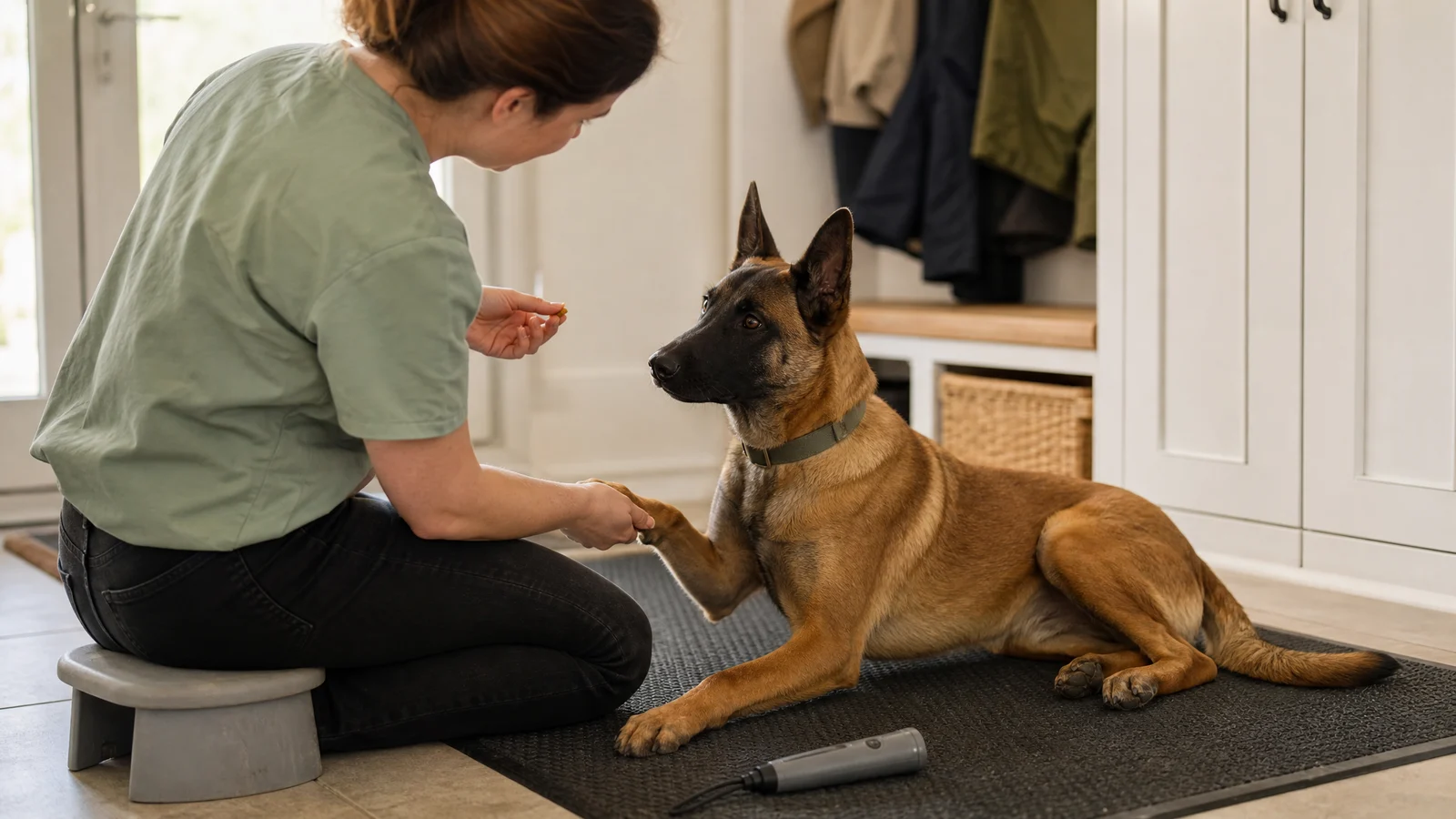
The usual advice is to handle your dog's feet often, trim nails in short sessions and run your hands over their body each week. The breed standard even calls the Belgian Malinois a natural breed with no need for excessive grooming.
In practice, a Malinois often tenses up, wriggles and pulls a paw away the moment a tool appears. We have trained this breed for many years, and the fix is nearly always a smaller step than you planned.
In this article, we'll go through tiny starter touches, treat timing, breaks your dog controls, staged nail work with clippers or a grinder, and a weekly body check. Done well, your dog offers a paw and stands steady at the vet.
Start Handling and Grooming Small
Start with one touch and one treat, and call that a full session. Malinois are eager to please and quick to learn, so a small win teaches fast and makes the next touch easier.
Tiny steps also protect you from a bad first memory, which sticks in an observant dog. Some dogs dislike having their feet touched, so build acceptance well before any nail tool appears, ideally from puppyhood.
Plenty of guides say to hold a wriggling dog still and finish fast. With this breed, rushing only teaches your dog to resist sooner next time, so shrink the step instead. Adults can learn all of this too, on a slower ladder.
The First Touches
Use a non-slip floor with your dog standing or sitting beside you. Keep treats in your pocket and stop after a few touches.
- Rest a flat hand on the shoulder, then feed a treat.
- Slide your hand a little way down the leg, then feed.
- Rest one finger on top of the paw for a moment, then feed.
- Cup the paw while your dog stays put, then feed.
- Raise the paw a hair off the floor, set it down, then feed.
Moving Up a Step
Advance when your dog leans into your hand, looks soft and loose, or turns to you for the treat. Repeat each step across several days before you change anything.
If your dog stiffens, drop back to the last easy step. Once touch feels welcome everywhere, work gradually toward handling ears, lips and paws, restarting each new area at one touch and one treat.
Touch Sensitivity in Belgian Malinois Handling and Grooming
The standard describes an alert dog with a questioning gaze, ready for action. On the grooming mat, that means a Belgian Malinois who tracks every hand movement and reacts in a flash.
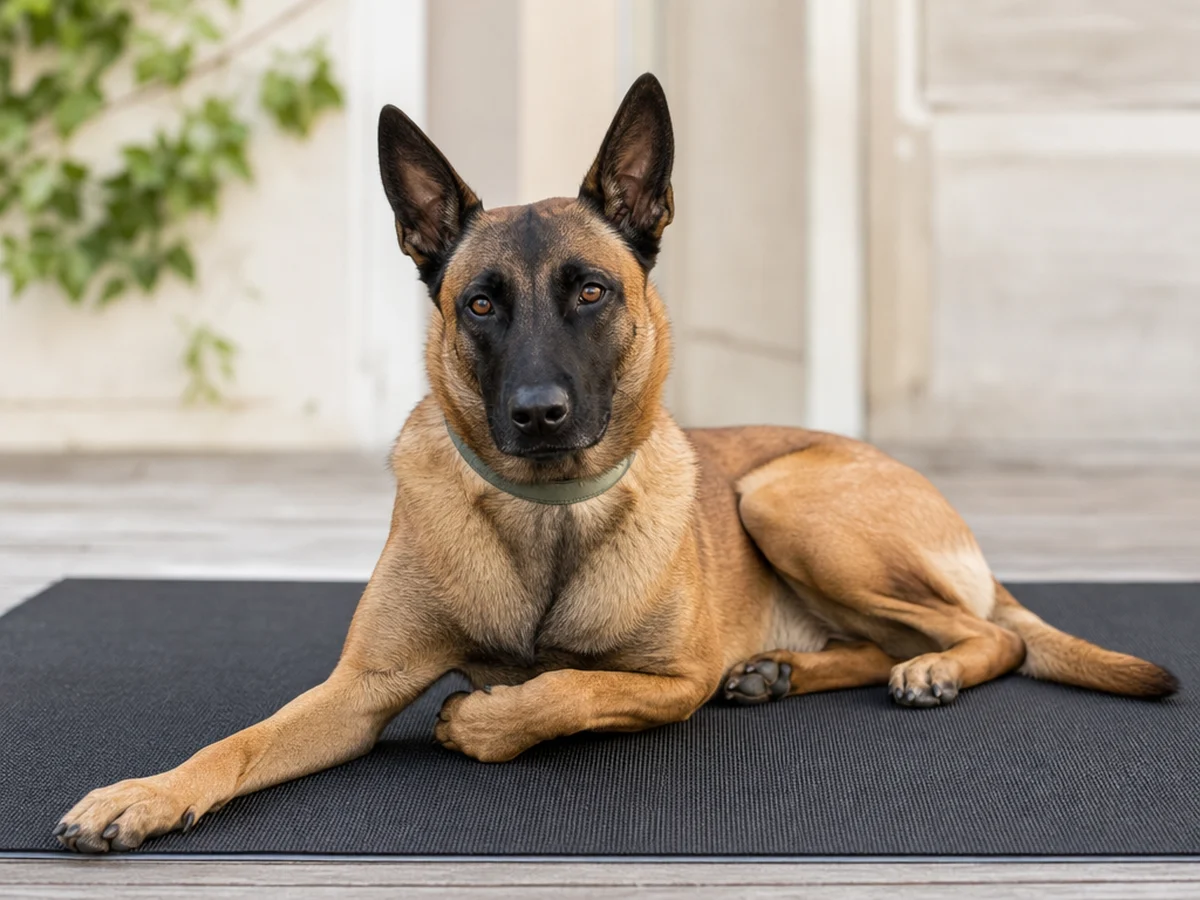
A snapped-back paw is not stubbornness. Your dog reads you closely, so calm, predictable hands work better than firm ones.
This breed also rates high for energy and mental stimulation needs. Handle after a walk or a short training game, because a dog bursting with energy cannot hold a paw lift.
Signs of Tension
Learn the early warnings so you can ease off before a wriggle becomes a scramble. These are the common ones.
- The body goes stiff, the mouth clamps shut and your dog holds their breath while you touch a paw.
- The leg locks or the paw snatches away, and a second try meets a harder pull.
- Your dog spins, circles or paces, which this breed does readily when wound up.
- They mouth your hands or stare at the tool instead of the treat.
- A dog who normally loves food turns their head away from the treat.
Signs of Ease
A relaxed Malinois has soft eyes and a loose body, and they take treats gently instead of grabbing. They may lean into your hand or shift their weight so you can lift a paw.
A long breath out, or lying down mid-session, is a great sign. Mark the moment with a treat and a calm word, then end there if you can.
Watch your own body as well. Quick movements, tight grips and a held breath travel straight down your hands to a dog who reads people this closely.
Pair Handling and Grooming With Treats
Every touch should predict food, and the order matters. Touch first and treat second, so your dog learns that a hand on the paw makes snacks appear.
Over many repetitions, the paw itself becomes the good news. For a dog this quick, timing is the whole skill.
Timing the Treat
Choose one short marker word and say it the instant your hand lands. Deliver the treat right after, while the paw is still held, so the food pays for staying.
As steps get harder, treats during and after clipping keep the whole experience positive. Hold your food hand steady and close so your dog never leaves position to eat.
Choosing the Food
Pick small, soft, smelly treats that your dog values above everyday snacks. Tiny pieces let you reward again and again without a pause for chewing.
Leave the tug and the ball out of these sessions. Toys wind up a high-drive Malinois, and you want calm here, so save play for the moment the session ends.
If treats stop working mid-session, your dog is telling you something. Stop, make tomorrow's step easier, and bring better food.
Your Dog Sets Grooming Breaks
Let your dog say when they need a pause, and honor it every time. A Malinois who learns that a turned head ends the touch stops needing louder protests, and trust builds fast.
This breed was bred to be taught tasks, so a clear job with a clear exit suits them. Treat a break signal as part of the job, never as defiance.
Teach a Start Signal
Give your dog a way to say go on. Many learn to rest their chin in your palm or place a paw on your knee, and you touch only while that stays put.
When they move away, stop touching and wait. If they return to position you continue, and if they stay away, the session is over.
Honoring a Break
Lift your hands, drop your shoulders and wait quietly. Give a treat for calm rather than for escaping, so leaving never becomes the winning move.
Restart one step easier than where you stopped. Finish on a touch your dog finds simple, so the last memory is a win.
If your dog mouths your hands, hold still and offer a chew in place of the tussle. Then shrink the next session so mouthing has no room to start.
Nail Grooming Comes in Stages
Nail work is a ladder, not a single event. Your dog should be happy with the paw lift before any tool comes near, and every rung earns food.
Most dogs need time to accept clippers or a grinder. Trimming, or only pretending to trim, one nail a day with a treat and praise afterward builds toward fuss-free trims.
Clippers
Set the clippers on the floor and feed your dog for looking at them. Next, touch the closed clippers to a shoulder, then a leg, then a paw, feeding each time.
When that is easy, hold the paw and rest the clippers against a nail, then treat. After that, snip only the very tip of one nail, feed generously and stop for the day.
Grinder
The buzz and vibration are new, so separate them. Run the grinder across the room while your dog eats, then bring it nearer over several sessions.
Next, touch the silent grinder to the paw, then the running grinder to the paw, then briefly to one nail. Grind a touch, feed, and quit before your dog tires.
Building the Routine
Once one nail is easy, add a second, then a third, spreading the paws across the week. Short sessions beat marathons for a dog who winds up fast.
If you are unsure how much nail to take, ask your vet or a groomer to show you. Watching once saves a lot of guessing.
Weekly Belgian Malinois Body Checks
A weekly check turns handling into routine and helps you catch problems early. The short coat makes it easy, because lumps, cuts and ticks show quickly when you part the hair.
Shedding is moderate, so a weekly pass with a soft brush or rubber mitt keeps loose hair down. Many dogs find it feels like a massage.
The Head-to-Tail Routine
Work in the same order each time so your dog can predict what comes next. Feed throughout and linger on the touchy areas.
- Look at the eyes and lift each ear flap to check for redness, debris or a strong smell.
- Lift the lips and glance at teeth and gums.
- Run your hands along neck, shoulders, ribs and belly to feel for lumps, scabs or ticks.
- Lift each paw, spread the toes and check pads and nails for cracks, cuts or burrs.
- Finish at the tail and hindquarters, then give a big reward.
Coat and Skin Basics
Part the short hair with your fingertips and look at the skin. Check armpits, groin and between the toes, where an active dog collects burrs and nicks.
Note anything new and raise it at regular vet visits, the right place for questions about lumps, skin or ears. This breed is reserved with strangers, so have a friendly helper handle your dog with treats now and then and exam tables feel normal.
Calm Handling and Grooming for a Belgian Malinois
A smart, tuned-in dog like this rewards patience. Every calm touch you pay for now becomes a dog who offers a paw, tolerates the grinder and stands steady for the vet. For the next two weeks, follow this plan, keeping each session short and ending it whenever your dog signals a break:
- First few days: touch shoulders, legs and paws, one treat per touch, and practice the start signal.
- Rest of week one: hold and lift each paw, then run your first full head-to-tail check over the weekend.
- Early week two: show the clippers or grinder at a distance, then touch the tool to a paw, feeding at every step.
- Later in week two: touch the tool to one nail and trim or grind a sliver if your dog is relaxed, then repeat the full body check at the weekend.
The main thing to carry forward is that handling is a small job you teach in pieces, and your Malinois does it best when it stays generous and under their control. Keep the steps tiny, honor every break, and nail trims and body checks settle into one more easy routine you share.
 BehaviorHome Alone Practice for a Belgian Malinois Who Shadows You
 BehaviorOne Alert Bark, Then Quiet: Belgian Malinois Barking Manners
 Training basicsWhy Are Belgian Malinois So Smart? Trainability at Home