 Malinois
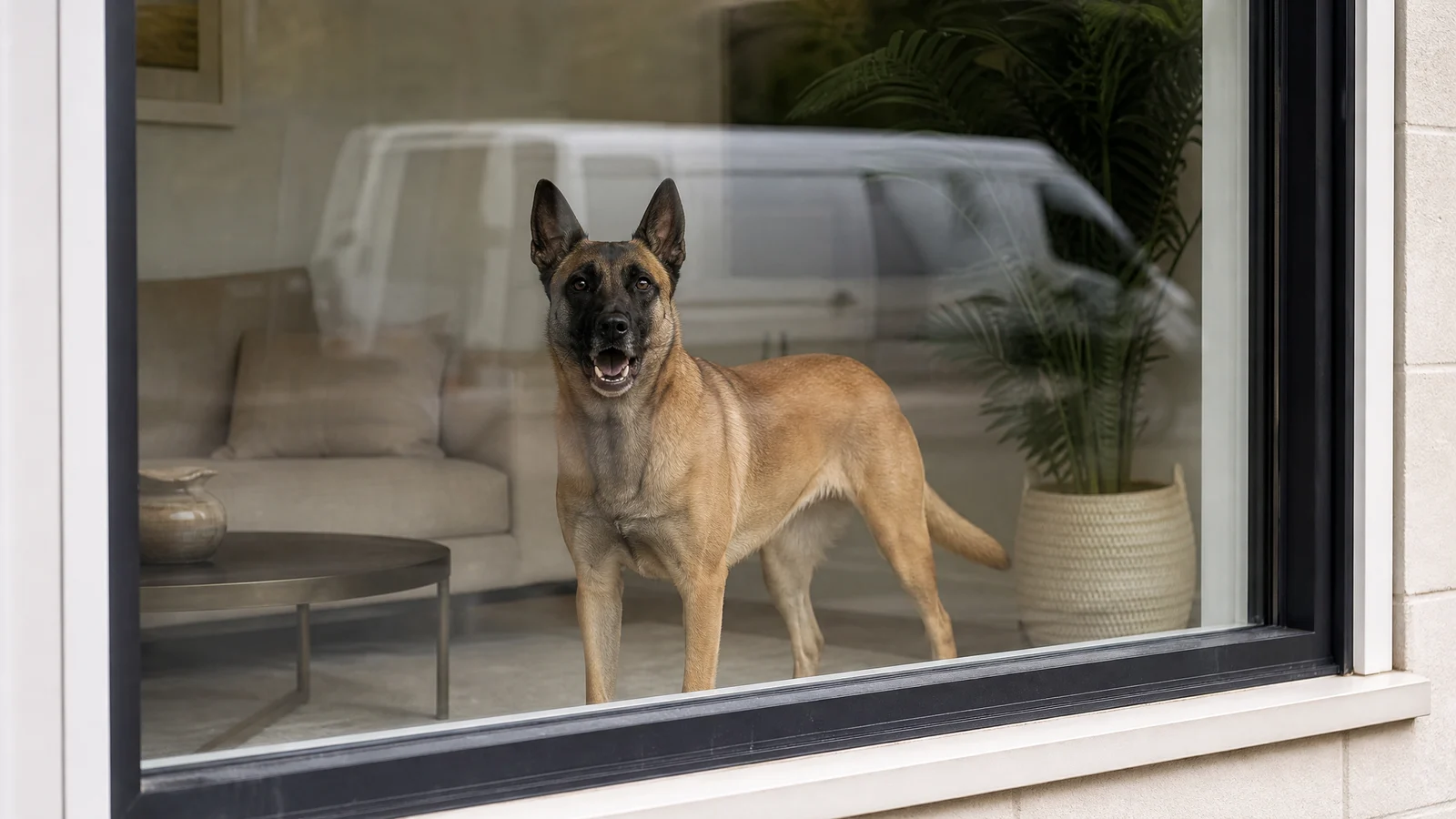
Alert barking is easier to shape before it has been rehearsed many times, because every long round of barking makes the next one more likely. A quiet cue can be taught at nearly any age, but earlier is easier because less long barking has been rehearsed.
This breed was made to notice change, so a Belgian Malinois with a clear street view and no plan can turn announcing into a full-time job. With a plan, you get one clear bark and a dog who then looks to you.
Below, you'll find four training stages that normally fill several weeks of daily practice, including how to allow one alert, reward the pause, teach a quiet cue and a settle spot, and cut the triggers. We specialize in Malinois behavior and training, so each step is written to be used the same day.
Weeks One to Two Let Barking and Alerting Happen
Stage one feels backward because you let your dog bark. For the first two weeks you are not teaching quiet, you are showing a watchful dog that the report was received.
The breed standard calls the Malinois an exceptional watchdog with an expression of alertness and attention. Asking that dog to ignore every noise asks them to switch off what they were bred to do.
One Alert Versus a Chain
A doorbell that rings once is useful, and a stuck button is the real problem. Your dog's bark works the same way.
An alert bark is one bark or a very short burst about a change, such as a car door or steps on the porch. Chain barking repeats and rises, which means the dog has stopped reporting and started reacting.
What to Do in the Moment
Run the same routine every time your dog alerts. Keep it boring and predictable.
- Stay relaxed and let the first bark finish.
- Walk to the spot your dog is facing and look out for yourself.
- Say thank you in the same flat, friendly voice each time.
- Turn away from the window and carry on, so your dog sees the matter is handled.
Food stays in your pocket this week. The treat arrives in stage two, for the quiet that follows.
Your calm thank you is the phrase that becomes the cue later. If your dog slides from one bark into a chain, jot down the time and trigger, then read the section on why that happens.
Rewarding the First Quiet After Alerting and Barking
Stage two begins when your dog's alert barks are brief and predictable. Now you pay for what comes right after the bark, which is the first moment of quiet.
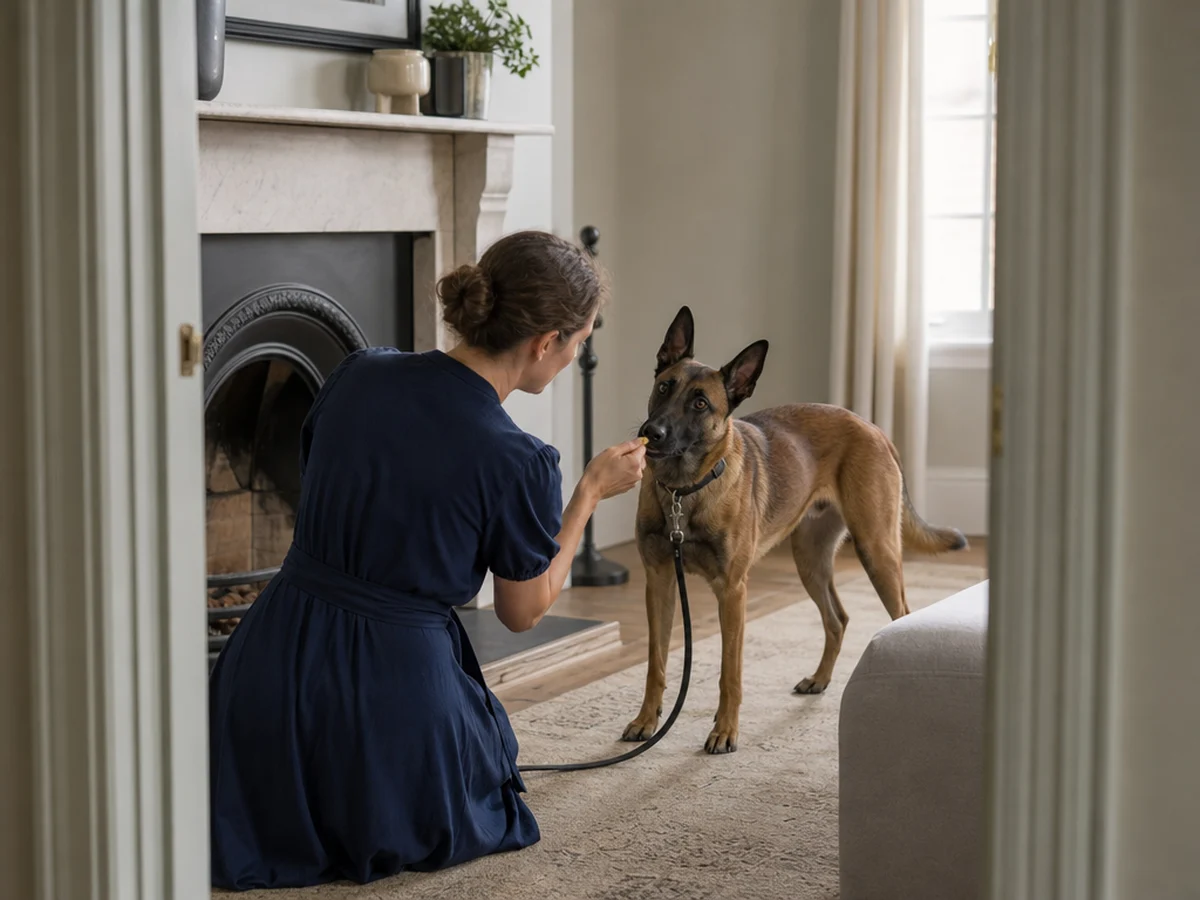
Dogs link a reward to whatever they were doing just before it arrived. A treat that lands during the bark pays for barking, and a treat that lands in the pause pays for the pause.
Mark the Pause
A marker word is a short, bright sound that signals food is on its way for whatever your dog did a moment ago. Say yes the instant the mouth closes, then deliver a treat.
Keep tiny soft treats in a jar near the window where alerts happen. The marker only works if food follows it every single time.
Build Repetitions Without Waiting for the Street
The street will not supply enough practice. Ask a helper to knock softly, or play a recorded doorbell at low volume, so you collect several pauses in one round.
Malinois rate 5 of 5 for trainability and 4 of 5 for energy, so rounds should be brief and lively. Stop each round while your dog is still eager for one more try.
A pause that lasts a moment still counts, and a second treat can follow if the quiet holds. Move on when pauses follow most alerts without you waiting for them.
Why Does a Belgian Malinois Keep Barking After Alerting?
When a dog gives one bark and then carries on, the cause is usually one of three things. Each points to a different fix.
Watchfulness That Stays Switched On
The Belgian is a herding dog by heritage, and herding rewards noticing every change. The breed also has a strong interest in moving objects, so cars, passersby and squirrels keep attention locked long after the first bark.
Reserve with strangers adds to it. A person who lingers near the fence keeps the alert going until they leave.
A Habit That Has Been Rehearsed
Each time a dog barks and the trigger walks away, the barking seems to work. A dog with a clear sidewalk view can rehearse that dozens of times a day.
That is why cutting the view matters as much as the cue. A later section shows how.
A Need That Has Gone Unmet
Malinois demand active interaction with their owner, mentally and physically, and an underused dog becomes a frustrated one. On mental stimulation needs, the AKC scores the breed 4 of 5, and daily walks alone are not enough.
If barking arrives with pacing, chewing or digging, read why a Malinois wrecks the house and add real work to the day. Treat the whole restless pattern rather than the noise alone.
When to Adjust the Plan
If you cannot get a pause after several tries, you are too close to the trigger or your dog is too wound up. Lower the volume, add distance, or stop and try later.
If barking suddenly jumps, look for a change nearby first, such as a new dog next door, construction or a bird feeder by the glass. Remove or soften that new trigger before adding practice.
Teaching a Quiet Cue for Barking and Alerting
Stage three starts when pauses arrive reliably. Now you add a word so your dog learns that it means quiet and that a reward follows.
A cue is a signal that tells your dog which behavior pays right now. Yours is thank you, the same calm phrase from stage one.
The standard describes a dog both energetic and highly responsive to direction. That responsiveness is why the cue often clicks quickly.
Attach the Word to the Pause
Follow this order, and move through it over several days of practice. Repeat an easier day whenever barking builds.
- Let your dog give an alert bark, then say thank you once in a level voice.
- When the pause arrives, say yes and give a treat.
- Repeat across many alerts until the pause follows the cue nearly every time.
- Practice the word in quiet rooms too. Say it, wait for a glance, then mark and treat.
Say the cue once. A cue repeated louder just becomes part of the noise.
Lengthen the Gap Before the Reward
Once the cue works, wait one breath longer before you say yes. Then add another breath, a little at a time.
If the barking restarts, you stretched too far. Go back to the last gap that worked, pay well, and build again more slowly.
When the quiet holds, hand out extra treats at uneven intervals. Quiet that gets paid unpredictably stays strong.
Does a Belgian Malinois Need a Settle Spot?
For most of them, yes. Quiet means doing nothing, which is hard for a working breed, so stage four gives the quiet a task.
Malinois are bred to be taught and assigned tasks, and a mat is an easy assignment: walk there, lie down, collect payment. Territorial barking has a real motive behind it, and a mat gives that urge somewhere to go.
Teach the Mat on Its Own First
Place a mat or bed where your dog can see you but not the window. Toss a treat onto it, let them step on, and reward again while they stay.
Practice until your dog heads for the mat when you point. Then add a chew or food puzzle there, since staying busy is easier than staying still.
Link the Mat to the Alert Routine
Now run the whole chain. One alert bark, thank you, the pause, yes, then a point to the mat and a treat on arrival.
Over time the mat becomes the place where waiting gets paid. Wild play just before settling can leave a dog wired, so see how to keep ball and toy play calm.
The Four Stages Side by Side
This table lays out the stages so you can plan each practice day. Move on only when your dog succeeds most of the time.
| Stage | Focus | What you pay |
|---|---|---|
| One, weeks one to two | Allow one alert and acknowledge it | Your attention, no food |
| Two | Catch the first pause | A treat for the pause |
| Three | Add the cue, lengthen the gap | A treat for quiet after the cue |
| Four | Walk to the mat | A treat and a chew on the mat |
Cutting Down Triggers Behind Barking and Alerting
Every alert you prevent is one less rehearsal, and a dog who is not constantly provoked learns faster. The aim is fewer reasons to bark while the watchdog still gets an occasional real alert.
Windows and Sound
A Malinois drawn to moving objects will lock onto the sidewalk, so the window is often the biggest trigger. These changes cost little.
- Cover the lower part of street-facing windows with frosted film or blinds, so light comes in and the sidewalk view does not.
- Move couches and perches away from glass doors and windows that face the street.
- Run a fan or soft background sound near the busiest entrance to blur footsteps and car doors.
- Leave one window with a distant view uncovered, so your dog can still do their job without constant provocation.
Fence Lines and Yard
This is not a dog who can be left in the backyard, and a solo yard turns every passerby into practice. Go outside with your dog.
Add a solid screen or planted border along the stretch of fence where people walk by. Less to see means less to announce.
Routines and Sound Practice
Watch for predictable moments, such as mail delivery or school pickup. Shortly before the usual time, send your dog to the mat with a chew so the trigger arrives while they are busy.
For visitors, work on greetings with our guide to socializing with strangers. For sounds, play low-volume recordings and raise the volume only while your dog stays relaxed.
A Belgian Malinois Who Alerts Once, Then Settles
Expect the alert to stay for your dog's whole life. A watchful Malinois will still announce a new voice, a delivery truck or an odd noise at night.
What changes is recovery. With months of steady practice, the aim is a dog who barks once, hears thank you and heads for the mat before you reach the window.
Plan small refreshers when the seasons change, when windows open in warm weather, after a move, or when a new noise appears. Go back to stage two for a few days and pay generously for pauses.
Keep daily mental work in the routine, because a dog with a job has less need to invent one. Keep regular veterinary visits on your calendar as well.
Treat one clear bark, a glance at you and a quick walk to the mat as the dependable adult pattern, and expect it to return faster after every new season, move or noise. A Malinois who gets steady work, a settle spot and payment for quiet will keep reporting what matters and then hand the rest to you.
 Training basicsWhy Are Belgian Malinois So Smart? Trainability at Home
 Puppy trainingA Malinois Training Timeline From Puppy to Age Two
 Exercise and jobsHow High Can a Belgian Malinois Jump? Teaching Wall Manners