 Malinois
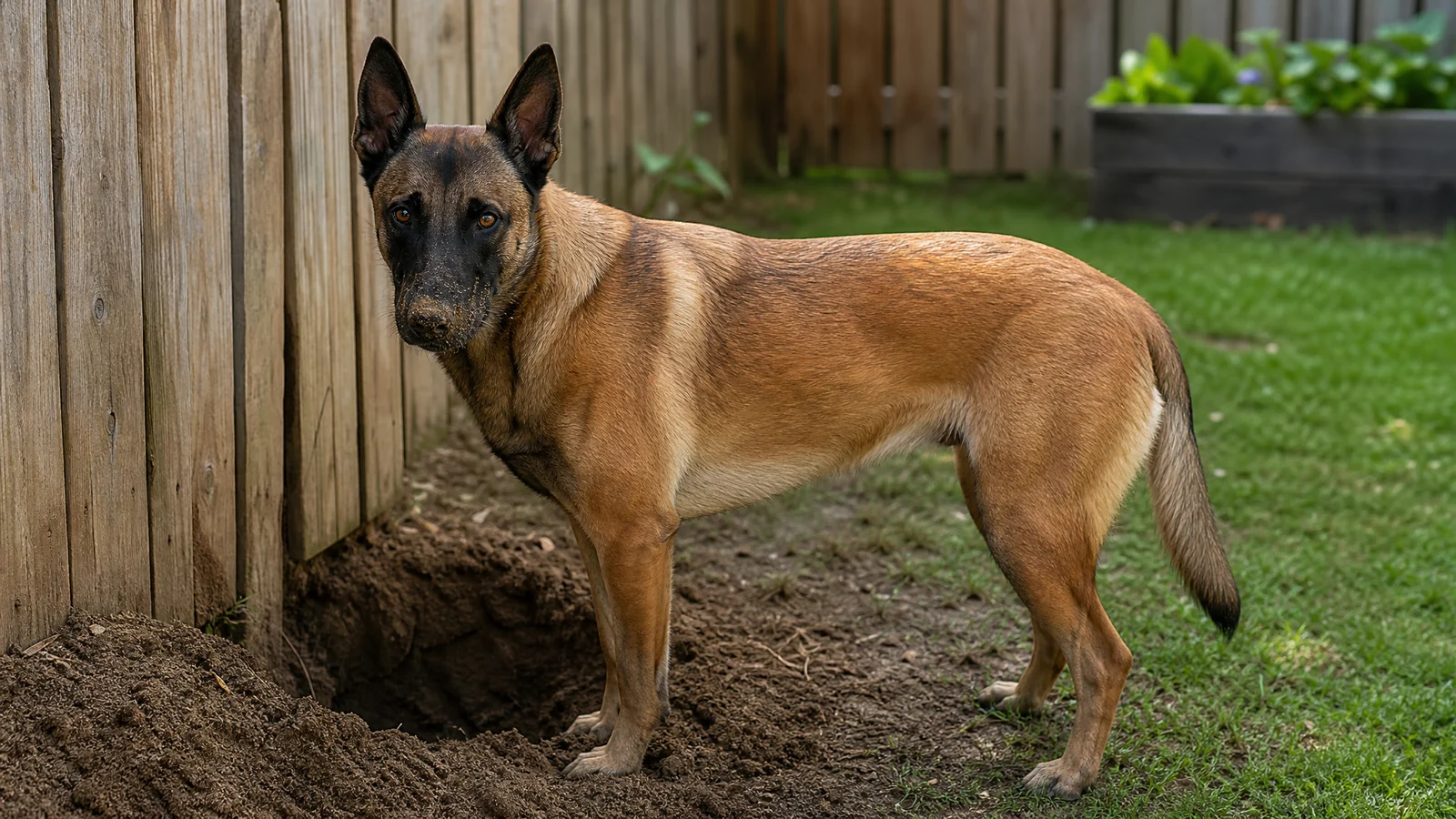
The parent club warns that without intensive, long-term training, Malinois create their own activities, and those activities can be destructive. Owners of the Belgian Malinois describe the result: a dog who knows sit, down and heel, passes every drill on paper, and still eats the sofa.
Below, you'll find the damage owners see most, including chewing, digging, dusk pacing and door shredding, each traced to its cause and paired with a sport or household job that answers it. We have trained this breed for many years, and the fix is rarely more miles. It is a task with a start and a finish. Scent work, tracking, agility and dock work suit many Malinois, and a dog who gets that work gives back a calm evening and an intact house.
Chewed Furniture and the Dog Sports Fix
What you see: sofa arms, baseboards, shoes and door trim gnawed while you are home. The ratings explain it. Energy rates 4 of 5, and mental stimulation also rates 4 of 5, where 5 means the dog needs a job. A walk spends the first number and leaves the second untouched.
Why the Sofa Becomes the Task
Play, chase, smell and chew are daily needs for every dog, and without enough stimulation they invent their own outlets. Malinois are bred to be taught and assigned tasks, then to carry them out at a high level. With no assigned task, the nearest object becomes one.
Owners often respond with more miles. That rarely fixes it. Daily walks are not enough for this breed, and a backyard alone is no answer. Chewing stops when the work is real, not when the dog is merely tired.
Outlets That Replace the Sofa
Run one of these for ten minutes, then hand over an approved chew in the same spot every day. Keep the routine brief enough that your dog still wants more.
- Structured tug: you start the game on a cue, the dog releases on out, and restarting the game is the reward for letting go.
- Retrieve to hand: throw a toy, ask for the return and trade it for the next throw. A breed rated 5 of 5 for trainability learns this fast.
- Scent search: hide a toy or treat just out of sight, release the dog to find it and mark the find.
Build a Second Reward
Many Malinois value balls, toys, play and praise over food, so the toy does most of the paying. That works until the dog is too wound up to play.
A dog who ignores food can often learn to value it. Owners report success with hand feeding, scatter feeding and high-value treats such as chicken. With two rewards available, a session can keep going.
Yard Craters and Dog Sports Outlets for Digging
What you see: holes along the fence, a crater by the door, paws raking the carpet or the couch cushions. Digging is effort with no target. The persistence that makes this breed good at tracking and scent work will turn a lawn to dirt when nothing else is on offer.
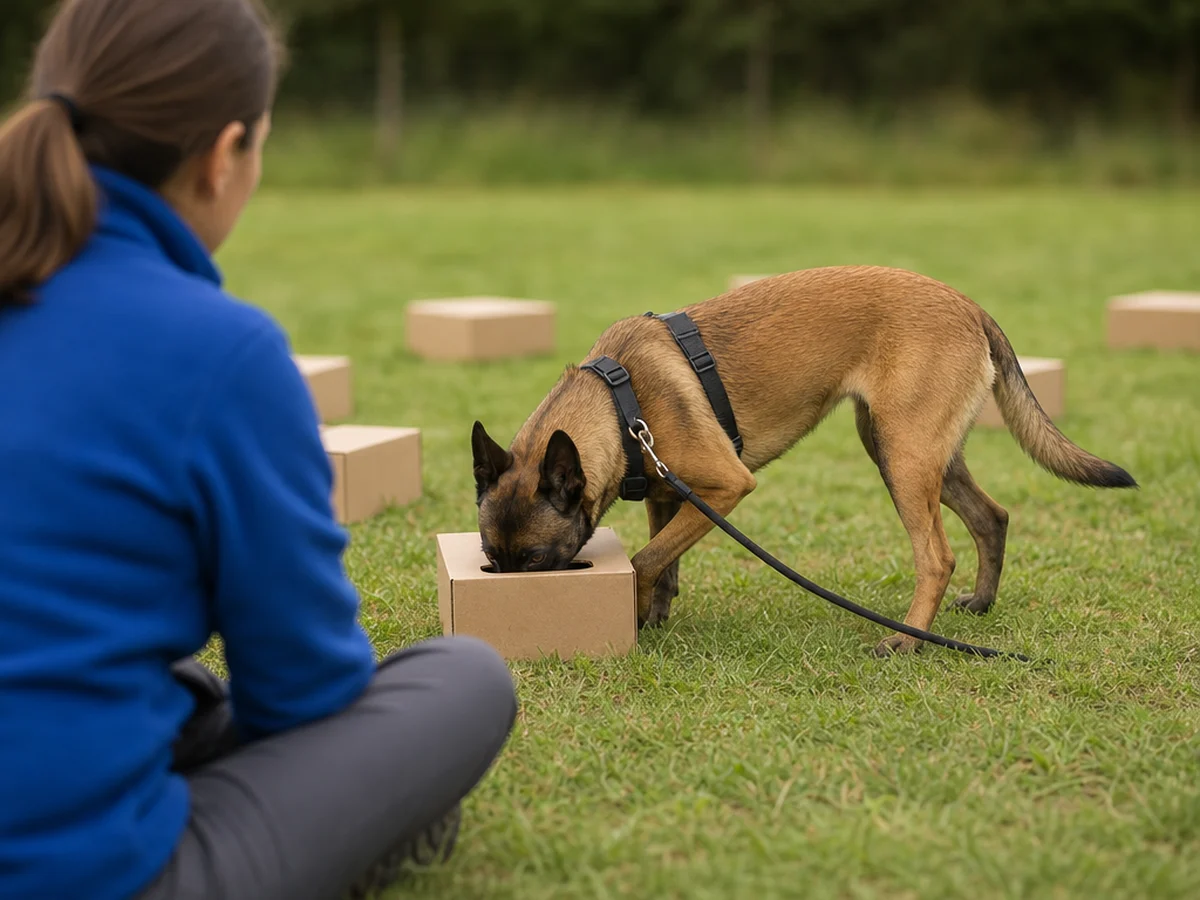
More yard time does not fix it. This is not a dog to leave alone in the backyard, and unsupervised hours out there are digging practice. Go out with the dog and give the effort a legal target in this order:
- Choose one patch of ground or a shallow box of loose soil and bury a toy or treats there.
- Cue dig at the patch and reward the find with praise and the toy.
- When the dog digs elsewhere, calmly walk them to the patch and reward there.
- Move the search onto your cue. Hide a toy in the grass, release the dog with find it and mark the find.
- Lay a short trail of treats across the lawn and let the dog follow it by nose. This is the first step toward tracking.
Indoor digging at carpet or cushions gets the same answer: a scent game on your cue, followed by a chew. Tracking and dock work give those paws a bigger job later, once the basic search is solid.
Belgian Malinois Pacing and Whining at Dusk
What you hear: nails on the floor, the same loop through the rooms, whining at windows from late afternoon. This is pent-up drive with no finish line. The day held no task that ended, so the dog keeps looking for one.
Why Dusk Is the Worst Hour
The breed standard calls the Malinois vigilant yet responsive, and watchdog nature rates 4 of 5. Dusk brings movement and sound outside. Add energy at 4 of 5, a quiet house and a morning walk that ended hours ago, and the dog patrols. The breed also needs active interaction from the owner, so a dog who has watched you all afternoon without a task will pace for one.
Move the Work and Change Its Type
Schedule the main session in late afternoon, before the pacing starts. Choose thinking work over speed: a scent search, a short run of obedience patterns or a new trick. Fast fetch alone can leave a dog higher than before.
Finish every session the same way, with a cue such as done and a chew on a mat. That ritual is the finish line the evening lacked.
Give Evenings Real Household Jobs
A job does not have to be a sport. Owners describe dogs who keep them on schedule, and dogs who help with farm chores such as the chickens, donkeys and outside work.
Some report that a long daily walk plus helping around the property keeps their dogs happy without formal training. Dogs of uncertain background, including rescues, often do well once they hold several roles at home.
Door Shredding and Spinning in a Belgian Malinois
What you see: scratched frames, torn carpet edges and chewed wall corners near an exit, with a dog who spins at the door. Two different problems produce this. Frustration is drive with nowhere to go. Anxiety is distress. They need different plans.
Frustration or Panic?
Use the pattern of the damage to sort them. The location and timing point to the likely cause.
- Frustration usually shows when you are home. The dog is shut out of a room, stares at a closed door or spins with excitement, and relaxes after a work session.
- Anxiety is more likely when damage happens only after you leave and the dog refuses treats or toys while alone.
- Hurt paws, torn nails or a damaged mouth from the damage point to panic and call for your veterinarian.
- Spinning that continues when you call the dog or offer a treat is a sign to get help rather than keep training alone.
Fix Frustration at the Door
Teach the door as a cue. Cue a sit, crack the door open slightly and reward the dog for staying put. Release with a word.
Before you leave, run a ten-minute search game and give a chew. If spinning starts, call the dog calmly to a mat and reward the first still moment. Trainability rates 5 of 5, so this builds quickly.
When to Call a Professional
Book a vet visit first to rule out medical causes. If panic signs remain, call in a behavior professional trained in reward-based methods. Do not wait for a destroyed door.
Which Dog Sports Suit a Destructive Belgian Malinois?
Choose by symptom, not by trend. The table pairs what you see with the likely cause and a sport that answers it.
| Symptom | Likely cause | Sport that fits |
|---|---|---|
| Chewed furniture | Drive with no task | Scent work, obedience patterns |
| Digging | Search effort with no target | Tracking, scent work |
| Dusk pacing | No finish line to the day | Scent work, obedience |
| Door damage from excitement | Frustrated drive | Obedience with stays |
| Chasing movement | Herding and prey drive | Herding, dock work |
| Reckless speed and jumping | Athletic drive without control | Agility foundations |
Herding and Chasing
Like most herding breeds, Malinois have a high prey drive and a strong interest in moving objects. Chasing children, vehicles or other animals should be directed into acceptable activities. Herding is the most direct outlet for that instinct, since it gives the chase and the focus on moving stock a proper job.
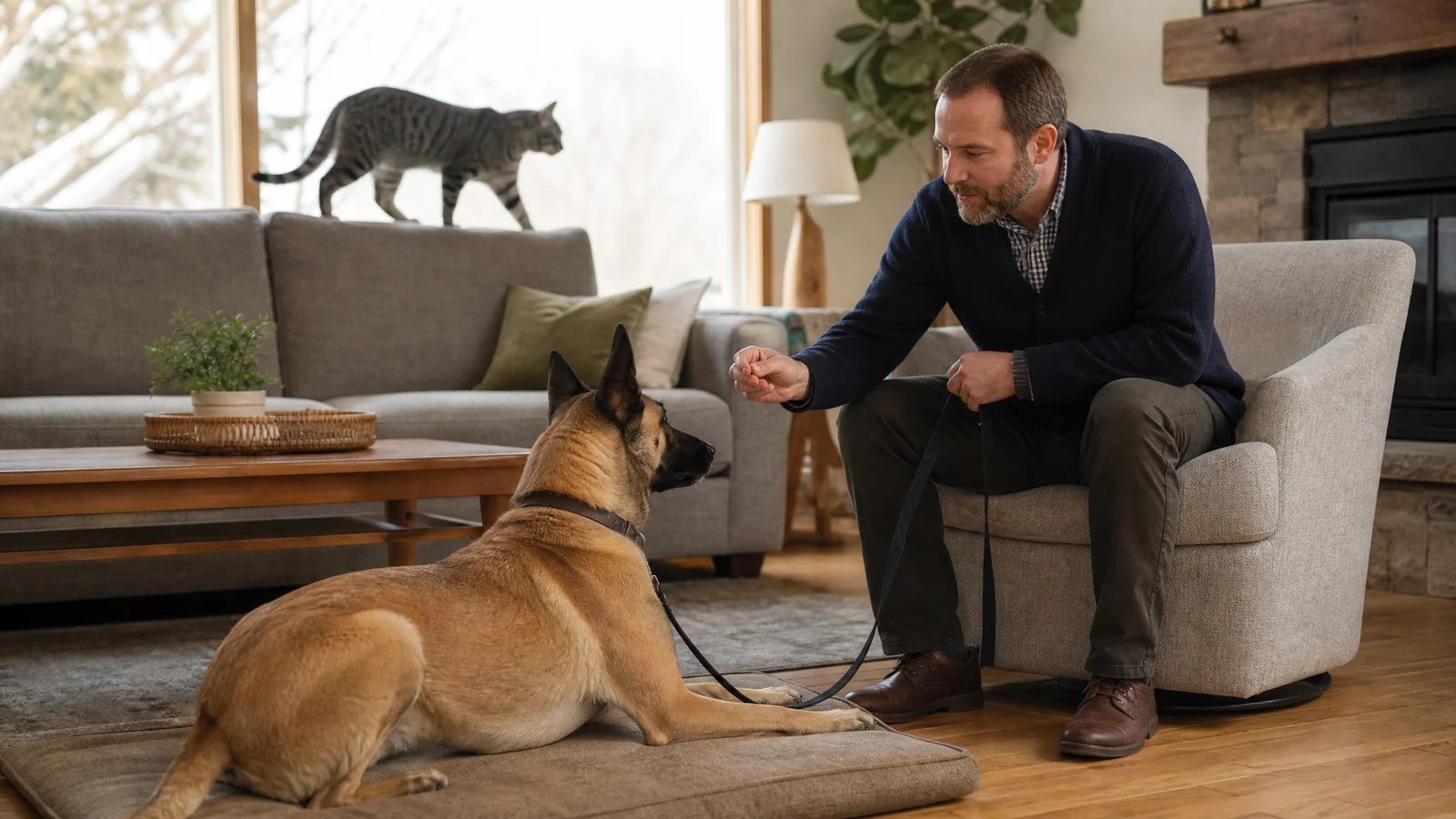
Several owners also report good recall despite high prey drive, including dogs who stop mid-chase when called. Our guide to turning back mid-chase builds that skill, and giving herding instinct a job covers the household side. Small animals need careful supervision because chase instinct can spill toward them. Introduce a puppy to cats slowly and reward calm behavior.
Agility Needs Manners First
Agility rewards speed, and speed is the easy part. Control is the skill. Settle jumping habits first and teach wall manners before any equipment appears. Early socialization and obedience training are musts for this breed, so obedience patterns suit almost every dog on the table.
When the Search Frustrates Them
A young dog starting search work can grow frustrated and distracted when they cannot find the target. Coach the refocus. Make the next search easier, reward any move toward the target and call the dog back to you for a reset. Refocusing is a skill, like sit.
Building a Dog Sports Week Around Calm Rest
More sport does not always mean a calmer dog. Add intensity without rest and you build a more wound-up Malinois. Structure and routine help dogs learn best, and adaptability rates only 3 of 5, so a steady weekly pattern beats constant variety. Trainability rates 5 of 5, which means the dog will keep going. You end each session.
The sample week below pairs each session with settling practice. Adjust the sports to your own.
| Day | Sport session | Settling practice |
|---|---|---|
| Monday | Scent search, ten minutes | Mat and a chew afterward |
| Tuesday | Obedience patterns with stays, ten minutes | Down on the mat while you cook |
| Wednesday | Tracking trail or ground-level agility | Mat and a chew afterward |
| Thursday | Tug and retrieve with rules, ten minutes | Calm time near you with a chew |
| Friday | New trick with a toy reward, ten minutes | Down on the mat during dinner |
| Weekend | Saturday longer outing for tracking or dock work, Sunday no drills | Household jobs and a relaxed walk |
Rest Days Still Have Jobs
Rest means no drills, not no life. The walk and household tasks continue, because an idle Malinois invents a job by afternoon. Keep regular vet visits on the calendar too, and ask your vet before adding jumping or fast turns.
Practice Settling Like a Sport
Reward the dog for lying on a mat, then lengthen the time slowly. Practice with household noise nearby, then after a session, when the dog is most wound up. A dog who can switch off on cue is a better sport partner and a better housemate.
Ten Minutes of Dog Sports Starts Today
Pick a toy or treats your dog loves. Let the dog watch you place the item in an easy spot, such as just inside a doorway. Release them with a word, mark the moment they find it and reward on the spot. Each round, hide it a little farther away. Stop at ten minutes while the dog is still eager, then hand over an approved chew.
Afterward, write one line: how quickly the dog settled and whether any chewing, digging or pacing followed. Mark it easy, so-so or hard. After a week of notes, the pattern shows which hour needs the next session. The breed rates 4 of 5 for mental stimulation, and a Malinois will always find work. Assign the job before the dog invents their own, and run the first ten minutes today.
 BehaviorMalinois Quirks: Pacing, Circling and Never Switching Off
 BehaviorCats, Chickens, Little Dogs: Training a Prey-Driven Malinois
 BehaviorMalinois and Kids: Supervision Rules That Keep Everyone Safe