 Malinois
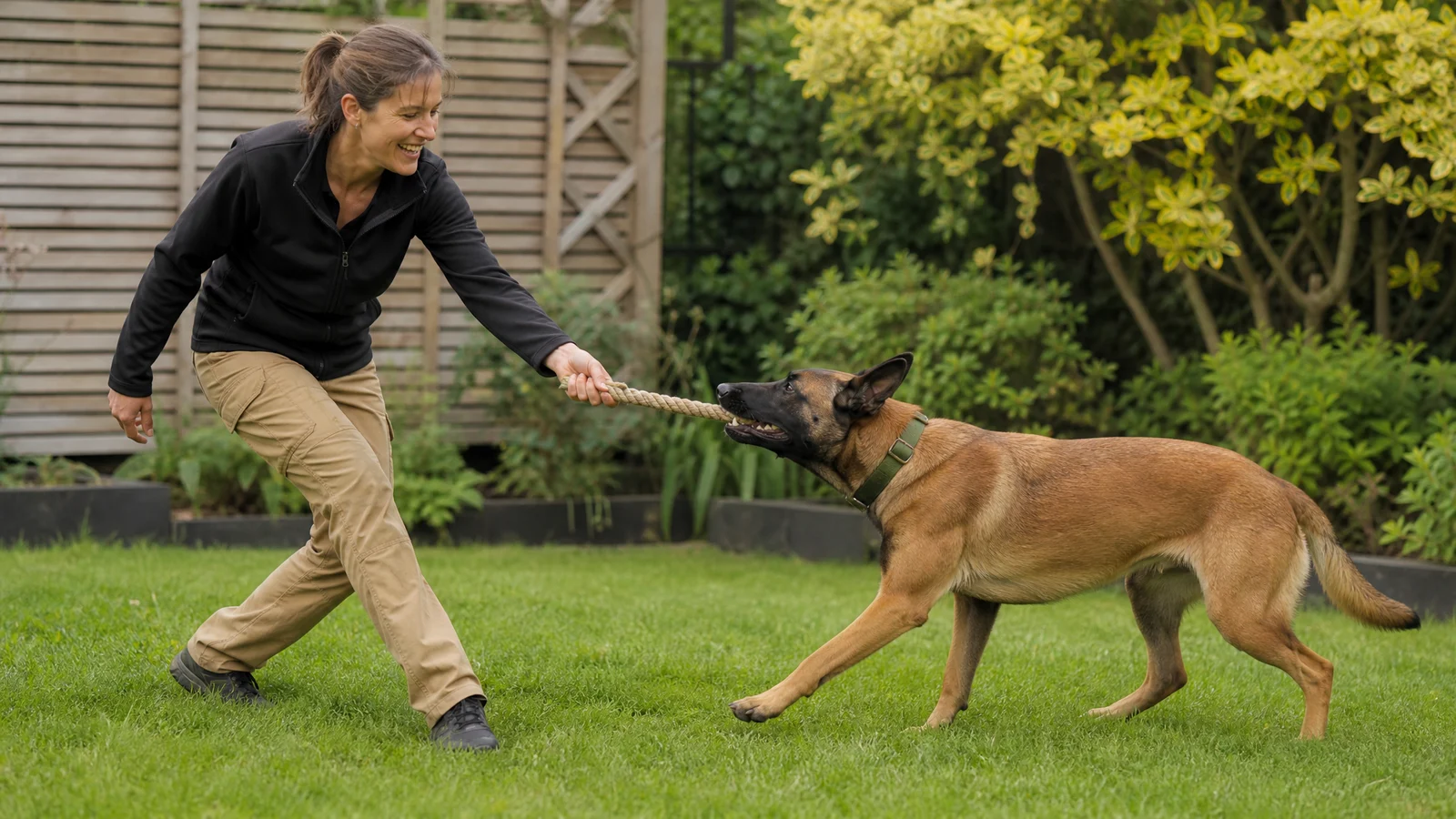
Yes, tug is one of the best outlets for a Belgian Malinois, as long as the game has rules: it starts on your cue, the dog grips the toy and nothing else, and the toy is released when you ask. The reason is the grip itself. Many Malinois take hold eagerly and hard, and many work harder for a toy or play than for any food, so the same instinct that puts teeth on your sleeves is the one that makes tug such a powerful reward.
Handled badly, that grip lands on hands, ankles and sleeves, and the games get wilder every week. Handled well, you get a dog who can be thrilled one moment and settled the next. This article looks at biting and gripping in the Malinois from the toy outward, so you can choose a toy, run tug with clear rules, respond calmly when teeth touch skin, and teach a dependable out.
Belgian Malinois Biting and Gripping Compared With German Shepherds
The breed standard describes a square, elegant, well-muscled dog who is alert and full of life, with a marked tendency to move in a circle rather than a straight line. Expect tug to be quick and acrobatic, with spins and re-grips, not a slow, heavy pull.
Do not assume the Malinois is always the more intense one, either. Drive differs widely from dog to dog. Some owners find a working-line German Shepherd has more energy than their Malinois, and others say even a Husky does not compare to their Mal's drive. Show-line, rescue and older dogs are often mellower, yet many still carry real prey drive, so judge your own dog's first minute of play, not the label on the breed.
Choosing the Right Tug Toy
That shapes your toy choice. A mellow dog may be happy with a soft rope, but an eager gripper needs a sturdy toy with a handle or loop, long enough that your hand stays well back from the teeth. Keep the best toy for tug only and store it out of sight. Some owners restrict access to a favorite toy to keep the frenzy low, and our guide to ball and toy play covers what to do when the fixation grows.
The grip is not a flaw to be erased. Malinois are bred to be taught and assigned tasks and to perform them at the highest levels, and the parent club is blunt that an underutilized dog is a frustrated dog. Tug is a task you can assign tonight.
Free-for-All Tug Versus Tug Rules for Gripping
Common advice says to let the dog win, let them growl, and keep everything loud and wild so they stay happy. Some of that is true. The trouble is who ends up running the game.
Why Free-for-All Tug Lets Grips Wander
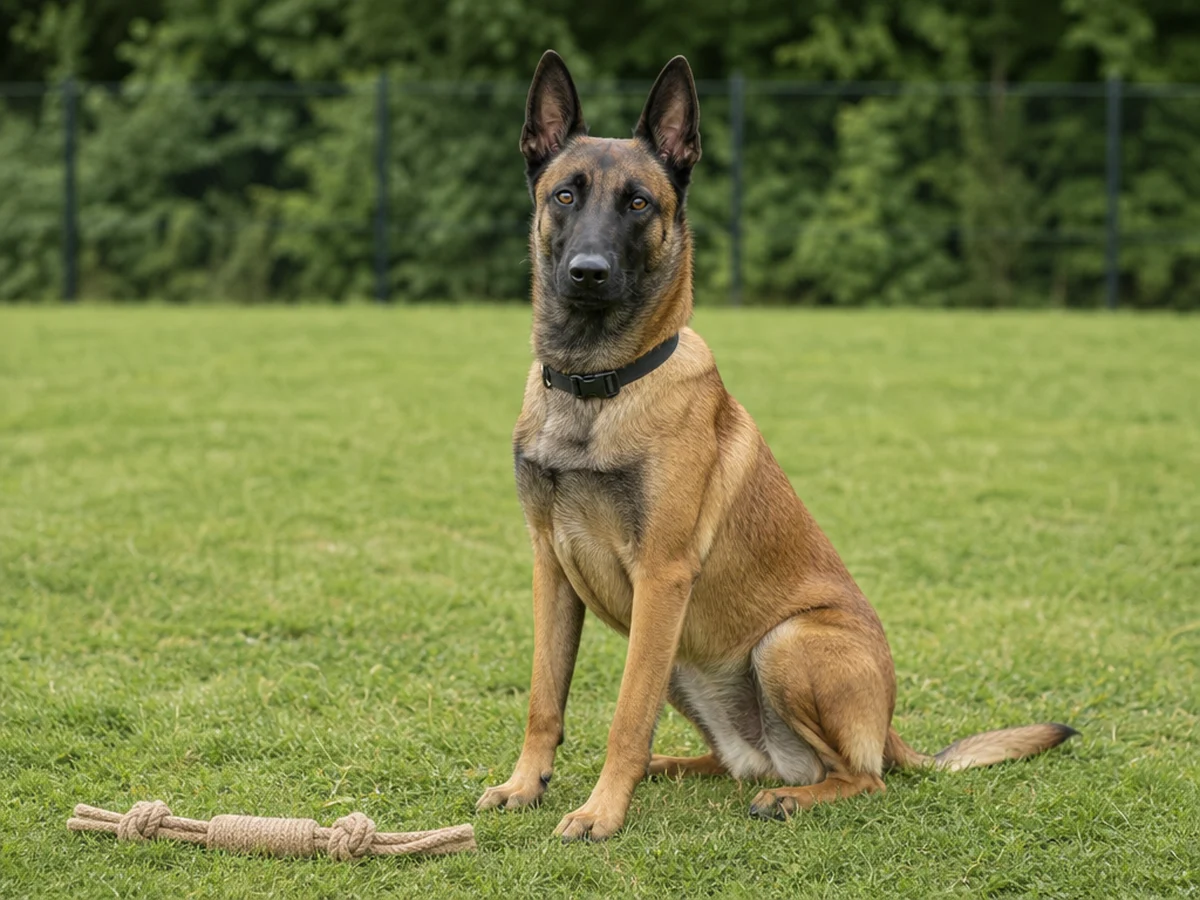
In an unstructured game the dog decides when tug starts, where the teeth go, and when it ends. With a Malinois the grip creeps toward your hand as arousal climbs, and some owners report that intense toy drive tips into shaking, barking and jaw snapping. A play growl is just noise. A mouth that keeps sliding toward skin is the sign that the game has outgrown its rules.
Letting the dog win is fine too, with one edit: win after releasing, not instead of it. When the toy goes back to the dog only after an out, winning becomes the pay for letting go, and a Malinois will happily practice that all day.
Tug With Rules, Step by Step
Structured tug works because every part of the game has a signal. These rules work together.
- The toy lives out of sight and appears only when you decide, so the game always starts on your cue.
- Ask for a sit or a "wait" first, then invite the grip with a cue word such as "take it." Some owners build the wait before the reward, and it gives all that eagerness something calm to do.
- Only the toy is a target, and if teeth touch skin or clothing the game ends calmly.
- Say "out" and hold the toy still, and the dog earns either a treat or the game starting again.
- Finish while the dog is still keen. Short sessions with rest between rounds help keep excitement down.
Because many Malinois care more about a ball, toy or play than about food, use the toy as the main pay and keep treats as a second reward. Rules make the toy more exciting, not less, because the dog learns that the game only exists when they follow them.
Puppy Mouthing Versus Adult Belgian Malinois Biting and Gripping
Puppies explore with their mouths, and a Malinois puppy does it with remarkable commitment. Owners of young puppies report intense biting that simply ignoring did not stop, including outbursts at night after waking or after a noise. A puppy who loves to grip will test every sleeve and ankle, so guide the grip early instead of waiting for it to fade.
Owners report some help from short crate time-outs with a reward for calming down, plenty of chews, a tug toy offered in place of a hand, and tug-then-settle sessions where a game ends with the puppy relaxing. Results are sometimes mixed, so treat it as a steady habit built over weeks, not a one-day fix. Keep puppy tug gentle and brief, with the same cue to begin and the same out to finish.
Potty Breaks After Play
Excitement and bladders go together, so take the puppy outside right after play. Puppies can generally wait about an hour per month they have lived, so at 3 months expect to head out every 3 hours.
An adult is a different animal. The same eager grip now comes with real size and strength, and habits that were cute at a few months become bruises. Some owners report a wild or destructive phase in the first nine months or around age two that settled with training and maturity.
If that phase turns toward wrecked furniture, real work for a frustrated Malinois belongs in your plan. Schedule regular vet visits as well, and report any abrupt shift in how your dog uses their mouth.
Teach the rules while the jaws are small, and keep them as the jaws grow. Early consistency makes the adult game easier to manage.
Toy-Only Gripping Versus Biting Hands
A Malinois learns where teeth are allowed by what happens when they land. Make hands and sleeves dull. Keep your hands still and low during play, never wiggle fingers near the mouth, and let the toy do the moving, because a flapping arm looks just like a tug toy to a dog in the mood. A long toy with a handle keeps skin out of range.
Pay the right grip generously. When the dog takes the toy cleanly, keep the game going. Food helps with hands too. Owners report building food motivation through hand feeding, scatter feeding and high-value treats like chicken, which gives you a second reward besides the toy. Hands that deliver chicken become hands worth watching, not biting.
When teeth land on skin or clothing, respond the same way every time. Use this sequence consistently.
- Go still and stop moving the toy. Do not yank your hand away or squeal, because flapping and noise look like more play.
- End the game calmly by taking the toy out of sight, with no scolding.
- Stand quietly or step away for a short pause so the dog learns that teeth on skin make the fun stop.
- Once the dog settles, ask for a sit, reward the calm, and either restart on cue with a slower, easier version or end the session.
- If it keeps happening, the game is too exciting. Shorten the rounds, lower the intensity and add rest.
If the pause brings barking, our notes on frustration barking explain why and what to do. Consistency matters more than any single response, because the dog is reading the pattern.
Teaching the Out for Belgian Malinois Gripping
Teaching a drop cue and rewarding every release builds trust around valued items. The dog learns that giving something up brings something good back, so letting go becomes the thing that pays. That is what the out is for.
Trading Toy for Treat
Start with a toy the dog likes but does not adore. Hold it still, bring a treat to the nose, and say "out" as the mouth opens. Mark the release and feed, with chicken if food is not their favorite. Then say "take it" and give the toy straight back. The dog learns that releasing makes the game continue, which is the lesson a toy-crazy Malinois needs.
A second identical toy helps. Keep it in your other hand, say "out," and offer it the moment the first one drops. Raise difficulty slowly with a more exciting toy, faster tug and more movement, and rebuild the cue in new places in small steps, because a release that works in the living room may vanish in a busy park.
Freezing When the Grip Gets Hard
When the dog bites down and thrashes, stop pulling. Hold the toy against your body and go still like a tree. With nothing to fight, dogs usually loosen. Then cue the out, pay, and restart on your terms. If the dog will not let go, end the game calmly and try again later with an easier toy.
A calm freeze gives the dog nothing to win from the struggle. Wait for the release before restarting play.
One Tug Rule for Biting and Gripping Today
Start tonight with one rule: the toy comes out only on your cue, and tug stops the moment teeth touch skin. Keep the toy hidden until you decide to play, ask for a sit, invite the grip with your cue word, and if a tooth meets skin or a sleeve, the toy disappears and you step away calmly. Come back when the dog settles, and begin again on cue.
This one rule does the most work because it covers both ends of the game. Many Malinois are relaxed, even snuggly, in the house, and the intensity shows up during play and exercise. A dog who gets a structured outlet for that grip often settles well afterward, so the same toy that once caused chaos becomes the tool that brings the evening calm.
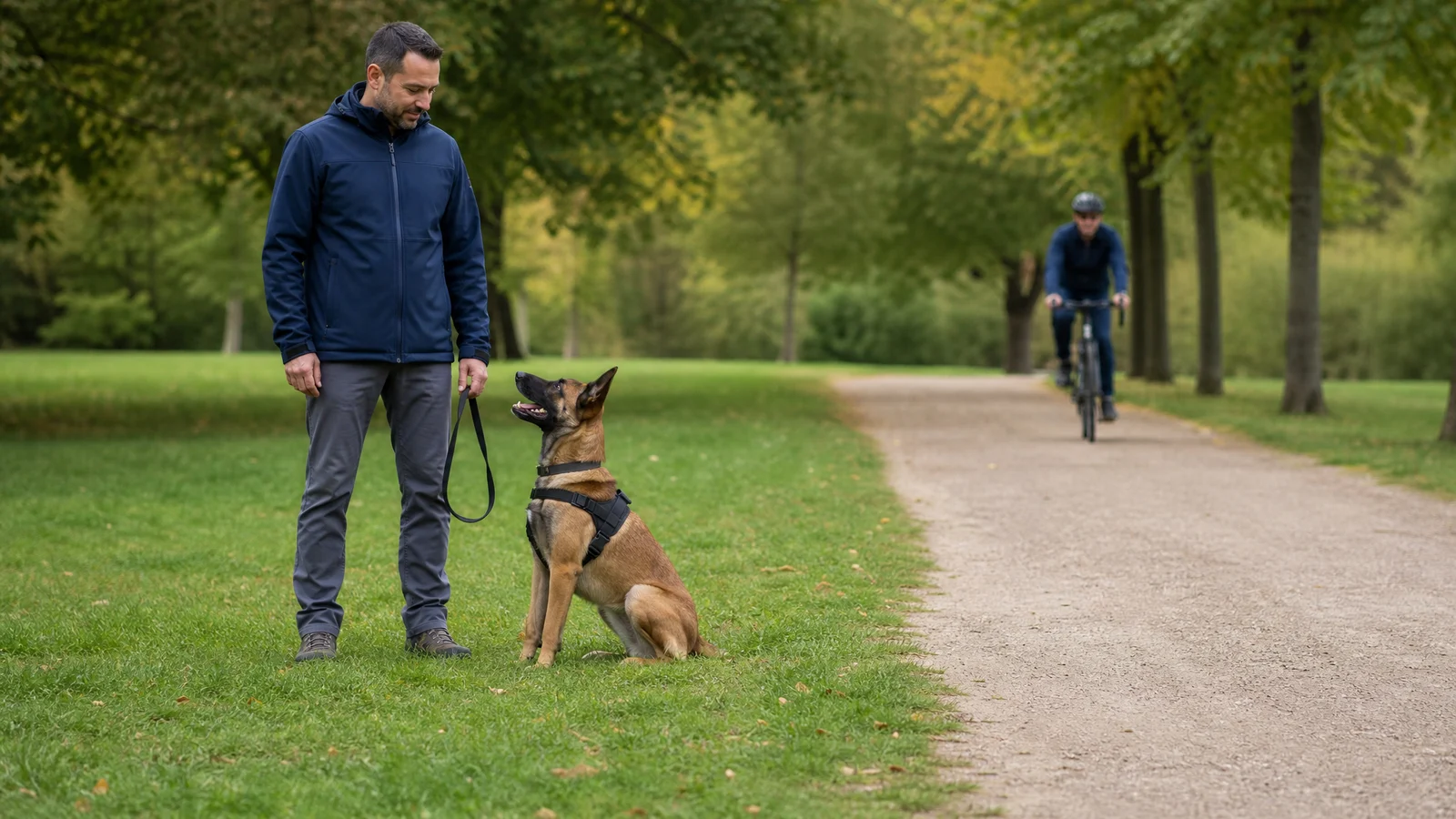 BehaviorA Steady Sit for a Belgian Malinois When Wheels Go By
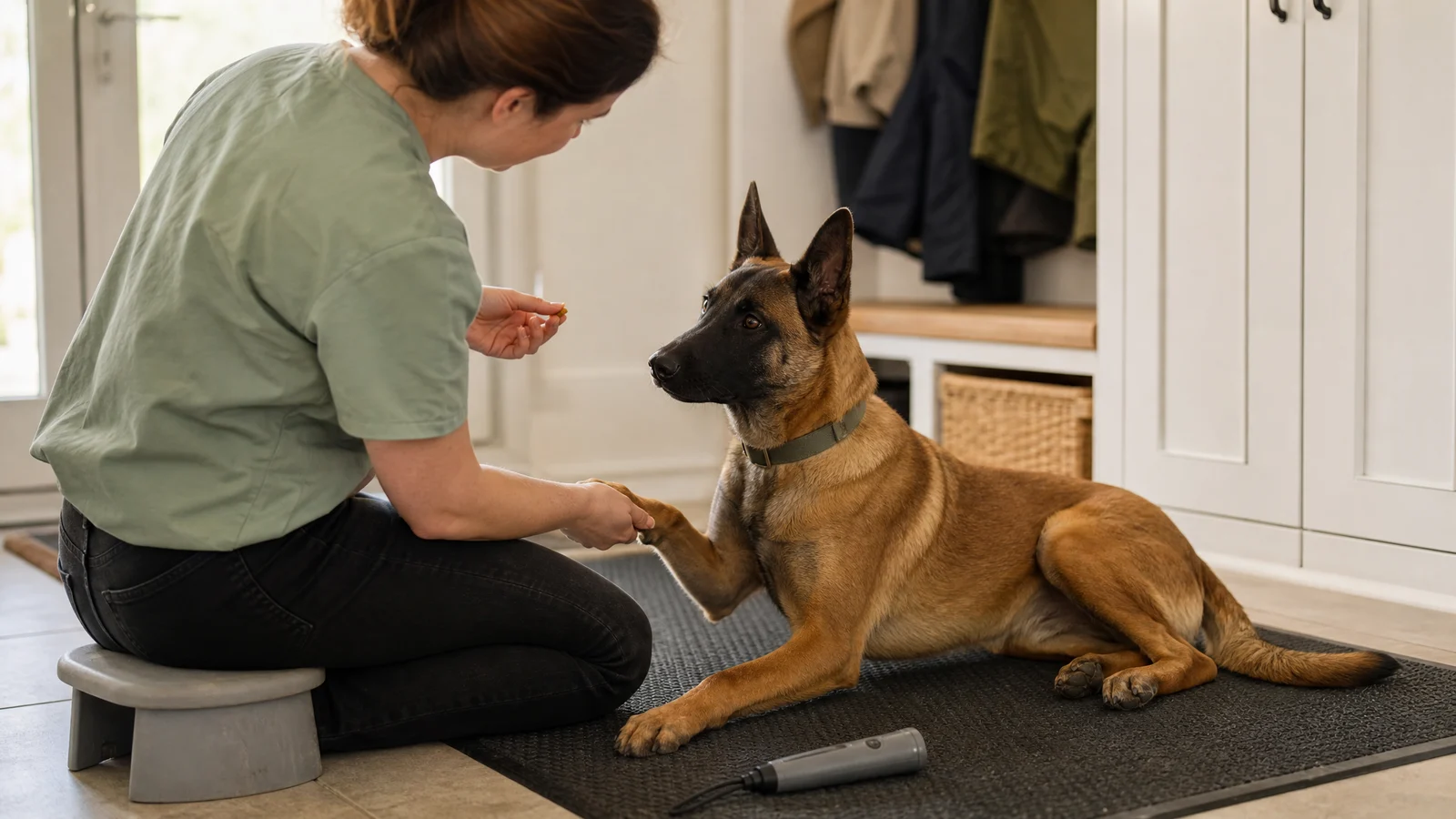 CareHow to Make Nail Trims and Body Checks Easy for a Belgian Malinois
 BehaviorHome Alone Practice for a Belgian Malinois Who Shadows You