 Malinois
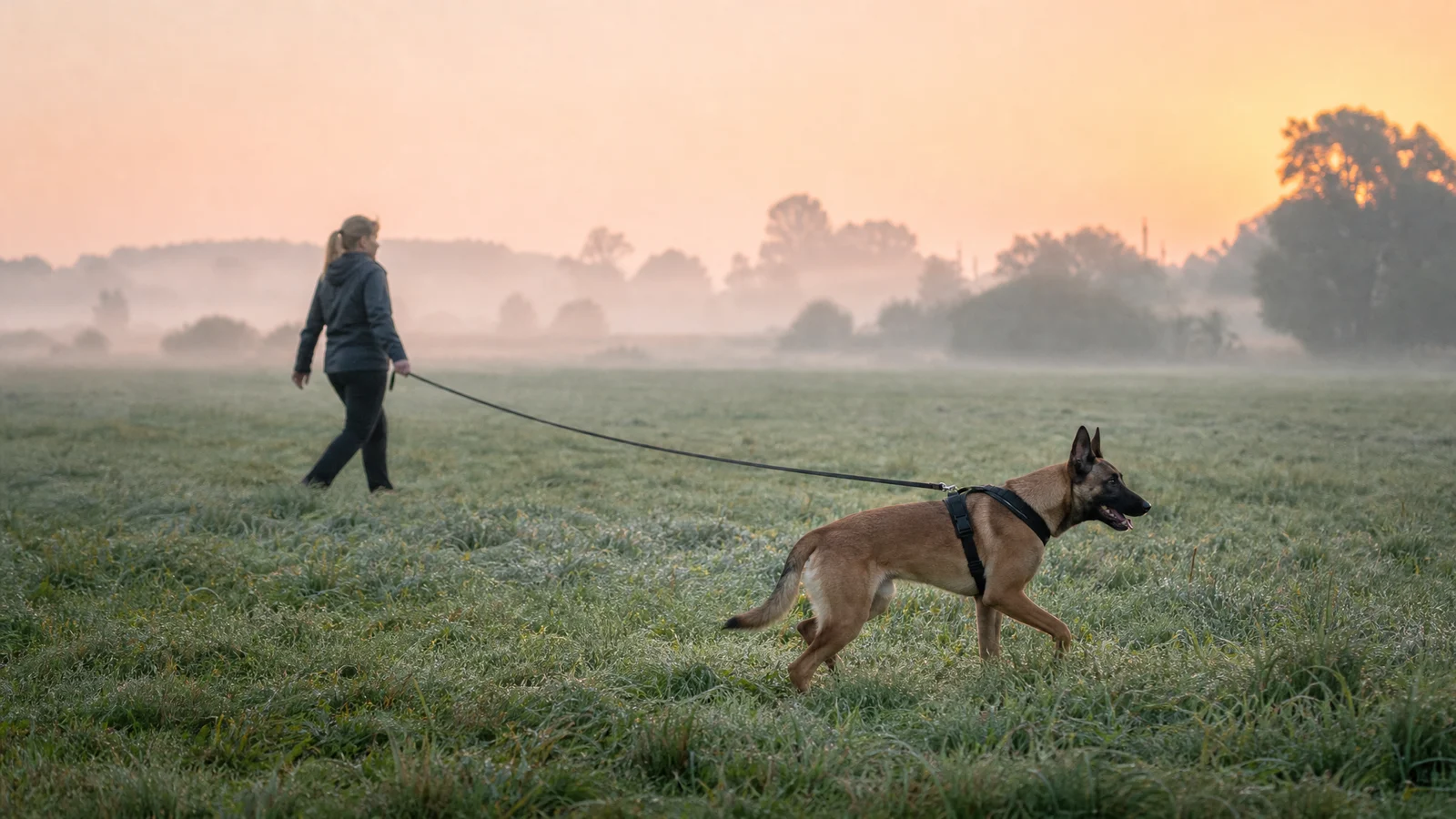
A Belgian Malinois does not need one magic number of exercise minutes. A daily walk can leave this energetic, responsive dog underused, while a day of nonstop intensity can leave the same dog too wound up to rest. The useful question is not only how long they moved, but what kind of load the day created.
We use a simple ledger with four columns: locomotion, task thinking, arousal and recovery. Each column describes a different demand on the dog, and adding more to one column cannot always repair a shortage in another. That is why another long run may fail when the missing piece is a job or a real cooldown.
This guide covers Belgian Malinois exercise from steady movement and brain work to rising arousal and restorative rest. You will learn how to read the four loads, record an ordinary day, and change one part at a time instead of chasing a generic hour formula.
A Belgian Malinois Exercise Ledger Starts With Four Loads
Locomotion is the ground covered through walking, running, play and other movement. Task thinking is the effort of following a scent, solving a food search or responding to cues. Arousal is activation, which can rise during either physical or mental work. Recovery is the return to loose posture, quiet breathing and settled behavior, not merely the absence of motion.
The breed makes this separation especially useful. The parent club says Malinois are bred to be taught and assigned tasks, and warns that an underused dog becomes frustrated. A dog can therefore log plenty of miles and still have an empty task column, or complete a demanding game and still lack the recovery that makes the work sustainable.
Locomotion Changes the Exercise Total
Movement matters because the Belgian Malinois is energetic, agile and ready for action. Yet locomotion is not one uniform substance. A sniffing walk, a brisk outing and a burst of hard play ask different things of the body, so recording only elapsed time hides impact, speed and the dog's ability to respond while moving.
Steady Movement Builds the Base
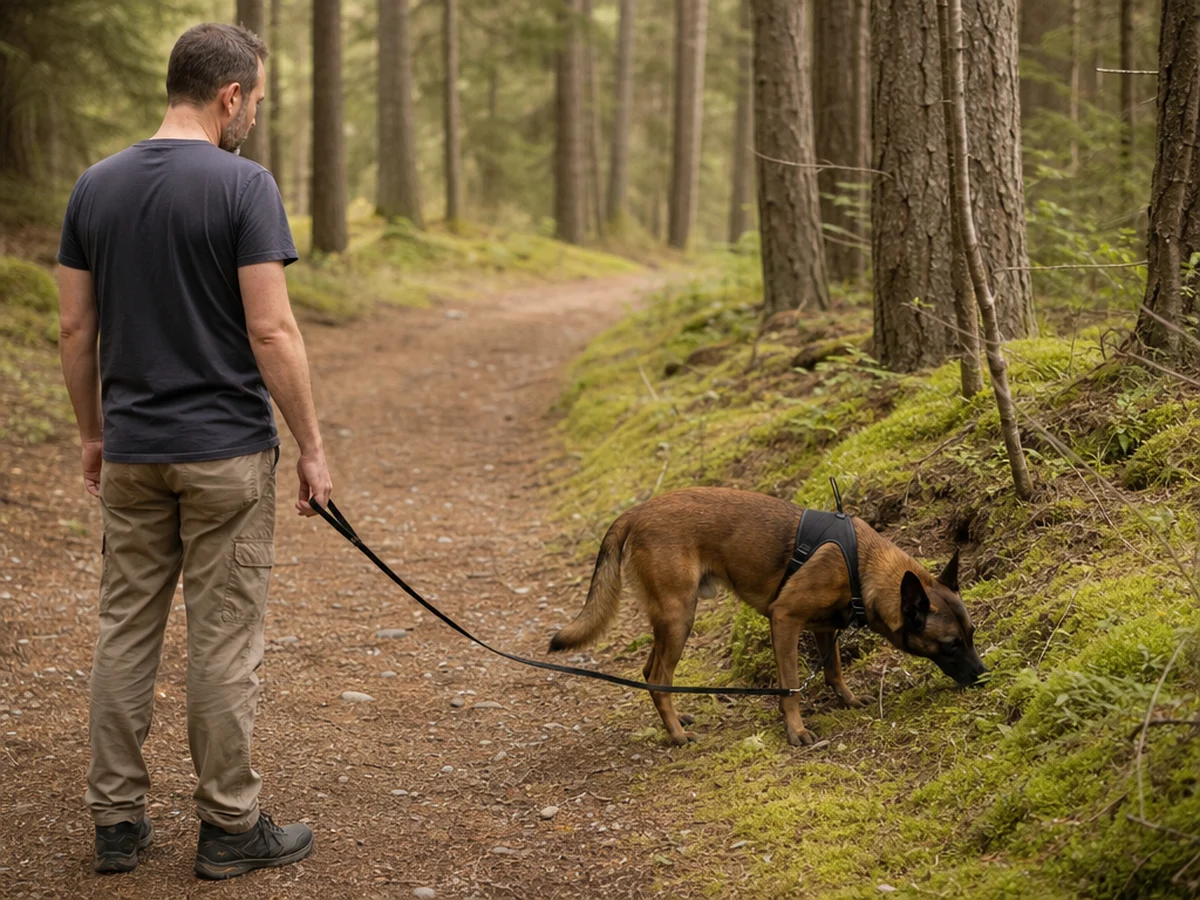
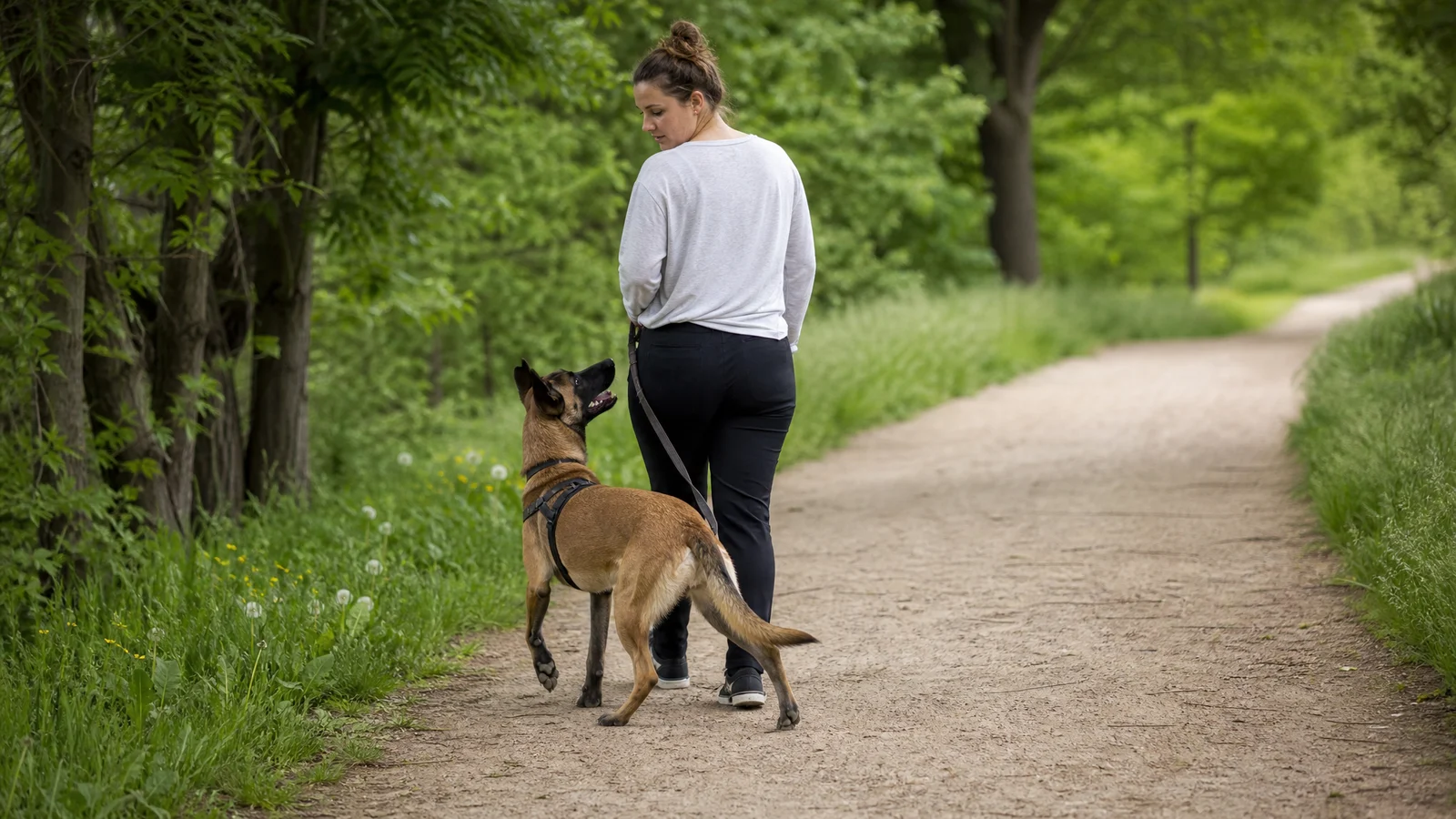
Steady movement lets a dog explore without making every outing a race. On a walk, allow time to sniff, change direction and check in with you, then reward a loose body and voluntary attention. This base combines moderate movement, information gathering and repeated chances to reconnect with the handler.
Intense Movement Raises More Than Fitness
Fast running, repeated fetch and vigorous play raise physical load quickly, but they can also raise arousal. A dog who finishes fitter yet paces, grabs or demands another round has not necessarily missed exercise. They may need a slower transition, not another burst that pushes the same column higher and rehearses urgency again.
Growing Dogs Need a Different Ledger
A puppy is learning movement skills while their body is still developing, so adult workloads are a poor template. The PDSA advises owners to protect growing joints and tailor activity to age, health and fitness. Discuss physical load at regular vet visits, especially before adding repeated jumping, hard running or a sharp workload increase.
- Choose steady exploration when the dog needs movement without another spike in excitement. Let sniffing and voluntary check-ins carry part of the load instead of measuring success only by pace.
- Choose a brief vigorous outlet when the dog can start and finish it with control. Keep the reward and finish cue familiar so the activity has a boundary the dog already understands.
- Reduce impact when a puppy, older dog or physically limited dog needs a gentler route. Easier movement can still include choices, scent and attentive work without copying an adult athlete's day.
- Record how the dog behaves afterward, because recovery determines whether the amount worked. Note whether the dog can drink, soften, respond and rest before deciding that the next outing needs more.
Task Thinking Makes Belgian Malinois Exercise Useful
A Malinois was developed as a working partner, so useful exercise asks the brain to participate. The official breed standard describes an energetic dog who is highly responsive to direction. That combination favors activities with a clear problem, a handler and a finish, rather than motion with no assignment.
Nose work is one accessible example because the dog searches instead of merely chasing speed. Best Friends explains that nose work can build focus in high-energy dogs and can suit older or physically limited dogs too. A box search, hidden toy or scattered meal can add task load without automatically adding impact or another high-speed chase.
Keep the task specific enough that success is visible. Decide what the dog is finding, where the search begins and what earns the reward, then stop while they are still working thoughtfully. Raise difficulty through one deliberate change, perhaps moving the boxes or making the hiding place less obvious, while leaving the other rules familiar.
- Turn part of a meal into a simple search across one room, then end when the last piece is found. Keep the first hiding places easy enough that the dog searches instead of becoming frantic.
- Practice a mat settle after movement so stopping becomes part of the assigned job. Reward the first loose posture and quiet attention rather than waiting for the dog to become exhausted.
- Rehearse familiar cues in a quiet place, then add one mild distraction without adding speed. Return to the easier version when accuracy or food-taking disappears.
- Use a favorite toy as pay for attention, with a clear start, a clear finish and quiet time afterward. Put the toy away before excitement replaces thoughtful participation, then record whether the dog can shift into a familiar quiet activity without pacing, grabbing or demanding that the game restart.
Arousal Can Masquerade as Unspent Energy
Arousal is readiness, not bad behavior. It becomes a problem when the dog cannot shift out of it after the work ends. Scanning, frantic circling, hard fixation, repeated grabbing or a refusal to take familiar rewards can mean the nervous system is overloaded, even when the dog looks as if they want more.
We take a clear position here: do not answer every restless evening with harder exercise. If intensity keeps producing a dog who cannot settle, log the activity in both the locomotion and arousal columns. The next adjustment may be an easier route, a thinking task with less speed or a longer quiet transition in a familiar low-traffic space.
Reward-based structure keeps arousal work clear. The AVSAB position statement supports reward-based methods, so mark calm choices, pause the game and pay for reconnection.
Recovery Completes the Belgian Malinois Exercise Cycle
Recovery is not unused time. It is the part of exercise in which breathing slows, muscles rest and the dog learns that work has an ending. A predictable cooldown can include a slower sniff, water, a quiet chew or a familiar mat, provided each choice helps this dog soften rather than restart the game.
The table turns what you see after activity into a ledger decision. It is a planning aid, not a medical conclusion, because discomfort, illness and fear can also change behavior. A sudden or persistent change belongs in a conversation with your veterinarian rather than another exercise experiment.
| After the activity | Ledger reading | Next adjustment |
|---|---|---|
| Loose body, drinks, then rests | Load and recovery look balanced | Repeat before adding difficulty |
| Paces and demands more speed | Arousal may be outrunning recovery | Lower intensity and lengthen the cooldown |
| Settles physically but seeks trouble | Task thinking may be too light | Add a short scent or cue problem |
| Moves stiffly or avoids activity | Physical load may be unsuitable | Pause the plan and contact the vet |
A dog who rests after work is not proof that every need has been met, but it is useful evidence. Look at the whole day and ask whether the dog also had an assignment, manageable excitement and ordinary social time. The ledger works through patterns across days, not one impressive outing followed by an unsettled evening.
Building a Daily Exercise Ledger
Start with one ordinary day and write down activities without judging them. For each, note whether it added locomotion, task thinking or both, how high the dog became, and what recovery looked like. Descriptions such as loose and sniffing, fast and focused, or pacing after play are more useful than a score you cannot define or compare tomorrow.
Then find the crowded column and the empty one. A day with a long walk, fast fetch and yard running may be heavy on locomotion and arousal but light on assigned thinking. A day packed with training in busy places may carry plenty of mental and emotional load even when the distance looks modest and the dog never breaks into a run.
Build the next day by balancing, not compensating. If movement was low and recovery was easy, add appropriate locomotion. If thinking was low, use a scent search or a short cue session. If arousal stayed high, make the route and task simpler before increasing anything else, then observe the transition into rest.
The ledger also keeps behavior problems from being mislabeled as a shortage of miles. Climbing, frantic boundary running and destructive projects need management and training as well as outlets. More fitness alone can give the same habit a stronger engine and make an unsafe rehearsal more efficient.
A Two-Week Exercise Adjustment
During the first week, keep the basic routine stable and observe all four loads. Record the activity, the dog's body during it, and how they behave after it ends. This creates a baseline without asking a single good or bad day to carry the verdict or inviting daily changes that hide the cause.
During the second week, change one column. Add task thinking while keeping locomotion steady, or reduce one intense bout and improve the cooldown while the rest stays familiar. If recovery improves and the dog remains engaged, keep the change. If the day deteriorates, restore the earlier plan and test a smaller adjustment.
The goal is not to empty a Belgian Malinois of energy. It is to create a repeatable cycle in which movement has purpose, excitement stays workable and rest actually follows. A balanced ledger gives you a dog who can work and recover, which is more useful than winning an argument about one universal exercise total.
 Training basicsHousetraining a Malinois Puppy With a Reward Schedule
 Training basicsBelgian Malinois Working Dog Training for Pet Owners
 Training basicsLoose-Leash Walking for a Malinois Who Circles and Lunges