 Malinois
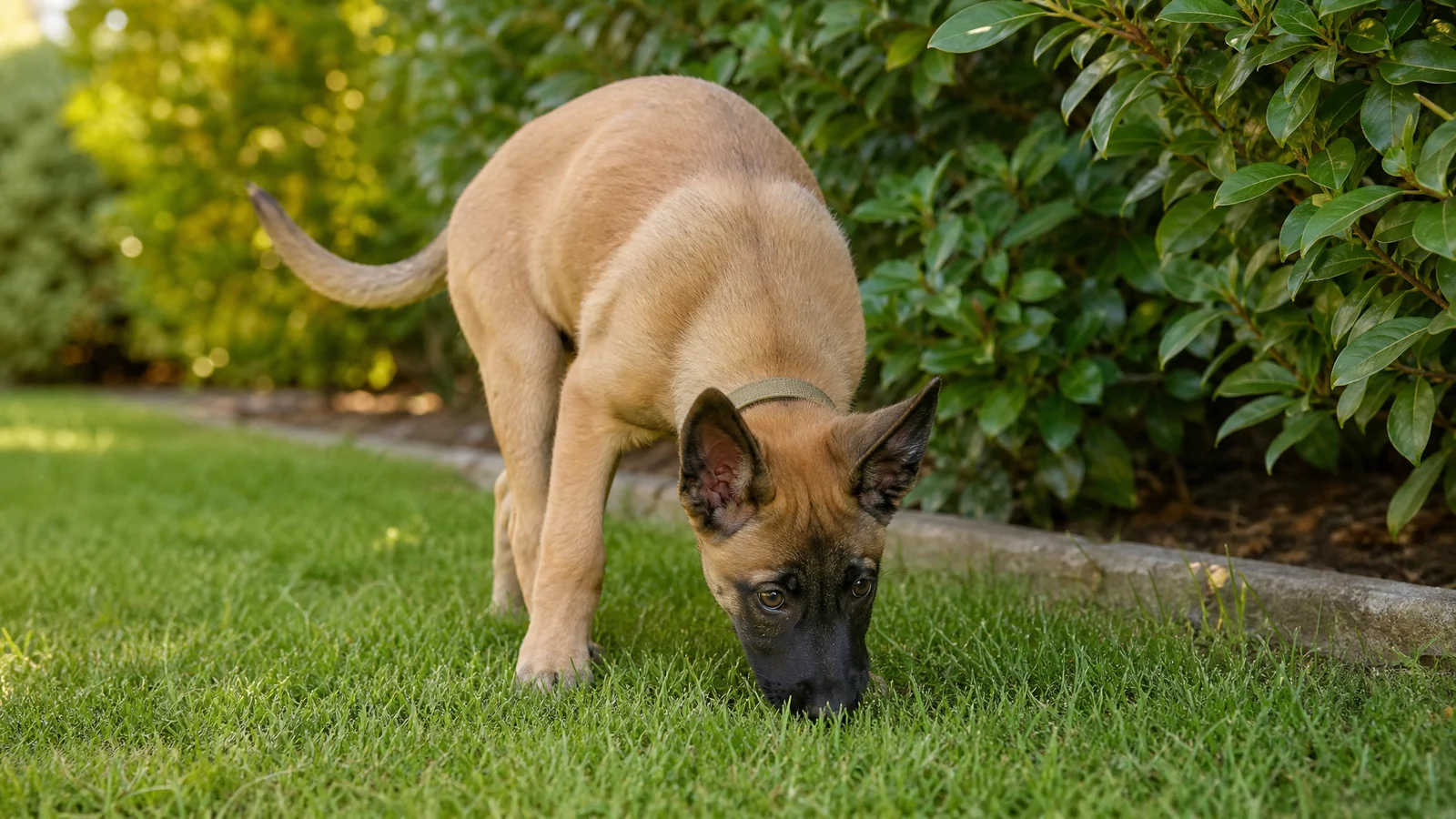
Fast learning can make a Belgian Malinois puppy look reliable before the route is clear, but speed does not tell them which door, surface or moment the household means. Potty training becomes reliable when the route stays clear and the consequence arrives at the destination. Intelligence helps the puppy notice that pattern, while supervision protects it long enough to become a habit.
We use a three-part decision path: observe what just happened, choose the next level of management, and adjust from the result. Below, you'll find decisions for the potty destination, event-based trips, indoor and outdoor signals, accident recovery, and earned freedom. The route is consistent, but the plan changes with the puppy in front of you.
One Belgian Malinois Potty Training Destination
Choose the outdoor surface and the shortest practical route before the first repetition. Humane World recommends using one consistent outdoor spot, taking the puppy there on a leash and saying the cue while they go. Consistency makes the location part of the answer rather than another choice the puppy must solve while also processing weather, sounds and movement.
Decide where the reward will happen too. Deliver it outdoors after the puppy finishes, while the action and place are still connected. If the reward waits until everyone returns to the kitchen, a quick learner may connect the payment with coming inside rather than with using the chosen spot. Keep a small reward ready before opening the door.
The household should make four destination choices once and repeat them. The table keeps the decisions visible, especially when several people share puppy duty or the normal caregiver is unavailable. Change a choice only when the current route is impractical, then treat the new version as a fresh lesson rather than expecting instant transfer.
| Household choice | Consistent answer | What the puppy learns |
|---|---|---|
| Exit | Use the same practical door and keep the leash ready beside it | The route begins in one place instead of becoming a tour of the home when urgency is high |
| Outdoor spot | Walk to the same surface on leash and pause there quietly | This texture, route and area predict the purpose of the trip even when the yard is interesting |
| Cue | Say one brief phrase while the puppy goes, without repeating it | The words belong to the action rather than to general outdoor excitement, walking or looking around |
| Reward | Pay outdoors immediately after completion, before changing activities | Finishing in this place earns the reward and the next part of the day, while the location is still clear |
Potty Training Trips Follow Events
A schedule is useful when it follows events rather than pretending every puppy has the same internal clock. Waking, eating, active play and a change from motion to wandering are practical reasons to offer the route. Take the puppy out after those transitions, then use the result to choose supervision, another brief opportunity or rest in a familiar safe area.
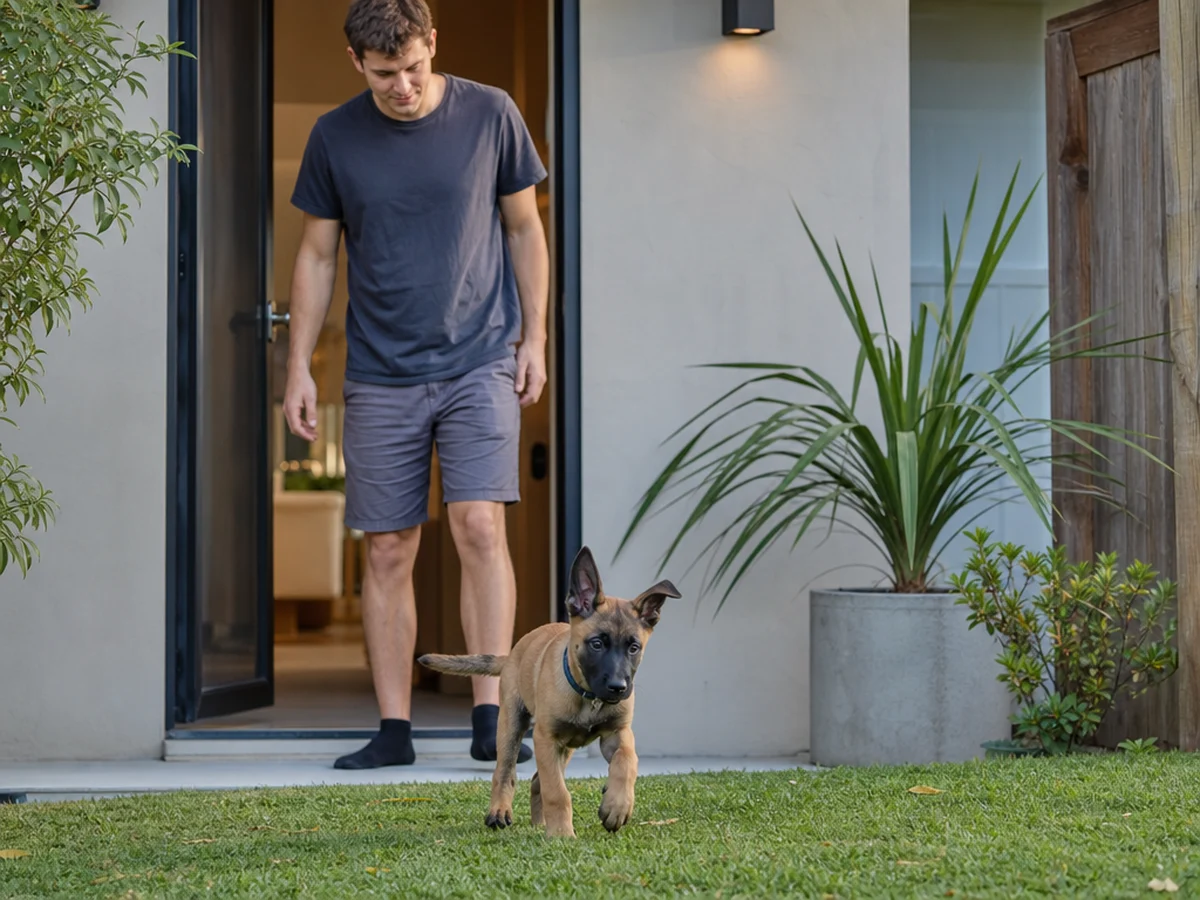
Battersea recommends frequent early trips and specifically names waking, meals and play as times to go outside. Those anchors are easier for a household to remember than guessing when the bladder is full. They also let the puppy rehearse the same route under different ordinary conditions without relying on a signal that may arrive too late.
If the puppy finishes outdoors, reward there and decide what comes next. A little supervised activity can follow a successful trip, while a puppy who did not go returns to close observation rather than immediate freedom. The choice is not a judgment about obedience. It is management based on the information the trip produced, and the next successful repetition can earn freedom again.
Potty Training Observations Guide the Next Trip
Observation is active work, not waiting for the puppy to make an obvious mistake. Keep them in the same room and notice changes in movement, attention and purpose. A Malinois may shift quickly from engaged play to a private search, so the early transition is more useful than a dramatic signal at the end. Position yourself so you can see the puppy without hovering over them.
Choose the next action from the clearest evidence available. If the puppy has just woken or eaten, take the route without waiting for a signal. If nothing has changed and the last trip succeeded, continue supervised life. When evidence is uncertain, a calm outdoor opportunity costs less than an indoor rehearsal. Record the result so repeated uncertainty becomes a usable pattern.
Indoor Signals Change Supervision
Watch for disengaging from play, circling a smaller area, sniffing with purpose, moving toward an edge of the room or slipping behind furniture. None is proof by itself, but a sudden cluster is enough to choose the outdoor route. Move calmly so your urgency does not turn the trip into a chase or teach the puppy that running away starts an exciting household game.
If you repeatedly miss the signal, reduce the puppy's available space. Use a gate, keep them close to you or return them to a comfortable crate only when crate skills are already positive and the puppy has recently had a fair outdoor opportunity. Our crate training guide treats confinement and alone time separately, which prevents potty management from becoming an unplanned separation lesson.
Outdoor Distraction Changes the Choice
A Malinois puppy may reach the right place and spend the whole trip scanning movement, leaves or sounds. Stand quietly, keep the leash area modest and let the chosen spot remain the simplest option. If nothing happens, return indoors without a play reward and keep supervision close before offering the same route again after a short, quiet interval.
Do not turn the outdoor spot into a long obedience session. The job is elimination, followed by immediate payment and then whatever safe activity you choose. Clear criteria suit a highly trainable breed because the puppy can tell which action ended the trip and earned access to the next part of the day. Keep outdoor play separate until elimination is complete.
Potty Training Changes After an Accident
An accident is evidence that the previous management choice gave the puppy more opportunity than their current habit could handle. It does not reveal spite, stubbornness or a failed relationship. Interrupt only if you notice the act in progress and can calmly move outside, then reward if the puppy finishes at the destination.
Reward-based training makes the wanted choice worth repeating. The RSPCA explains that something the dog values raises future likelihood, so pay outdoors and change your setup after an indoor miss.
- Clean the area thoroughly so the indoor spot does not continue to carry a familiar scent cue, and block access while the surface dries. Restore access only when supervision is ready and the next outdoor trip has been planned.
- Identify the missed event, such as waking, eating or active play, and protect that transition next time by preparing the leash and reward early. Assign a backup person when routines overlap so the transition does not disappear during a busy day.
- Reduce unsupervised space until successful outdoor choices become easier to predict, while preserving supervised play and normal contact with the household. Expand again from a successful baseline, one area at a time and with the route rehearsed.
- Return to the same outdoor destination and reward completion there without adding excitement or delay, then allow the ordinary activity the puppy expected. This keeps the correct route valuable, prevents the accident from becoming the most memorable event and gives the household another clean repetition to reward before allowing more space again.
Then record the circumstances in plain language. Note what the puppy had just done, where people were and whether an outdoor trip produced nothing shortly before the accident. Several notes may reveal a household gap, such as freedom after an unsuccessful trip, that one isolated miss could not show.
Layered Freedom for a Belgian Malinois Puppy
Freedom should follow demonstrated choices, not a birthday or a run of lucky days. Begin with one puppy-safe area where supervision is realistic. After the puppy repeatedly uses the route from that space, open access to one nearby room while keeping doors to the rest of the home closed. Keep the original route available instead of adding another exit.
Teach the route again from every new location. A puppy who knows the kitchen door from the living room may not recognize the same plan from a bedroom or basement. Walk the route after waking and play in the new space, then reward outdoors as if the skill were new, because the context is new. Walk it calmly in both directions before expecting the puppy to initiate it.
Increase either space or distraction, not both at once. A family gathering in the familiar room may be a bigger test than an empty new room. If signals become harder to see, use a leash indoors or return to the smaller area until the puppy can choose the route under the easier condition again.
Link freedom to the whole day rather than one perfect trip. A successful outdoor choice can earn supervised play, while an unsuccessful trip leads to close observation and another opportunity. This makes freedom predictable without asking the puppy to hold beyond their current ability or leaving the household to guess.
Potty Training Adjustments as Progress Changes
Progress means the puppy begins the route with less prompting, finishes more promptly at the destination and stays reliable across gradually added spaces. It does not mean management disappears overnight. Keep the cue, location and outdoor reward in place while the behavior becomes ordinary, then fade help slowly rather than testing with sudden access. Our complete training guide explains why skills need practice across contexts.
Frequent accidents despite a consistent routine, a sudden loss of reliability, increased thirst, straining or discomfort need veterinary attention. Battersea advises a vet check for those changes before behavior help. Keep regular vet visits on the calendar, because a physical issue cannot be solved by tighter supervision or richer rewards.
A fast-learning Malinois still needs the lesson made visible. Choose the destination, observe the transitions, and let each result determine the next amount of freedom. Long-term reliability arrives when the puppy can choose the familiar route from ordinary life, while the household remains ready to adjust when development, health or context changes.
 Training basicsBelgian Malinois Working Dog Training for Pet Owners
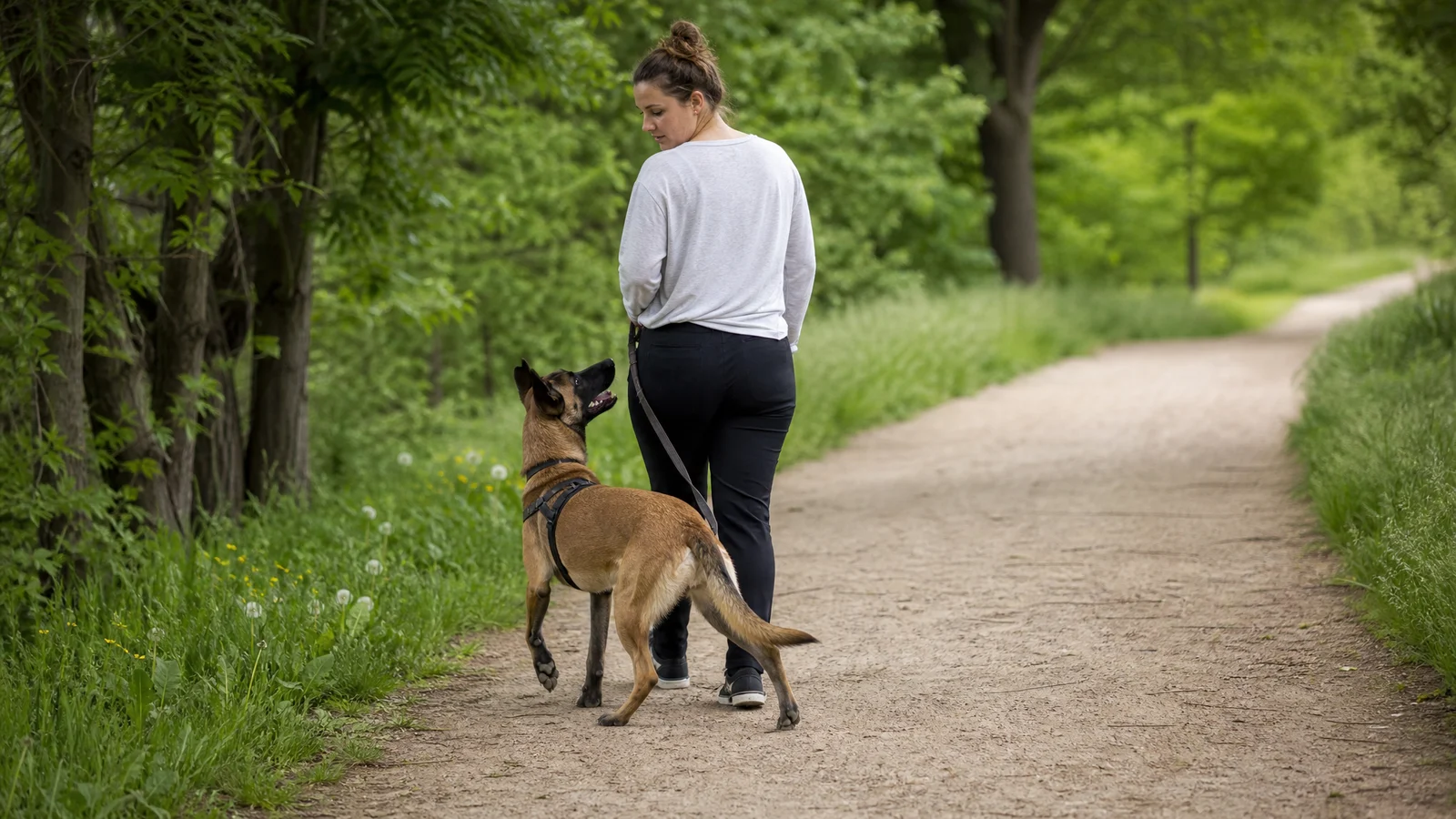 Training basicsLoose-Leash Walking for a Malinois Who Circles and Lunges
 BehaviorAre Belgian Malinois Considered an Aggressive Breed?