 Malinois
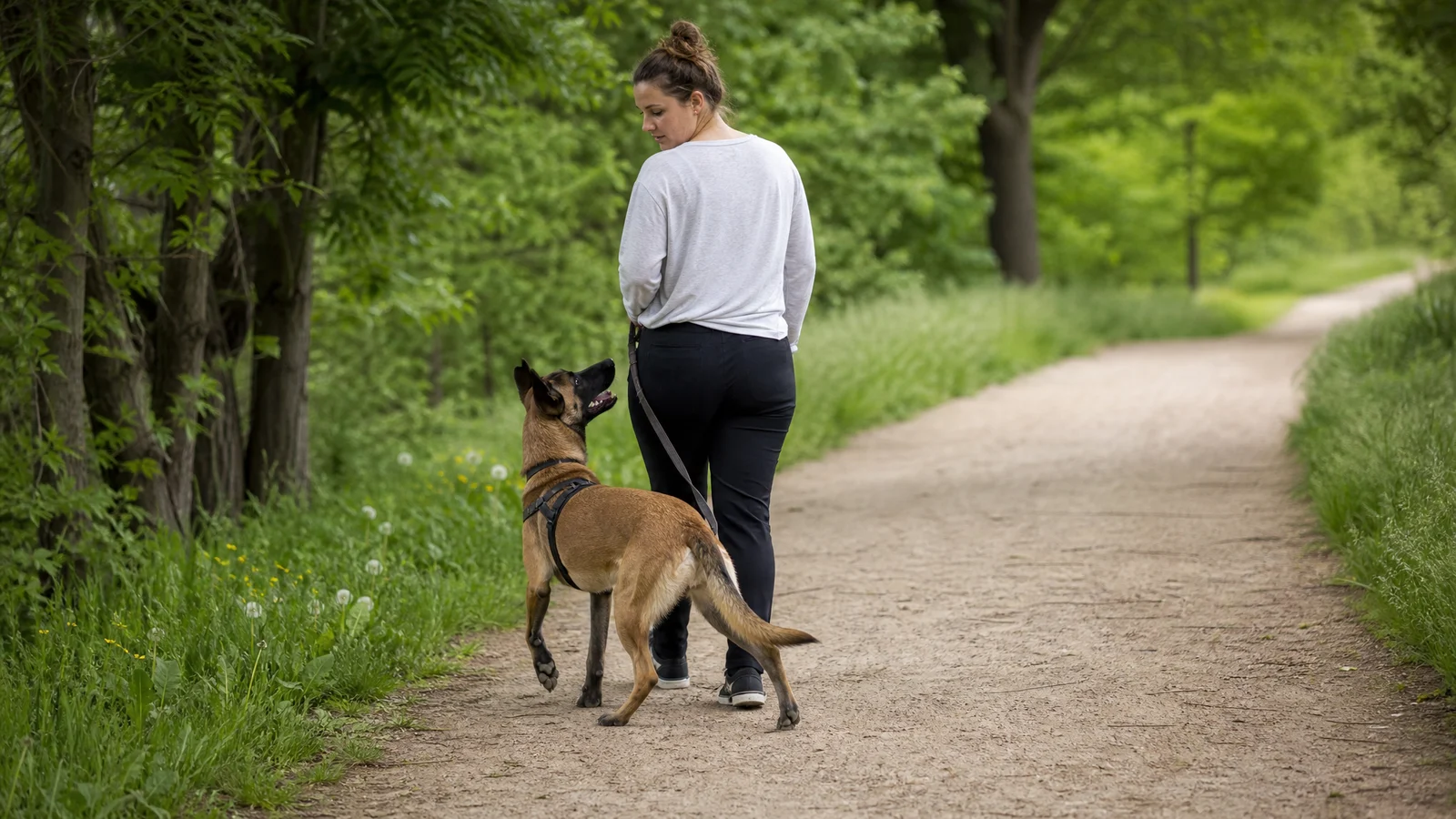
Loose-leash walking improves when you respond before a Belgian Malinois reaches the end of the leash. The first useful sign may be a higher head, a tighter mouth, a circle behind you or a stare at something moving. By the time the dog lunges, the body has already traveled through several earlier states.
We map those states in order: scanning, circling, forward pressure, fixation, lunging and recovery. Each symptom changes the next choice. The goal is not to force one walking position through every situation, but to keep the dog able to notice, think and reconnect while the leash stays a safety line.
Read on for a body-first Belgian Malinois leash training plan, including what loose availability looks like, why circling matters, when slack can earn movement, and how to recover after a trigger. The final walk plan begins on an easy route and rewards the earliest soft response instead of waiting for a dramatic mistake.
Reading the Belgian Malinois on Leash
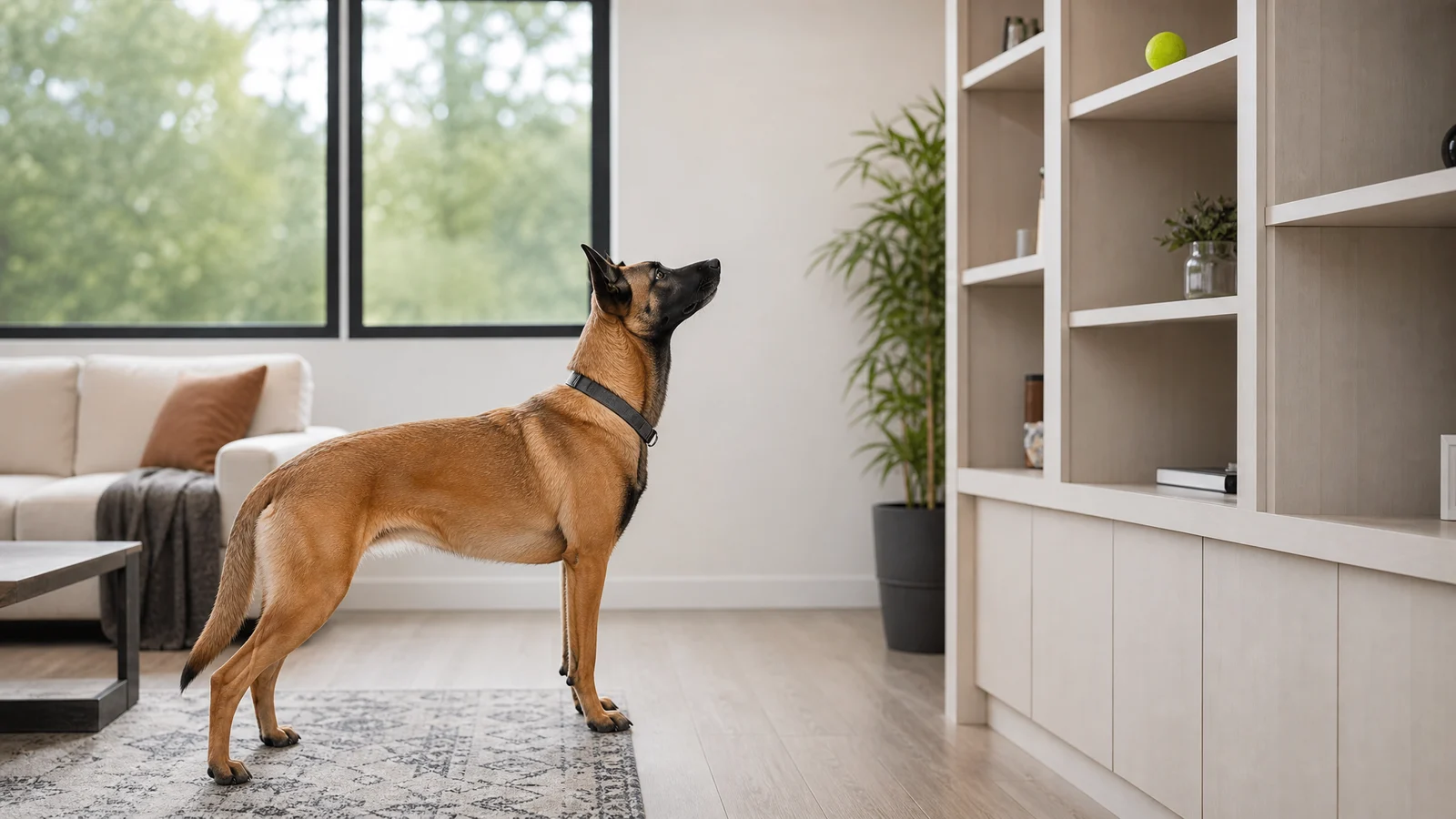
The Malinois standard describes an alert, energetic and responsive dog, and those traits are visible before they become leash behavior. Scan from nose to tail before leaving the doorway and again whenever the environment changes. You are looking for whether the dog can take in information without losing access to you.
Body reading is not a personality verdict. A high head may mean interest, and a closed mouth may follow exertion, so use clusters and changes rather than one frozen detail. Compare the dog with their own loose baseline and ask whether food, familiar cues and voluntary check-ins are still available.
Loose and Available
A workable body can turn the head without dragging the shoulders, sniff and then look back, or take a reward without snatching. The leash may move, but it repeatedly returns to a curve. This is the moment to reinforce because the dog is participating in the walk rather than merely being contained on it.
Pay where you want the dog to return, near your leg or slightly ahead if that suits your walking picture. Then release them to sniff or continue forward. Food is one reward, but movement and access to an interesting smell can also pay for a soft body and an easy leash.
Early Arousal Signs
The first change may be faster scanning, weight shifting forward, a higher tail, harder breathing or food taken roughly. Add distance or change direction while the dog can still follow. Waiting for a bark or lunge throws away the part of the sequence in which a simple choice can work.
Reserve with strangers is normal in the breed, according to the Belgian Shepherd standard, but reserve does not require a close greeting. Let the dog observe from a distance where their body stays workable. Neutral passing is a complete success even when no social contact happens.
Leash Training Circling
The breed standard notes a tendency to move in circles rather than a straight line. On leash, that may appear as crossing behind you, orbiting when excited or cutting across your path toward motion. Treat the circle as information about route and arousal before labeling it disobedience.
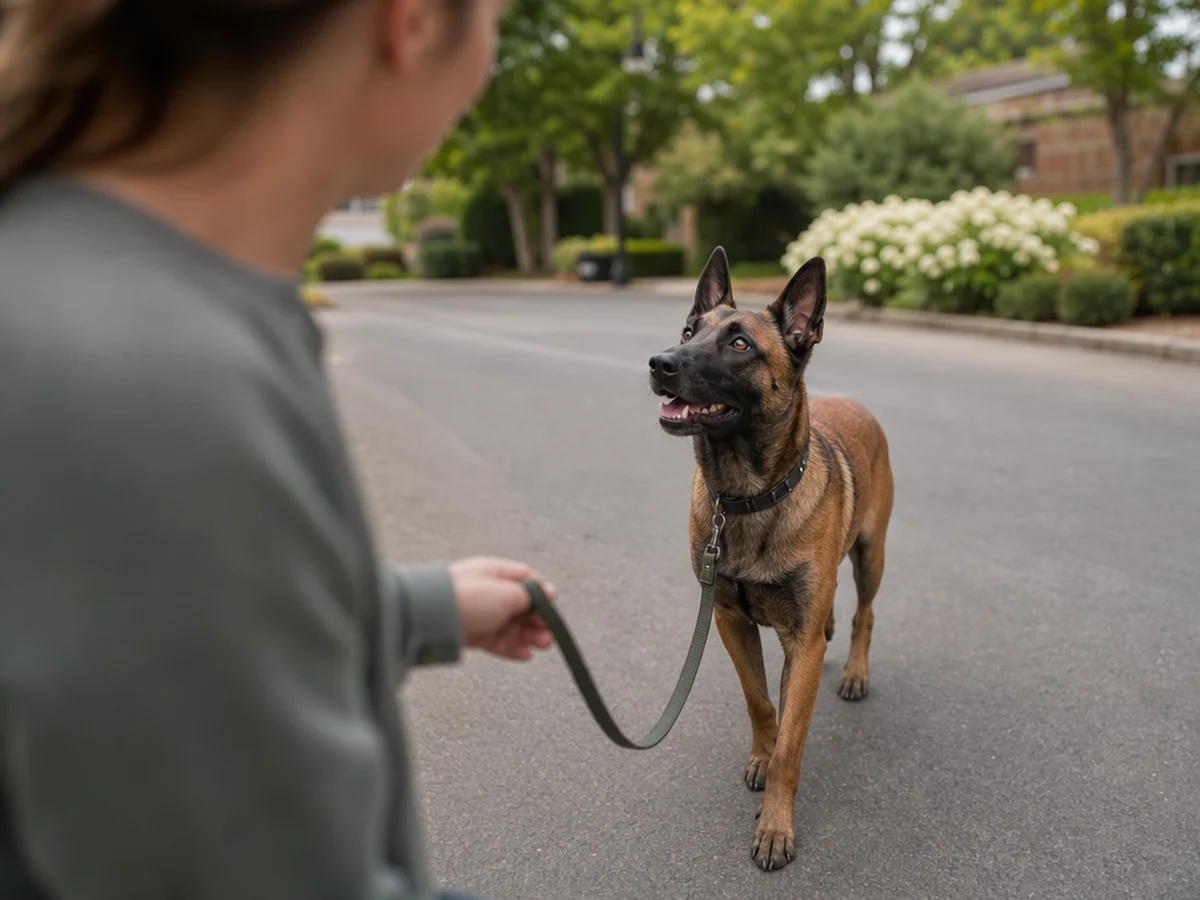
Circling can also grow when the handler and dog disagree about direction every few steps. Give the route more clarity by choosing the side where rewards arrive and marking the first moment the dog travels with you. If the body tightens, reset in open space rather than untangling while everyone keeps moving.
Forward Leash Training Pressure
Pulling persists when pressure regularly reaches places the dog wants to investigate. The destination may be a smell, another dog or simply the next block. The leash tightens, the handler follows, and forward motion pays for the exact body position the household wants to change.
The PDSA recommends stopping when the leash tightens and rewarding when it becomes slack, while expecting many stops at first. Consistency matters more than distance. If tight pressure works on busy days, the dog learns that persistence is sometimes the fastest route forward.
Slack Earns Motion
Begin where success is easy, perhaps indoors, in the yard or on a quiet stretch near home. Mark the curve in the leash, take one or two steps and reward again before pressure returns. Gradually link more steps, but release to sniff often so loose walking does not mean losing access to the environment.
- Stop before your arm is fully extended and keep your own body quiet, with your feet planted where the leash first lost its curve.
- Wait for the dog to soften, turn or create slack without drawing them backward, and mark the earliest change rather than demanding a full return.
- Mark that choice and reward near the walking position you want repeated, keeping your hand low and close to that useful location.
- Move forward again or release to sniff, making the slack itself open access to a real part of the walk rather than only food.
A Direction Reset
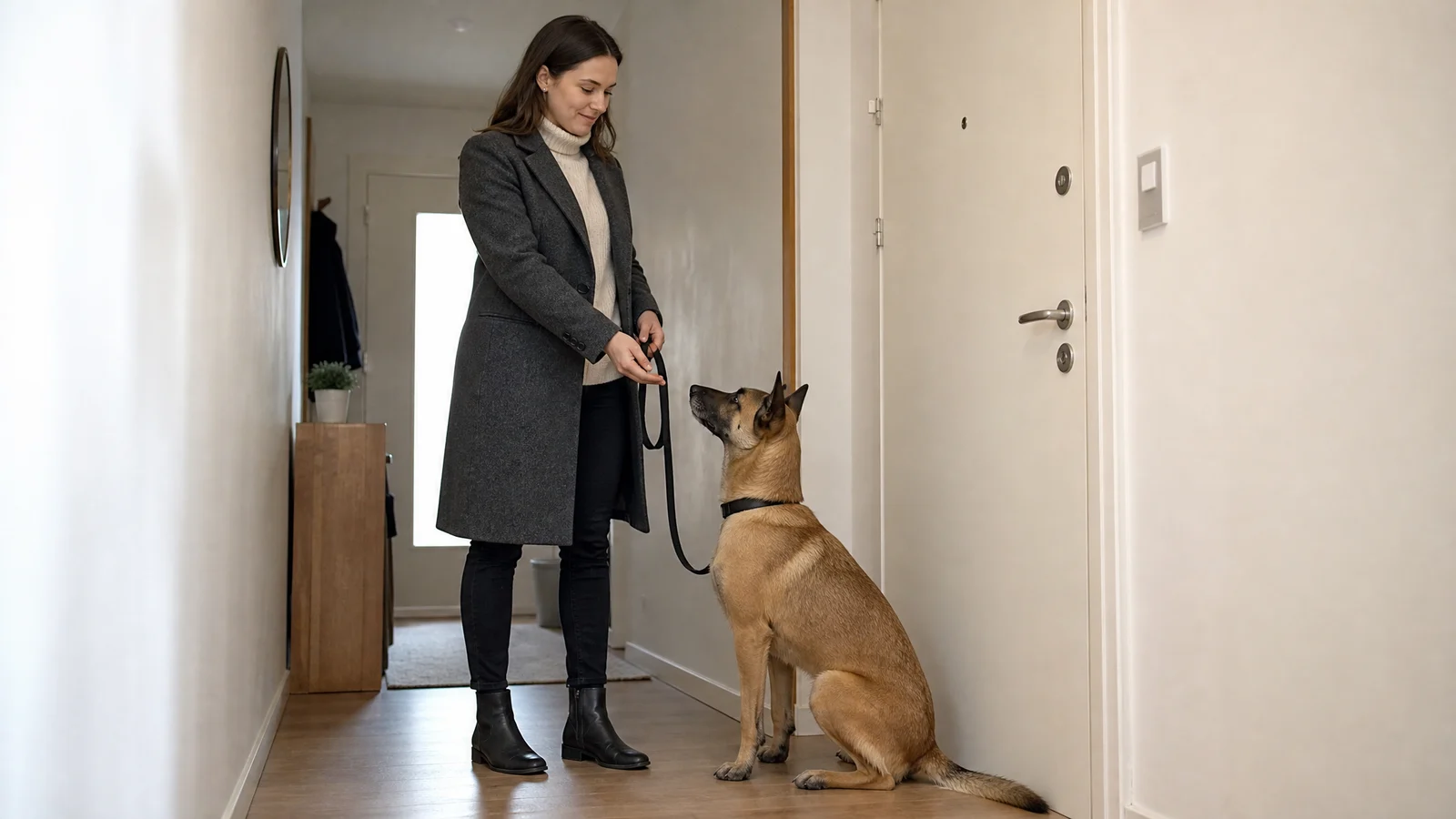
Stop in a place with room, hold the leash steady without pulling the dog into position, and wait for a voluntary turn toward you. Mark that turn and place the reward where the next straight step begins. Walk only a few steps before releasing the dog to sniff, then repeat from a different point.
The reset should lower complexity, not become another fast pattern. If the dog spins harder, widen the space and reduce nearby motion. Our guide to the breed's fast-learning temperament explains why repeated accidental patterns can become habits just as quickly as the planned one.
Best Friends also suggests changing direction if stopping alone does not help, then rewarding as the dog turns with you. Their loose-leash guidance makes the new direction part of the payoff rather than a contest. Turn smoothly and early enough that the dog can follow without a collision.
Belgian Malinois Leash Training Fixation
Fixation is more than noticing. The head and eyes stay locked, the body leans toward the target, and ordinary rewards lose value. A Malinois has a strong interest in moving objects, so bikes, cars, joggers or animals can hold attention long enough for forward pressure to become a lunge.
Distance is the first training tool because it changes what the dog can process. Move onto a broader sidewalk, use a solid visual barrier or turn onto a quieter path while food-taking and head movement still exist. If the dog cannot disengage, the lesson at that distance is too hard, regardless of how familiar the cue is at home.
Turn Before Fixation
Teach the turn away from triggers in an easy setting first. Say the cue once, turn your shoulders and reward beside you as the dog follows. Practice until your movement predicts a quick, rewarding change of direction, then use it when the dog first notices a trigger rather than after the stare hardens.
The cue is an exit, not a test of nerve. If you need it repeatedly on one block, choose a route with more space next time. A dog who can turn away, eat and resume sniffing is learning a portable recovery pattern instead of rehearsing a longer stare on every walk.
Leash Lunging at Full Extension
A lunge is the late symptom in this map. It may follow chase interest, frustration, worry or an approach that became too close too quickly. Because different causes can look similar at full speed, use what happened before the lunge and how the dog recovers afterward to plan the next walk.
Safety comes before another repetition. Create distance, use a secure well-fitted harness and choose routes where turning away is possible. If lunging is intense, unpredictable or hard to manage safely, ask a qualified reward-based behavior professional for in-person help rather than using crowded walks as practice.
Rebuild After a Lunge
Move to a quieter place and wait for signs that thinking has returned: a softer mouth, head movement, sniffing or the ability to take food gently. Reward reconnection, then decide whether to go home or continue on an easier route. Continuing toward the same trigger usually repeats the hardest part of the sequence.
- Choose a route with long sight lines and several exits instead of narrow paths with surprise encounters or unavoidable close passing.
- Carry rewards the dog values in that environment and practice the turn before a trigger appears, while the body is already soft.
- Create distance at the first body change, not after barking or lunging begins, and note which change gave the earliest warning.
- End the walk if recovery remains slow, then make the next setting easier, shorter and more predictable from the first step.
The Belgian Malinois standard calls the breed lively and responsive. Read that body early, because responsiveness is usable before threshold and far less available after fixation closes the window.
Leash Training Recovery
Recovery is the distance between excitement and usable attention. Track how long it takes the dog to soften, accept food normally and resume exploring after movement or a surprise. A walk with one trigger and quick recovery may be more productive than a longer route filled with repeated fixation.
Do not confuse physical tiredness with emotional recovery. A dog can cover plenty of ground and still return home scanning, pacing or unable to settle. Pair walks with an ordinary cooldown and quiet time, and use crate calm skills only when the crate already feels safe rather than as forced containment after arousal.
Keep regular vet visits on the calendar, and arrange a visit when leash behavior changes suddenly or movement looks uncomfortable. Pain and other physical changes can alter posture, tolerance and recovery. Training choices should follow a health check when the body no longer looks like the dog's usual baseline.
Next Belgian Malinois Walk
Choose an easy route with enough space to turn away. Before distance matters, reward the first loose body, the first voluntary look back and the first curve in the leash. If scanning speeds up or the mouth tightens, use your practiced turn and move away while the dog can still follow.
Judge the walk by availability, not blocks completed. Circling tells you to reset, pressure tells you to stop, fixation tells you to add distance, and a lunge tells you the earlier signs were missed or overwhelmed. A body-first plan gives the Malinois a path back to you before force and speed take over.
 BehaviorAre Belgian Malinois Considered an Aggressive Breed?
 BehaviorKeeping Belgian Malinois Ball and Toy Play Fun, Not Frantic
 BehaviorBelgian Malinois: Frustration barking