 Malinois
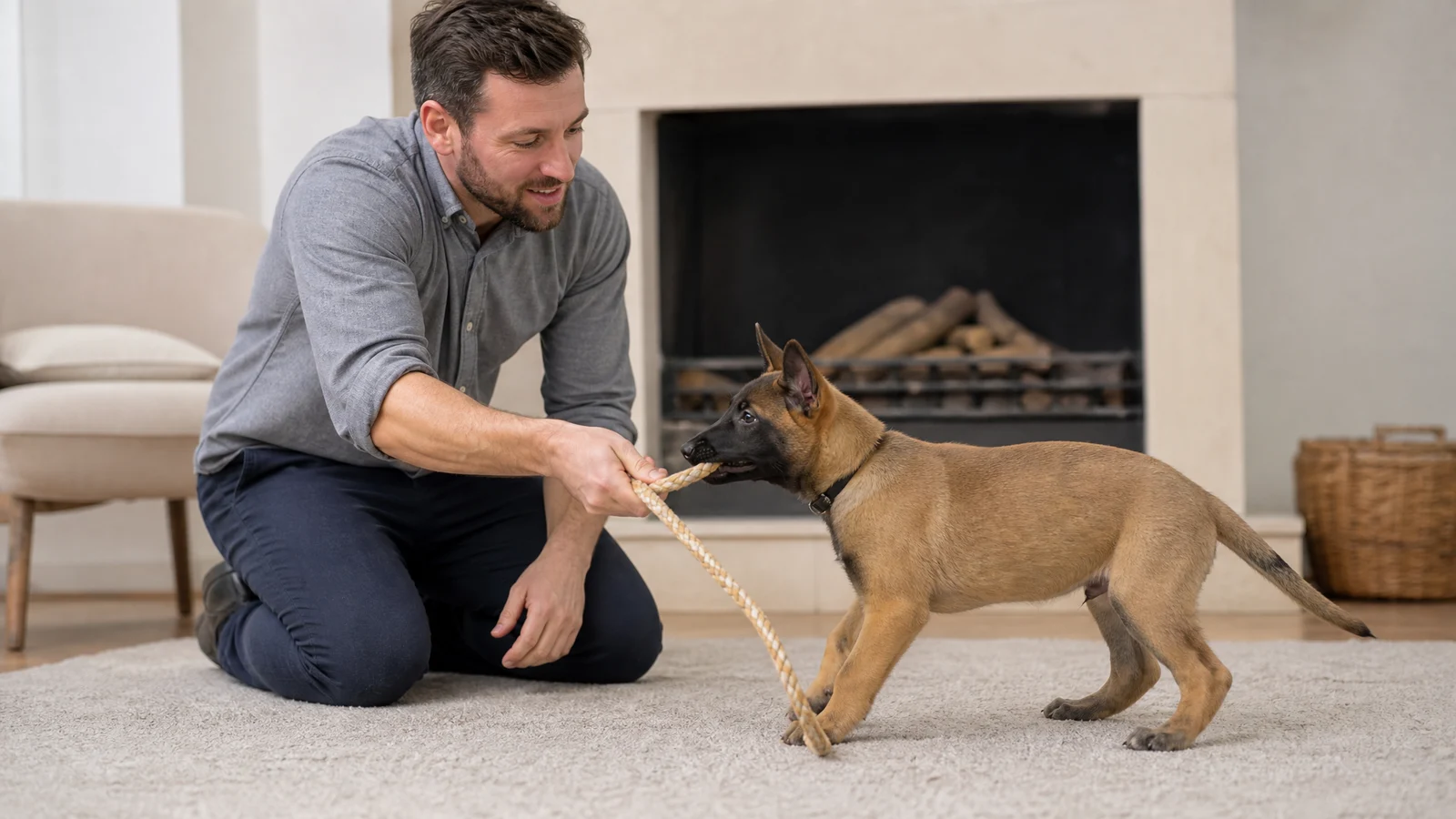
Why does a Malinois puppy bite so much, and when will it stop? The usual reply is that all puppies do it and grow out of it. That is true as far as it goes, but it falls short for a herding-bred dog, because the mouth is tied to a drive for moving things that does not fade on a calendar.
Handled badly, the nipping hardens into a fast, grabby style of play that hurts guests and frightens children. Handled well, the same energy becomes a dog who uses their mouth with care and brings that intensity to toys and training. We have spent many years inside this breed's behavior and training, and the method here follows how the Malinois is built.
Below, you'll find the working background behind the biting, the teething timeline, and the steps that change it, including toy redirection, calm timed breaks, and rewards for gentle contact, ending with a two-week schedule.
Belgian Malinois Breeding Behind Puppy Training
To understand the biting, start with the job. The Belgian Malinois was first bred around the city of Malines in northwestern Belgium and is one of four closely related breeds of Belgian herding dogs. Breeders cared most about working character, and that emphasis made the Malinois the go-to dog for Belgian sheepherders and cattlemen.
Movement Is the Trigger
A dog selected to manage livestock must notice motion and act on it fast. Like most herding breeds, Malinois have a high prey drive and a strong interest in moving objects. Prey drive is the urge to watch, chase and grab what moves, and a puppy's mouth is the first tool they have for grabbing.
In an adult, that drive can lead to chasing children, vehicles or other animals unless training points it at acceptable activities. In a puppy, it shows up first as grabbing whatever moves nearby.
Built to Take Direction
The breed standard describes a dog who is energetic and ready for action, yet highly responsive to the owner's direction. That pairing is the good news, because the puppy who nips is also built to listen.
What the Malinois asks in return is a commitment to active interaction. Without intensive, long-term training, these dogs invent their own activities, and those can turn destructive. An underused dog becomes a frustrated one, and mouthing can be one way a puppy with too little work shows it.
Read early biting as a working mind short of work. The fix is to give the drive a legal outlet and the mouth a better job.
Why Puppy Mouthing Peaks in Teething Months
Mouthing is ordinary puppy behavior, and several causes stack together. Puppies explore with their mouths, bite in play, chew while teething, and sometimes mouth to escape handling they dislike. A puppy's mouth does the job of a toddler's hands, so it is how a young dog finds out what things are and what happens when they press down.
Teething and Tiredness
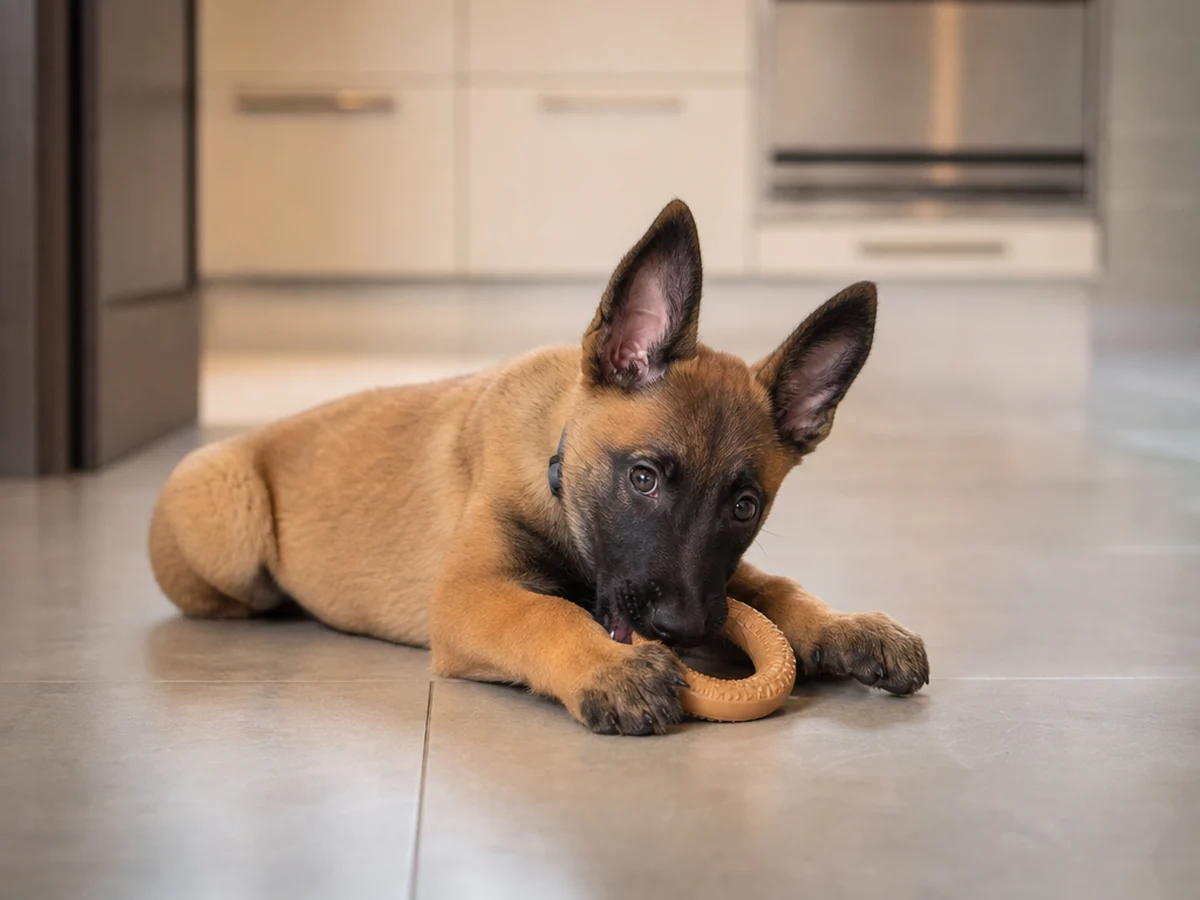
Teething brings sore gums as puppy teeth are replaced by adult ones, so chewing climbs and nips feel sharper. Chewing also soothes, which is why a safe chew toy earns its place in every room.
Overtiredness matters as much. Puppies tend to mouth harder when overstimulated, worn out or unable to cope with the moment, so a spike in nipping late in the day usually calls for an earlier nap rather than more drills.
A Loose Timeline
This table lists the phases in the order they tend to arrive, though dogs vary and exact ages differ. Use it to match your help to the phase, not to predict dates.
| Phase | What the mouth is doing | What helps most |
|---|---|---|
| Settling in | Exploring everything, grabbing at moving hands and clothing | Toys in every room, calm hands, plenty of naps |
| Teething months | Sore gums, heavy chewing, nips that feel sharper | Chew toys on hand, quick redirects, shorter and quieter play |
| Adolescence | A stronger body with the same urge to grab | Keep rewarding soft contact and keep the timed breaks consistent |
| Adulthood | Mouth habits mostly set by what earlier rewards taught | Maintain the gentle rules and give daily outlets for chasing and work |
Watch behavior more than the calendar. In a Malinois the drive behind the bite can make it feel intense, and change comes from what you reward and interrupt, not from waiting. Mention the mouth at regular vet visits, especially while teeth are changing, and see our Malinois training timeline for where mouthing sits on the road to age two.
How Belgian Malinois Prey Drive Targets Hands
Prey drive runs on movement, so anything that darts, jerks or flaps becomes interesting. A puppy from a breed built around motion reacts before they think. Your body is full of that motion, which is why hands, ankles and clothing take most of the bites. These are the usual triggers:
- Hands that wave, wiggle or pull away during play give the puppy something to chase and grab, and a quick yank back often makes the grab stronger.
- Ankles and feet moving across the floor look like a target, especially when you walk fast or turn suddenly.
- Sleeves, pant legs, hems and shoelaces swing and flap, so they get grabbed and tugged even when no skin is involved.
- Squealing, flailing or running away, especially by children, speeds up the chase and winds the puppy higher.
Your reaction is part of the game. Squealing and running feed the chase, while calm stillness gives the puppy nothing to pursue. The puppy is not attacking you but responding to motion, so the cure is to make your motion boring and offer better motion somewhere else.
Children move the most and squeal the most. Supervise every interaction, and teach kids to stand still like a tree and call an adult instead of running.
Puppy Training Starts With Redirecting Bites to Toys
Redirecting means offering a better target at the instant teeth touch skin. It works with the drive instead of against it, because the puppy still gets to grab, tug and chase, only on an object made for it. That is the channeling of chasing instincts that this breed needs. Keep a few toys within reach in every room so you never hunt for one while a puppy hangs from your sleeve.
- Freeze your hands or feet the moment teeth touch, and keep them quiet instead of pulling away.
- Say a calm marker word, then bring in a toy and wiggle it along the floor so it moves like something worth chasing.
- When the puppy grabs the toy, praise warmly and play for a short while.
- Repeat every time, so the toy becomes the first thing the puppy looks for when the urge to bite arrives.
Toys that drag, bounce or flutter on a short line or soft rope work better than ones lying still, because they carry the movement the puppy is after. Rotate a few types so none gets dull, and put them away between sessions so they stay special.
Mental work counts as an outlet too. Simple nose work games, such as scattering treats to sniff out, give an energetic dog practice at concentrating. For a breed made to be taught and assigned tasks, a sniffing job gives the mouth a rest from your ankles.
Expect to repeat the redirect many times a day at first. Consistency teaches more than any single clever toy, and the puppy soon starts hunting for the toy on their own.
Timed Breaks in Puppy Training for Soft Mouth Control
Redirection will not always work, especially when the puppy is tired or wound up. A timed break teaches the same lesson calmly. After a hard bite, ignore the puppy by turning away and stay out of the game for 10 to 20 seconds. Then rejoin and start playing again. The puppy learns that gentle mouths keep play going, while a painful bite makes it stop.
Keep the break boring. Stand up, turn your side to the puppy, say nothing dramatic and wait. A long pause can confuse a young dog, and the aim is only to show that the game ends when teeth press. When time is up, return calmly and offer a toy so play restarts on the right foot.
If the puppy follows and keeps grabbing clothing. Take the pause behind a baby gate or in another room, so your hands and legs leave the chase entirely.
You may have been told to yelp like a littermate when bitten. For a puppy bred to chase movement, that sound can read as more play, so a quiet stop usually works better.
If the biting turns frantic and the puppy cannot settle, a rest in a crate or pen with a chew may be the kindest break, since an overtired puppy needs sleep more than a lesson. End every pause like the end of a game, never like anger, and the puppy learns that softness brings you back.
Rewarding Gentle Contact in Puppy Training
Stopping hard bites is only half the lesson, because puppies repeat what pays. Gentle contact is any soft-mouthed moment, such as a lick, a mouth resting on your hand with no pressure, or polite treat-taking. Mark that moment with a short word like yes. A marker word is a signal that tells the puppy exactly which behavior earned the reward, and a treat or calm praise follows.
Early socialization and obedience training are musts for the Malinois, and rewarding gentleness is one of the earliest forms of both. Soft mouth becomes the habit because it keeps paying off.
Gentle Hands
Offer a treat from a flat palm or closed hand and mark the moment the puppy takes it softly. If the teeth press, calmly draw your hand away and try again. Over time, ask for a little more gentleness before each treat, and let calm petting or a toy game follow when the pressure stays light.
Malinois are affectionate with family but may be reserved with strangers, so ask guests to offer treats the same way and let the puppy approach at their own pace.
Clothing and Ankles
For clothing, reward the choice to ignore it. When you walk through the room and the puppy does not grab your pant leg, mark that moment and toss a treat or a toy ahead for them to chase. Rewarding the move toward the toy instead of your feet builds the habit without any fuss.
Fourteen Days to a Softer Belgian Malinois Mouth
Use the next two weeks to build one routine from redirecting to a toy, taking a timed break, and rewarding gentleness. Keep sessions short and stop before the puppy tires, since a rested Malinois learns and an overtired one mouths harder. Each day, add a nose work game and a nap, and jot down the times when the biting spikes.
- Early week one: stash toys in every room, redirect each bite to a toy, and praise the grab. Skip the breaks for now so the toy rule sinks in first.
- Late week one: add the timed break for hard bites, pausing for 10 to 20 seconds and returning with a toy. Keep the pause identical every time.
- Start of week two: mark and reward every soft touch, including polite treat-taking and passing your ankles without a grab.
- Middle of week two: bring the whole family and any regular guests into the same rules, so the puppy meets one consistent set of answers.
- End of week two: review your notes, move the nose work game ahead of the hour when the biting peaks, and raise any worry about sore gums at the next vet visit.
Expect progress, not perfection. By the end of week two you should see shorter bites, quicker turns toward the toy and more soft touches, though dogs vary.
Redirect, pause, reward: that is the whole routine. This is not a dog who can be left in the backyard, and daily walks are not enough either, so keep giving active interaction, a clear outlet for chasing and a reward for gentleness. A puppy given all of that rarely needs your ankles as a toy, and the mouth you struggle with now grows into a careful, responsive working partner.
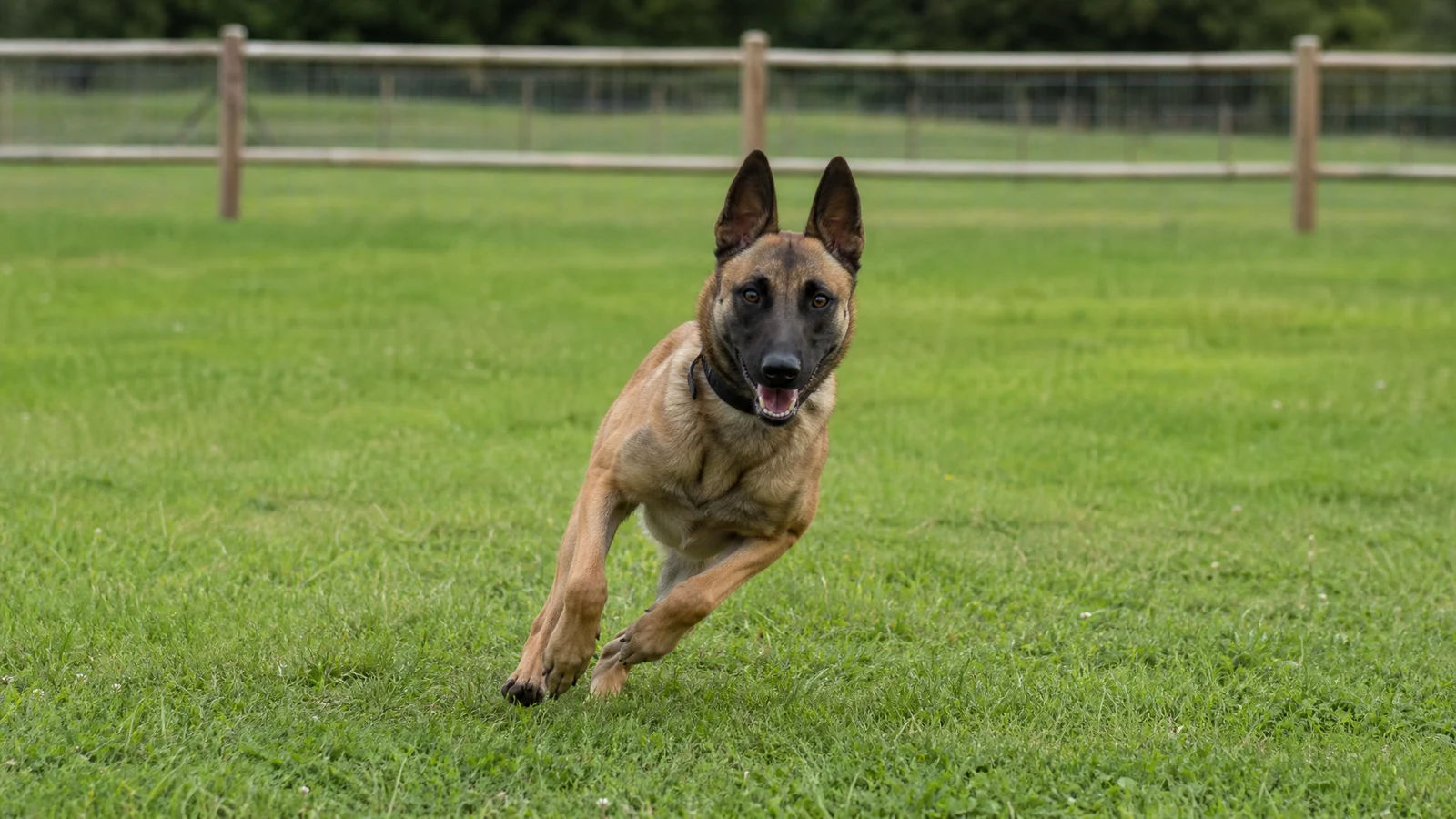 Training basicsTeaching a Belgian Malinois to Turn Back Mid-Chase
 BehaviorWhy Is My Malinois Wrecking the House? Try Real Work
 BehaviorMalinois Quirks: Pacing, Circling and Never Switching Off