 Malinois
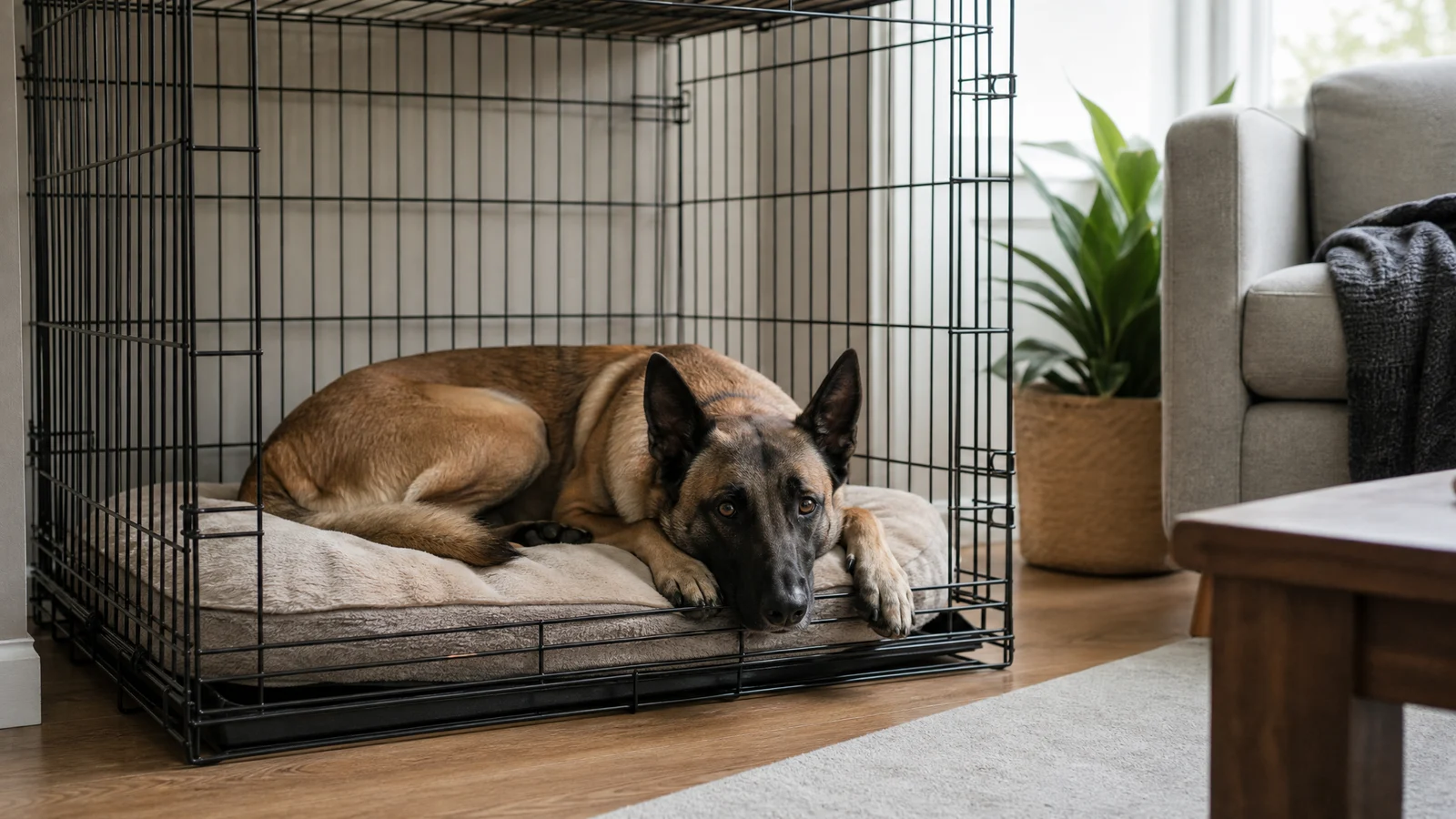
A Belgian Malinois may relax in a latched crate while you remain beside them, yet worry as soon as you leave the room. Another dog may nap alone behind a gate yet object when a crate door moves. These are not contradictions. They are two different skills that owners often put on one clock.
Clock one measures confinement: entry, door movement and duration behind the door. Clock two measures absence: your movement, disappearing from view and staying away. Train them separately until each is easy, then combine two familiar pieces. This matters for a breed known for close partnership and alert attention to people.
We'll walk you through voluntary crate entry, the door clock, Belgian Malinois alone-time practice, and the point where the clocks can meet. The final section shows how to read calm progress, when to step back, and when a crate is the wrong setting for the dog in front of you.
Crate Training Foundations
The crate must first predict access, comfort and good things rather than the end of choice. Set it in an ordinary living area where your dog can observe quiet household life. Secure the door open so it cannot swing, and let the first sessions happen while nobody is preparing to leave.
A crate should fit the dog and allow a natural position, but size does not create safety by itself. The RSPCA describes a crate as a safe haven and recommends short introductory sessions. Your dog's willingness to return is the more useful measure of whether the setup feels safe.
Voluntary Entry
Begin outside the crate and reward any calm investigation. A look, a sniff or one paw inside can earn food placed where the dog made the choice. Gradually place the reward farther in, but keep the doorway open and let the dog turn around or leave without being followed.
This is shaping, which means paying small pieces that lead toward the finished behavior. Battersea advises trainers to break behavior into small steps and reward them in sequence. For a fast, responsive Malinois, precise payment prevents speed from becoming a frantic dash in and out.
Calm Occupation
Entry is only the first piece. Feed a few rewards between the dog's paws while they remain inside, then pause and allow them to leave. A chew or food toy can extend calm occupation if it helps this dog settle, but it should not be used to hold a worried dog in place.
Watch the body rather than the bowl. A dog who shifts onto one hip, breathes normally and stops monitoring every hand movement is beginning to rest. A dog who eats rapidly while braced toward the exit is occupied, not necessarily comfortable, so shorten the next repetition and keep the door open.
Crate Training Door Clock
The door clock starts only after voluntary entry and calm occupation are easy. You remain beside the crate throughout this stage, which keeps human absence out of the lesson. Move the door a little, reward while it moves, then open it fully before the dog has a reason to push toward it.
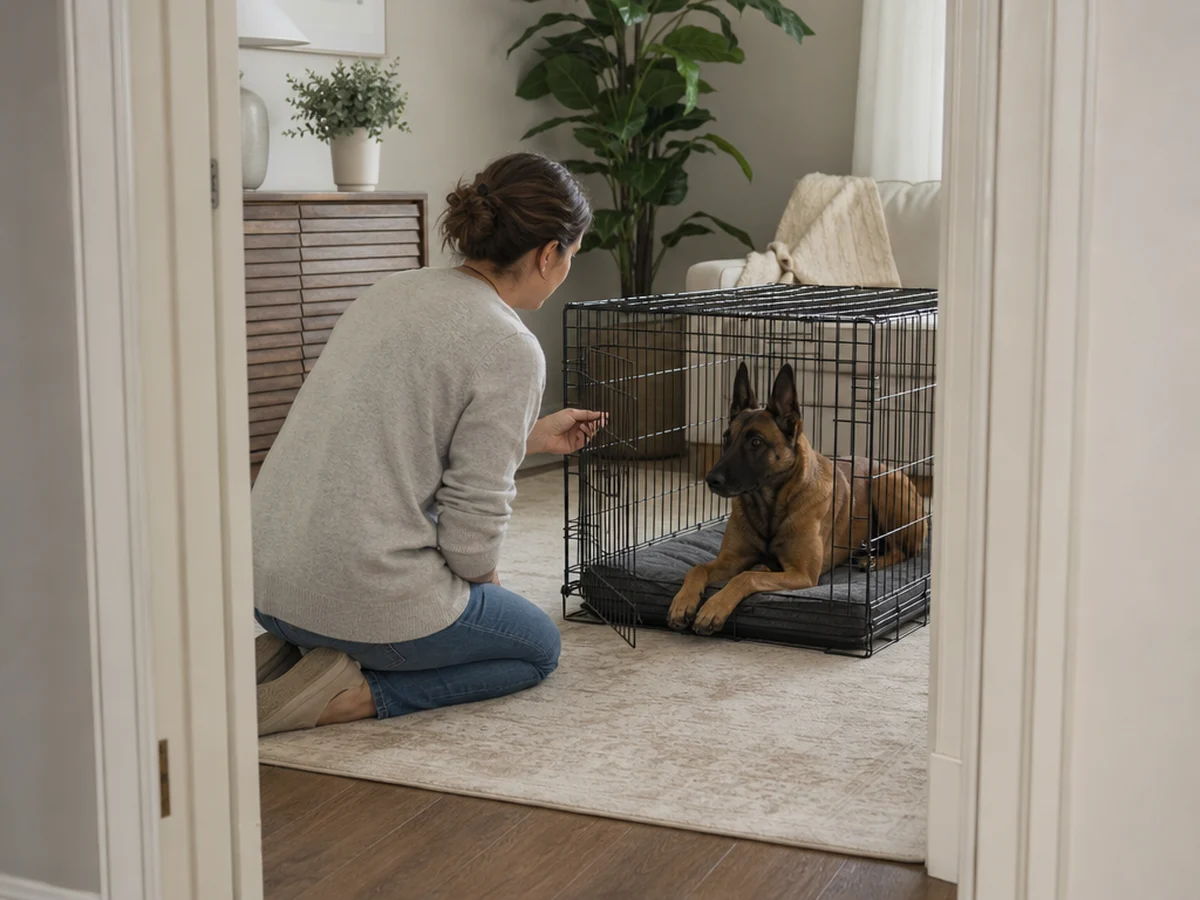
Duration is not the first goal. The first goal is a dog who treats the door as ordinary information. A Malinois notices small changes quickly, so quiet repetitions of hinge movement can be more useful than one ambitious closure that changes the emotional meaning of the crate.
The First Door Movement
Touch the door, move it a few inches and reward the dog for remaining loose. If the dog follows the door with their body, make the motion smaller. When that movement becomes dull, bring the door closer to the frame, briefly touch the latch and reopen before adding any real duration.
Release the dog with a consistent word instead of letting them burst through as the door opens. Reward a pause, open the door, give the release and let them exit. This makes the opening predictable and separates freedom from frantic pressure against the barrier.
Longer Closed Rest
Once a brief closure is easy, add duration in uneven, modest steps while you stay nearby. Follow a slightly longer repetition with an easy short one, and sometimes release the dog during calm occupation instead of waiting for them to finish. Predictability comes from the release routine, not from making every repetition longer than the last.
Build real rest, not endurance through discomfort. If the dog stops chewing, stares at the latch, pants, paws or vocalizes, the current step is too difficult. Wait for a brief quiet gap if opening is safe, then make the next repetition short enough that those signs do not appear.
Belgian Malinois Absence Clock
Now leave the crate door open and train the second clock. The dog can work from the crate, a mat or another safe resting place, because this lesson is about your movement rather than confinement. Reward staying settled as you shift position, stand up and take one step away.
Separating the clocks gives you useful information. If the dog stays relaxed while you move around with the door open, absence is developing even if closed-door duration is still short. If they follow every movement, the next job is smaller changes in distance, not a longer crate closure.
Movement Around the Room
Start with movements too small to predict departure. Stand and sit, walk to a nearby chair, or pick up an ordinary object, then return and reward calm. Mix these with long periods in which nothing happens, so the dog learns that your motion does not always begin an event.
Use ordinary reward-based structure rather than trying to exhaust the dog first. The AVSAB statement says dogs learn best with routine and clear guidelines taught through reward. Appropriate exercise can help a Malinois arrive ready to rest, but fatigue cannot teach safety during absence.
Briefly Out of Sight
Step behind a doorway and return before the dog gets up. The first disappearance may be only a natural pass behind the wall, followed by an immediate return and quiet reward. Repeat until the dog keeps the same soft posture, then vary the absence rather than increasing it in a straight line.
Do not use vocalizing as the timer that brings you back. Instead, plan repetitions below that point and observe the earliest change, such as a head lift or a fixed stare toward the doorway. If worry begins, shorten the distance or keep part of your body visible on the next trial.
Combining Crate Training Clocks
Combine the clocks only when the door can close calmly with you present and the dog can remain settled while you move out of sight with no confinement. Choose easy versions of both. Close the door for a familiar brief interval, take one familiar step away, return, reward and release.
This is multiplication, not addition, from the dog's perspective. A closed door plus a disappearing person can feel much harder than either piece alone. Keep every combined repetition below the first stress sign, then separate the clocks again for most practice so neither skill becomes dependent on the other.
Pair Two Easy Criteria
Pick a door duration the dog has completed comfortably many times and an absence smaller than their proven easy distance. If the combination changes their body, reduce one criterion rather than asking for persistence. The successful repetition is the one that looks almost boring.
ASPCA guidance notes that a crate can help some dogs who learn it is a safe place, while it adds stress for others. If confinement itself increases distress, use a safe room or gate for absence practice and keep crate work separate, provided that setup is safer for the individual dog.
Vary Departure Details
Keys, shoes, a bag and a particular doorway can all become signals that predict a long absence. Handle those details during easy sessions without leaving, then put them down and resume ordinary life. Vary which cue appears so the dog responds to the actual skill rather than memorizing one performance.
Progress looks like choice before it looks like duration. The dog enters without being lured deep inside, remains loose while the door moves, and can watch you stand without springing up. Those quiet details show that the two clocks are developing, even if a long real-world absence is not ready.
A manageable wobble is a small change that resolves when you lower one criterion. The dog may lift their head when you leave, then settle when the absence becomes easier. Persistent panting, escape attempts, drooling, nonstop vocalizing or refusal to enter is different. Stop increasing difficulty and reassess the setting.
Belgian Malinois Crate Training Progress
Use the same four checks whenever you consider advancing. They keep the decision tied to the dog's body instead of a duration target the household hopes to reach:
- Meet the dog's ordinary movement and bathroom needs before practice without trying to exhaust them, then allow a quiet transition into the training space.
- Set up the crate or safe area with the same comfortable resting option used in easy sessions, keeping the room and household activity familiar for this repetition.
- Choose one familiar door criterion and one easier absence criterion, then return before posture changes, and follow that combination with an easier repetition rather than a harder one.
- Record the first body change and make the next repetition easier if it appeared, including which motion or departure detail came immediately before it.
We do not use the crate to discover how long a distressed dog can endure. If the crate adds stress, choose safer management while you seek help. A veterinarian can rule out physical contributors and discuss the behavior, and a qualified reward-based behavior professional can design a plan below the dog's distress threshold.
Keep regular vet visits in the routine even when progress is smooth, because sudden changes in sleep, elimination or tolerance of confinement deserve a health check. Practice also has to fit the dog's daily life. A well-used crate is a resting skill, not a substitute for daily training routine, social time or thoughtful work.
The two-clock rule keeps the finish honest. Teach the door without disappearing, teach absence without shutting the dog in, and combine only the easy versions. Crate calm grows when the dog can predict safety on both clocks, not when the calendar says they should be ready. Their fast-learning temperament rewards clear criteria, but it does not make forced independence safe.
 Exercise and jobsBelgian Malinois Exercise Needs: Is a Daily Walk Enough?
 Training basicsHousetraining a Malinois Puppy With a Reward Schedule
 Training basicsBelgian Malinois Working Dog Training for Pet Owners