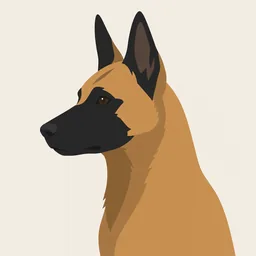
 Malinois
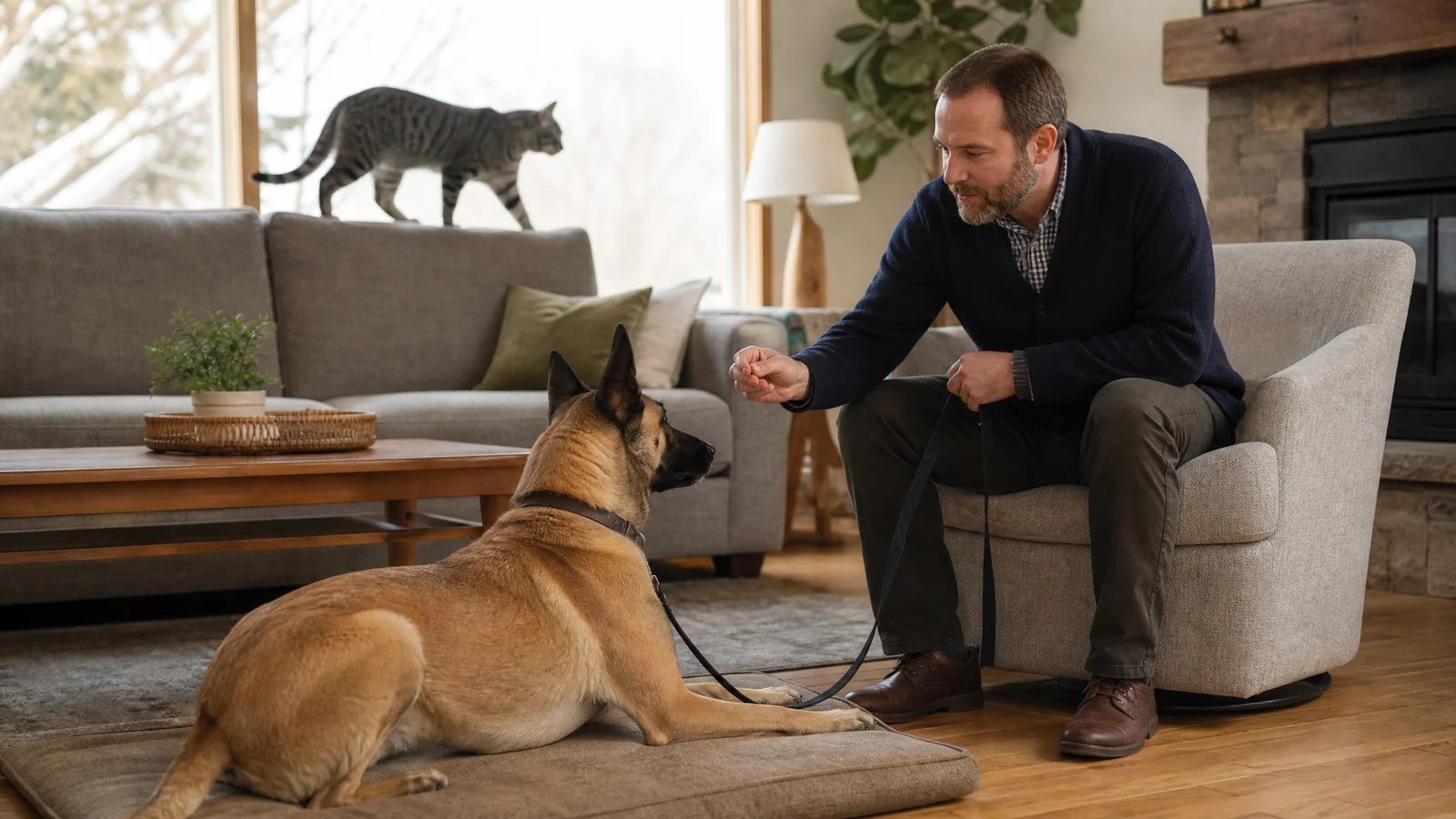
Prey drive in a Belgian Malinois can show up early, so start calm, rewarded practice well before the dog is anywhere near a cat, a flock of hens, or a small dog, and plan on it taking weeks rather than days. Some dogs get there faster. Planning for the slow version is cheaper than recovering from the fast one.
Timing matters because every chase that works teaches the dog to chase better. Handled well, you get a Malinois who shares a house with a cat and ignores the neighbor's hens. Handled badly, you get a stressed cat, a fence nobody can use, and months spent rehearsing the wrong job.
In this article, we'll go through what each age stage looks like, a settle on a mat, a look-away habit, and how both play out with cats, chickens, small dogs, and your daily management.
Belgian Malinois Prey Timeline
Like most herding breeds, Malinois have a high prey drive and a strong interest in moving objects, and that interest can lead to chasing children, vehicles, or other animals unless it is directed into acceptable activities through training. The instinct does not wait until you are ready, so your training calendar has to follow the dog's age, not your schedule.
Puppy Months
Malinois have a strong interest in moving objects, so a cat crossing the room, a rolling ball, or a hen outside the patio glass can all be triggers. This is the cheapest time to teach, because the habit is young and a handful of treats for calm outweighs a handful of chases.
A chase that works even once can become a habit, so management matters from the very first day. Baby gates, closed doors, and a leash outdoors keep the rehearsal from happening while your training catches up.
Adolescent Months
Skills can wobble as a dog matures, so plan for it. If a response that used to be reliable around a cat, a squirrel, or a flapping bag starts to slip, go back a step in training, make the distance greater, and raise the value of your rewards. Reward the calm look-away and the settle every time they appear, and the skills will rebuild.
Keep leashes and gates in place so no chase gets practiced during the wobble. A dependable turn-back mid-chase is your safety net for the bad days.
The Adult Dog
An adult Malinois is not finished with prey drive, only better at hiding it when training has been good. The breed standard pictures an energetic dog, ready for action, who still answers readily to direction, and that responsiveness is what you build on. A new kitten or a new flock deserves a fresh start at the bottom of the ladder, not the benefit of the old dog's reputation. Expect the same dog to be easy with one animal and hopeless with the next.
Training Starts With Settling
Settle comes before any exposure to another animal, because a Malinois who can't lie down and breathe near mild excitement can't be taught to disengage from a flapping hen. Trainability for this breed is rated as high as it goes, and settle is where you spend it on purpose. An underutilized Malinois is a frustrated one, and frustration makes a poor housemate for a cat.
Teaching the Mat
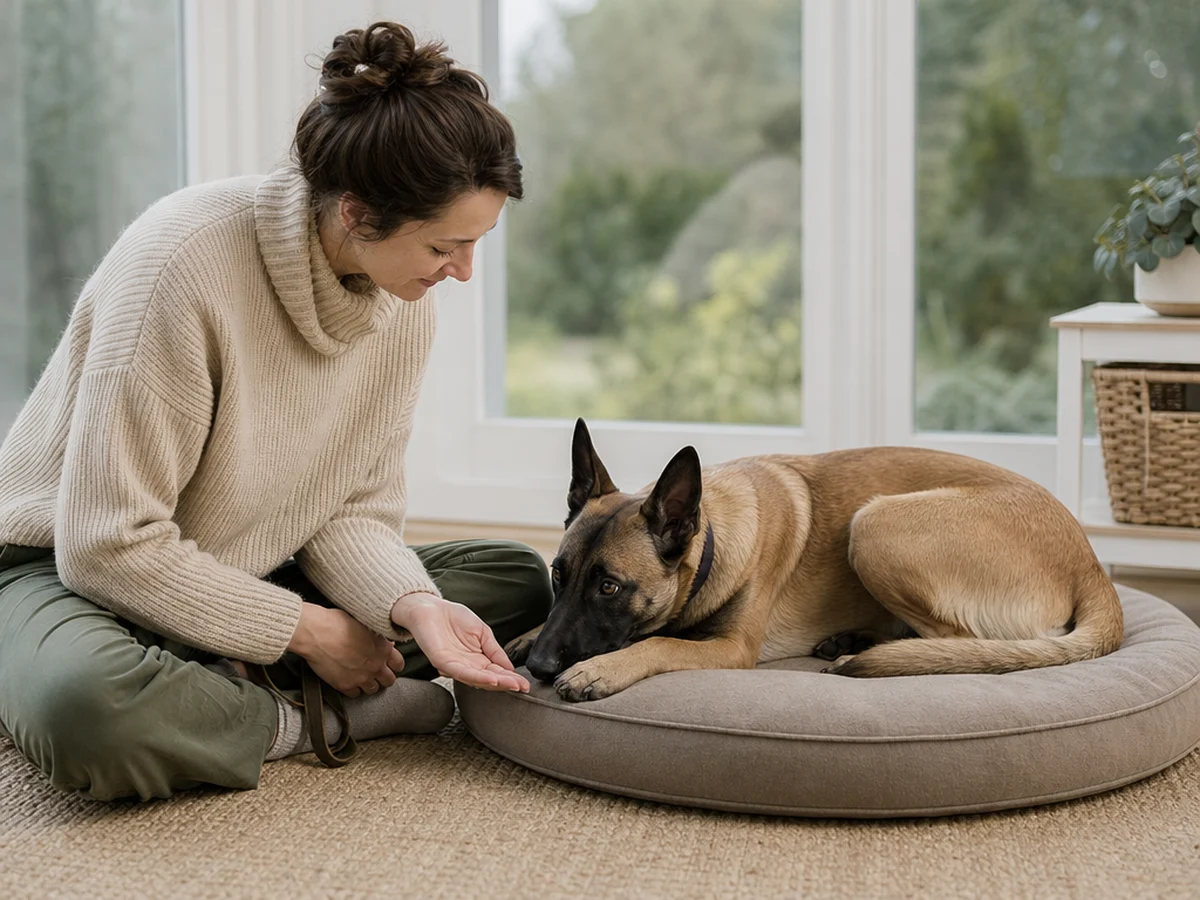
Pick one mat or bed and keep it the same, since a clever dog will decide any rectangle on the floor is the mat if you let them. In a quiet room with no animals in sight, reward stepping onto it, then lowering the body, then staying lowered. Drop treats between the front paws so staying put is how they collect.
Add a word only once the dog is dropping onto the mat without being lured. The word matters less than using it the same way every time.
Building Duration
Duration is built from easy wins. Start with a few seconds, pay often, then stretch the gaps between treats a little at a time. We have spent a long time training Malinois, and one pattern holds: the dogs who end up safe around small animals are the ones whose calm got rehearsed long before it was tested.
End each round while it still feels easy. A dog who pops up and wanders off has been asked for too much, so make the next round shorter.
Once the mat holds through ordinary household noise, add movement of your own, like walking across the room, dropping a toy, or opening a door. Your movement rehearses a cat's movement. Reward-based training works because paying a dog in food, toys, or praise for a behavior makes that behavior likelier next time, so pay for staying put every single time at this stage.
Look-Away Skills for Belgian Malinois
Settle is the floor, and look-away is what keeps the dog on it when something interesting runs past. The goal is a Malinois who notices movement, glances at it, and turns back to you for payment.
That beats a dog you hold back with both hands. This is a thinking breed, so give them something to think about besides the hen, and pay them well for choosing it.
Marking the Glance
Begin with a mild trigger at real distance, such as a cat resting across a room behind a gate or a hen glimpsed far off. Wait. The instant the dog's eyes leave the animal, even for a flick, mark it with your marker word and hand over the treat at your knee so they have to turn toward you to get it.
No cue yet, because the dog is offering this on their own. Keep your tone flat and your marker word identical every time. This is where reward-based methods earn their keep. In survey studies, dogs trained that way showed greater obedience, and each paid glance makes the next one more likely.
Adding Movement
Change one thing at a time. A cat walking is easy, a cat trotting is harder, and a flapping hen is the final exam. Add speed or reduce distance, never both in one session, and if treats stop working, go back to the last version that did. Distance is your volume knob, and you are allowed to turn it down.
Walks give you free practice. Every squirrel, jogger, and skittering leaf is a rep, so pay for each glance away you get.
Later, add a cue such as look, said just before the movement appears. The logic mirrors a go-away cue, which teaches a dog they can walk away from a situation instead of feeling trapped. A Malinois who knows turning away pays is calmer near a hen than one who has only been held back.
Training Around Cats and Chickens
Now the two skills meet real animals. Each species needs its own rules, written down so everyone in the house applies them the same way.
Individual dogs vary a great deal here. Some Malinois settle with a cat quickly while others stay locked on far longer, and the same dog may be easy with the cat and hopeless about hens. Let behavior, not the calendar, set the pace.
Cats
First greetings belong on a leash, ideally behind a baby gate, so the dog can see and smell the cat without reaching them. Reward the mat, reward every look-away, and let the cat leave whenever they like. A cat with a high shelf or a door the dog can't open will stroll instead of bolt, and bolting is what starts chases.
House rules for the cat are short. The cat always has an exit. The dog never follows the cat onto the shelf, into the litter room, or past a closed door. Skip the common advice to let them sort it out themselves, because with this breed every unsupervised chase is a rehearsal, and cats make poor coaches.
Keep them apart when unsupervised until calm is boring. That can take months, and the months are cheaper than the alternative.
Backyard Chickens
Hens are a tougher test because they flap, dart, and squawk, which is a full buffet for a prey-driven dog. Start inside behind the patio glass or well back from the fence, and reward the first look away. Then place the mat far from the fence line, and close distance only as the dog keeps taking treats and recovers quickly after a flutter.
The poultry rules are logistics: a secure coop or run, a leash or long line for every yard trip while birds are out, and a solid panel to block the sightline at the fence.
Bring your best treats here, because hens outbid almost everything. Maybe skip the chicken flavor while the hens are watching.
Small Dogs and Belgian Malinois
Malinois land at a middling 3 of 5 for getting along with other dogs, a score labeled as needing supervision. Small dogs add a wrinkle: they are quick and wiggly, and a dog with a strong interest in moving objects may stop seeing another dog and start seeing something that runs. Supervision means eyes on both dogs at all times, not a vague sense that someone is home.
Make the first meeting neutral and boring. Leash both dogs, walk parallel outside at a comfortable distance, and pay the Malinois for calm looks and look-aways. Close the gap in small steps and end while everyone is still relaxed. At home, start the visitor behind a gate and keep an exit ready for the small dog, such as furniture they can get under.
Play needs rules. Keep sessions short and break them up with pauses. If play gets stiff, if the Malinois starts stalking, or if the small dog tucks low and tries to leave, stop the game, take a calm break, and reward settle on the mat before restarting. Judge the game by how the small dog acts, not by how happy the big one looks.
Play style differs by dog, so watch body language more than enthusiasm. Our guide to socializing a Malinois covers more on reading other dogs.
Management Between Training Sessions
Training takes minutes a day, and the other hours decide whether it sticks. Every chase the dog rehearses between sessions undoes a surprising amount of rewarded calm, and a Malinois left without enough to do will invent activities of their own. These defaults cover most households:
- Baby gates sit between the dog's space and the cat's, with a high perch or a closed door on the cat's side as a retreat.
- A leash or long line goes on for every yard trip whenever hens, squirrels, or neighbors' pets might appear.
- A crate or gated room covers any time nobody can watch, since an unwatched chase is a free rehearsal.
- A fixed routine at doors and the car has the dog sit and wait calmly instead of racing outside.
- A daily outlet of mental and physical work keeps an underused Malinois from making their own fun.
Daily work counts as management too. Combine exercise with sniffing games, trick training, and a chew afterward, since a dog who has been served has less need to go looking for entertainment.
If the house is already paying for boredom, our piece on the Malinois wrecking the house shows how real work can replace it. On walks, loose-leash walking skills do the same job for a dog who circles and lunges. Book regular vet visits too, because a sudden behavior change deserves a professional look rather than assumptions about attitude.
The Next Two Weeks of Training
Here is the next two weeks: settle first, look-away at distance second, and a single carefully managed step closer last. Keep sessions brief, a few a day, with management running all day.
- Early in the first week, choose the mat and teach the lie-down on it in a quiet room with no animals visible, paying for every stretch of staying there.
- Midweek, build duration with household noise and your own movement, and put gates and leashes in place for everything outside training.
- Late in the first week, start look-away with the cat or hens at a distance where the dog still eats, marking and paying every glance away.
- Early in the second week, repeat the same skills on walks and at the patio door, changing only distance or speed in any session.
- Midweek in the second week, run one short leashed session with the small dog on neutral ground, ending while everyone is relaxed.
- At the end of the second week, take a single carefully managed step closer with one animal, behind a gate or on a leash, then review what to repeat and where to step back.
At the end of two weeks you will not have a finished dog, and nobody honest will promise you one. You will have a Malinois who has rehearsed calm far more often than chasing.
This is a breed made for tasks, so prey drive is energy waiting for a better assignment, and rewarded calm, settle, and look-away are that assignment. Hope is not a plan with this one, so keep the leash on near the hens, keep paying for the choices you want more of, and keep going well past these two weeks.
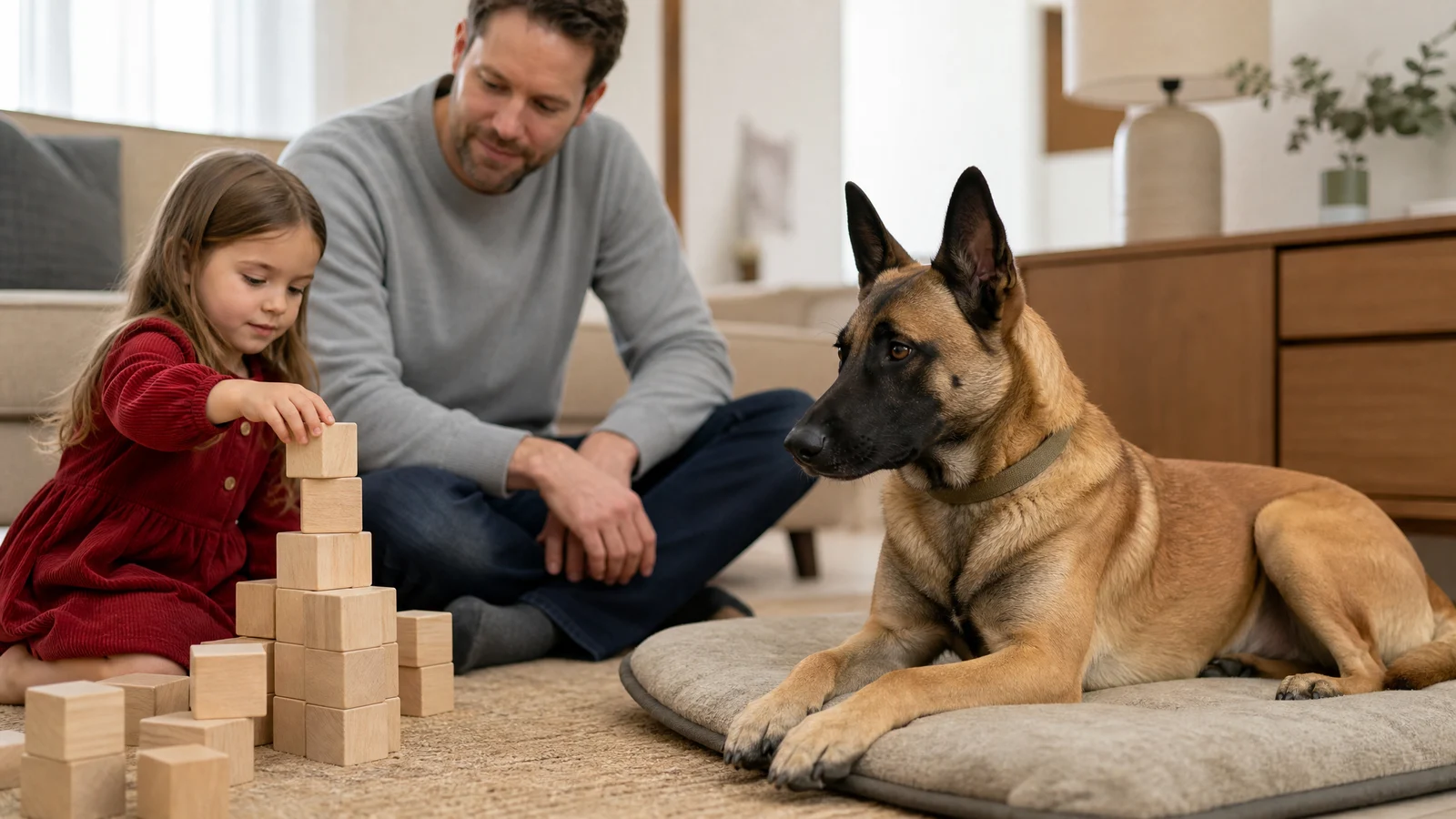 BehaviorMalinois and Kids: Supervision Rules That Keep Everyone Safe
 BehaviorFamily Pet or Full-Time Job? Living With a Malinois
 BehaviorBelgian Malinois Tug Games With Rules for a Strong Grip