 Malinois
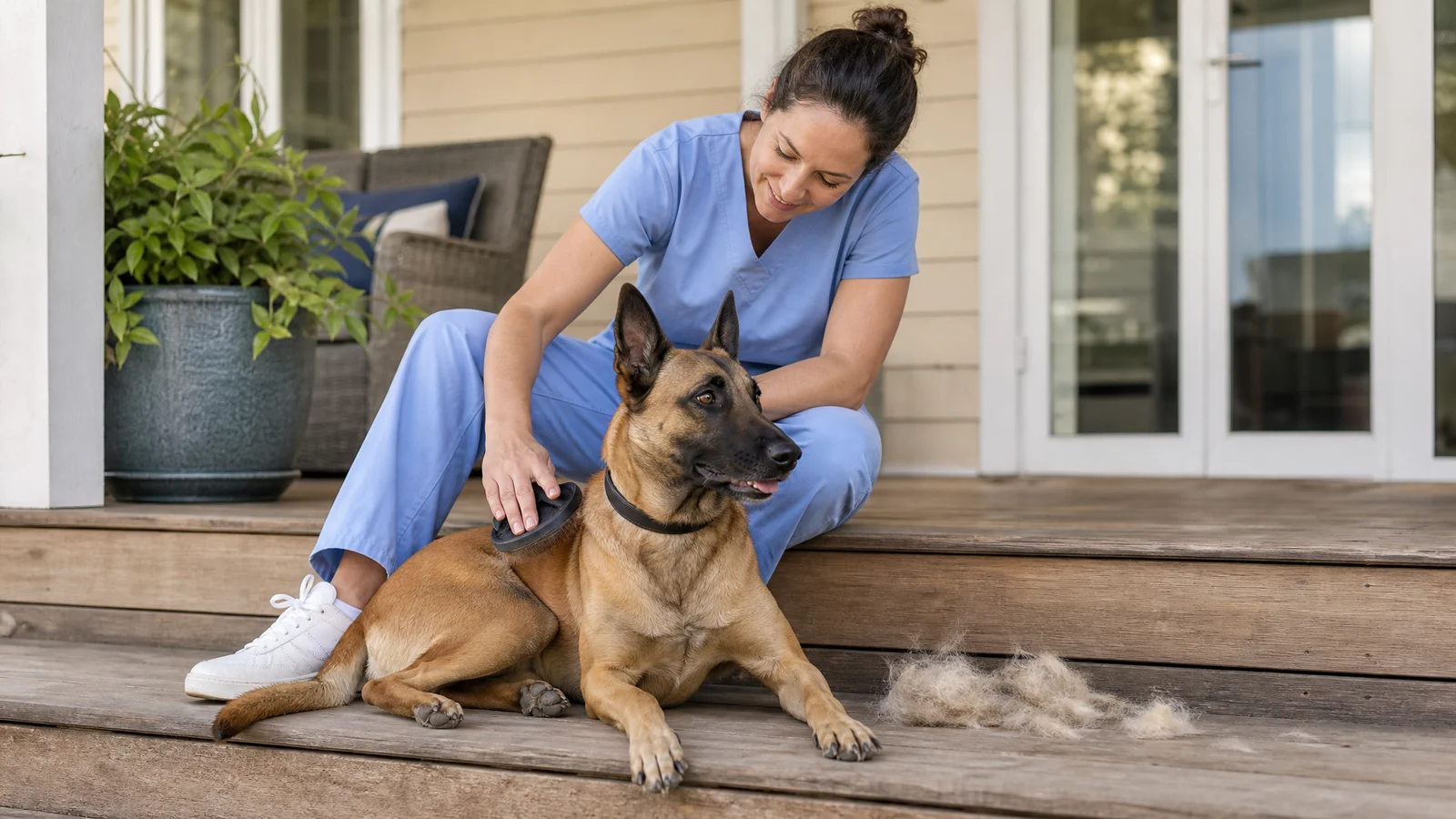
Start brushing the week your Belgian Malinois puppy comes home, not the month the hair starts landing on your couch. A dog who has already learned to love the mitt treats grooming as a calm, rewarded routine, and that habit is far easier to build early than to repair later.
This guide covers grooming for the short-coated Malinois, from the shedding rating and the coat-blowing story to brushing, wipe-downs and baths, and finally to a short rewarded routine you can finish before dinner. We test each common belief against the facts and settle it.
Handled well, grooming gives you a dog who accepts a mitt, a towel and a stranger's hands. Handled badly, it teaches a sharp, observant dog to dodge the vet table. We have trained this breed for many years, and we think the coat is the easy part while the handling is the skill.
Short Hair Does Not Mean No Shedding
The belief: a short coat means a clean house. The verdict: wrong. On a scale from 1 (no shedding) to 5 (hair everywhere), the Malinois lands on 3 of 5. That is the middle of the scale, and moderate shedding on a short coat still leaves hair on couches, car seats and dark clothes.
Length tells you how long each hair is. It says nothing about how many come out, so trust the rating over your eyes when you plan your housework.
According to the UKC standard, the Malinois has short hair on the head, the outside of the ears and the lower legs, and short hair over the rest of the body. The Laekenois is the rough-haired variety, and the standard treats differences in hair length, direction and appearance as what separates the varieties, so a dog of another variety will have a different coat to care for.
Verdict: short hair sheds, moderately. Plan for a mitt and a lint roller, and do not expect a coat that never needs attention.
Do Belgian Malinois Blow Coat Twice a Year?
The belief: the coat dumps twice a year and stays quiet in between. For the Malinois the evidence is thinner than the claim. The only measure we can point to is one moderate shedding rating of 3 of 5, with no seasonal calendar attached, so treat any firm date with suspicion.
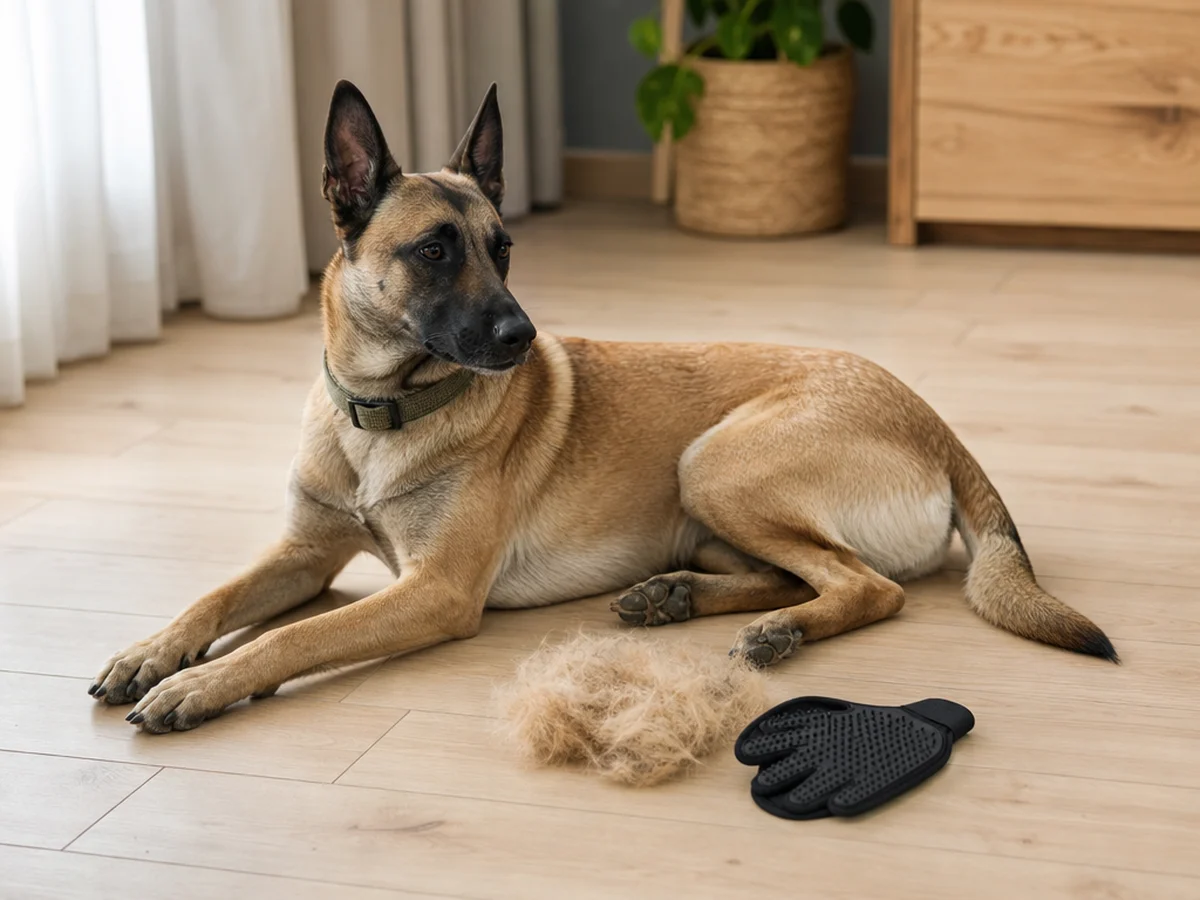
Puppies are a separate case only in one way: they have had less time to practice. Build the mitt habit early, with short, rewarded sessions, because a puppy who already likes brushing is ready for whatever the coat does later.
Dogs vary, and a heavier shed can land in any season. Brushing a little each week is the best early warning, because the mitt simply fills faster when the coat starts letting go.
Use what you see rather than the calendar. A coat that is letting go announces itself in a few plain ways you can check in a minute.
- The mitt or brush comes away with a clearly fuller load of loose hair than it did the week before.
- Loose hair collects on bedding and floors faster, even though the coat still looks full.
- Hair lifts away in your hand with an easy stroke, and it comes from all over the body rather than from one spot.
Even then the job barely changes. A heavy shed does not call for a bigger kit or longer sessions. It calls for the same calm routine, done a little more often, until the mitt comes away light again. Sudden, patchy loss is a different matter, and we cover that at the end.
Verdict: unproven as a fixed schedule, sensible as a watch list. Check the mitt rather than the date, and let a fuller load tell you when to brush more often.
Light Brushing Care Is Enough for Malinois Grooming
The belief: a working-bred dog needs a serious grooming routine. The breed standard calls the Belgian Malinois a natural breed with no need for excessive grooming, and coat grooming frequency is rated 2 of 5, which sits between monthly and weekly. Light care is the settled position.
These three physical ratings set the tools and the time a normal week needs. Read the right column as your weekly plan, not as a minimum.
| Rating | Score | What it means for you |
|---|---|---|
| Shedding | 3 of 5 | Moderate, so a regular mitt session earns its place |
| Coat grooming frequency | 2 of 5 | Between monthly and weekly, so no heavy grooming kit |
| Drooling | 1 of 5 | Less likely to drool, so no towel for the mouth |
So the kit is small: a rubber grooming mitt or soft brush, a towel and treats. A quick pass along the back, sides and chest lifts loose hair before it reaches your couch, and there is no clipping to schedule and no long session to dread.
The drool rating is a quiet bonus. At 1 of 5, this breed is less likely to leave wet patches on sleeves or furniture, so the towel is for paws, not for the mouth.
Where care really matters is acceptance. Gradual, reward-based grooming practice gets a dog used to equipment, products and the setting. That is a skill an alert, watchful Malinois needs for the vet table and any future groomer, and groomer visits can start once your puppy is fully vaccinated.
This is general information, not veterinary advice. Ask your veterinarian when your puppy is fully vaccinated and ready for groomer visits, and about any skin, coat or shedding change you notice.
Does Shedding Mean a Grooming Bath Every Week?
The belief: more shedding means more baths. The logic fails on a simple check. A bath answers a dirt problem, shedding is a loose-hair problem, and the mitt solves that in a fraction of the time. With a coat the standard calls natural, weekly baths have no support in any rating we have seen.
Wipe-downs fill the gap. A damp towel across legs, belly and chest after a muddy walk handles dirt, and a dry towel afterward gives the mitt a head start. Both take moments and both double as handling practice.
Baths still have a place, when your dog is truly dirty or smelly, but a bath is also where handling can go wrong. Wet and restrained is a lot for a dog who notices everything. Low-stress handling with minimal restraint is the standard to aim for, so keep treats within reach, keep the session short and stop if your dog's body goes stiff.
Verdict: no, not weekly. Brush weekly, wipe when needed, and bathe on the evidence of your nose and your floors. Red or itchy skin is a question for your vet, not for more shampoo.
Brushing as Training for a Belgian Malinois
The belief: brushing is a chore to get through. For this breed it is a free training session. Malinois are rated at the top of the scale for trainability and high for mental stimulation needs, so a short, predictable task with rewards suits them, and current evidence supports reward-based training as the way to teach it.
Give Each Session a Clear Finish
Pick a start cue and a finish cue and keep them identical every time. A word like brush signals that the routine is starting, and all done signals that it has ended. The finish cue matters most, because a dog who knows exactly when handling stops relaxes into it far more easily.
End while your dog is still relaxed, before the wriggle that says they have had enough. That keeps every session a win and the next one easy to start.
Build the Habit Step by Step
Build the habit in this order and move on only when your dog is loose at the current step. The coat is light, so none of this needs long sessions, and short happy repetitions beat one thorough effort every time, which is also easier for you to repeat daily.
- Say the start cue, give a treat, and let your dog sniff the mitt or brush before it touches anything.
- Make one slow stroke along the back, mark it with your marker word, and treat. Repeat a few strokes, then give the finish cue.
- Add the sides, chest and legs over later sessions, treating after each new area.
- Touch the paws, belly and ears, then reward, since these are the places a vet or groomer will handle. The guide to nail trims and body checks takes this further.
- Finish with the finish cue, a last treat or a short game, and a towel wipe-down of muddy paws when needed.
Watch the dog, not the clock. If they turn away, stiffen or walk off, end the session on a calm moment, then shorten the next one and go back a step. A dog who gets to leave learns that handling is safe, and that makes them far easier to groom later.
Verdict: brushing is not a chore to endure. It is the cheapest handling lesson you will ever teach, built from a mitt, a towel and a handful of treats, and it is the one your dog will rely on at every vet visit for the rest of their life.
Five Calm Minutes of Grooming Keep a Belgian Malinois Coat Healthy
Here is where the evidence lands. A moderate shed, light grooming needs and very little drool add up to a few calm minutes of handling each week. That small habit protects the coat, makes the vet table easier and gives a Malinois, a breed that likes to have a job, a clear task you can finish before dinner.
Judge the habit by what you see in your dog, not by the length of the session. These signs say it is working.
- Your dog's body is loose during brushing, with a soft face, relaxed shoulders and a wag or an easy stillness instead of stiffness.
- Your dog moves toward the mitt when they hear the start cue and settles when the finish cue comes.
- Loose hair lifts easily with a few strokes, and the mitt comes away light between heavier weeks.
- The skin underneath looks clean and healthy, with no bald spots, scabs or redness.
When Malinois Grooming Needs Professional Help
Other signs point to a professional rather than more brushing. Your vet is the call for skin and shedding changes, and a trainer is the call for handling trouble:
- Bald patches or thinning in one area, rather than an even loosening across the coat.
- Red, itchy or sore skin, scabs, or a dog who scratches, licks or chews at the same spot.
- Sudden heavy shedding that arrives without a clear reason or keeps going well past what you normally see.
- A dog who flinches, freezes or tries to escape handling despite weeks of gentle, rewarded practice.
Regular vet visits belong in this routine too, since a vet can check skin and coat during the exam and a dog used to handling makes that exam easy. Keep the habit small, keep the rewards flowing and keep the finish cue honest. A Malinois who learns that handling is predictable and ends well will accept a mitt, a towel and a stranger's hands, and that is the skill that matters most.
 Puppy trainingWhy Do Malinois Puppies Bite So Much? Teach a Soft Mouth
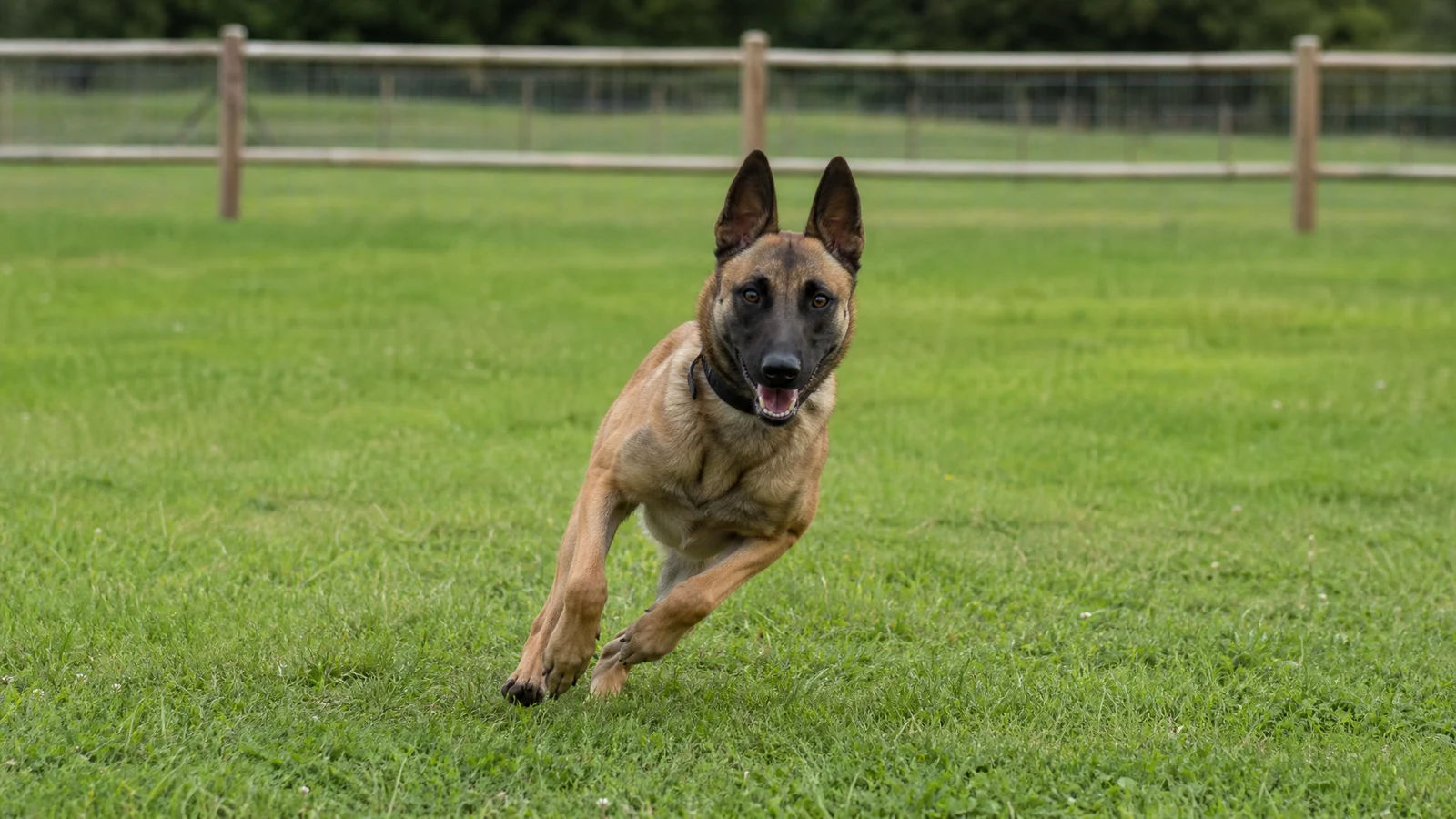 Training basicsTeaching a Belgian Malinois to Turn Back Mid-Chase
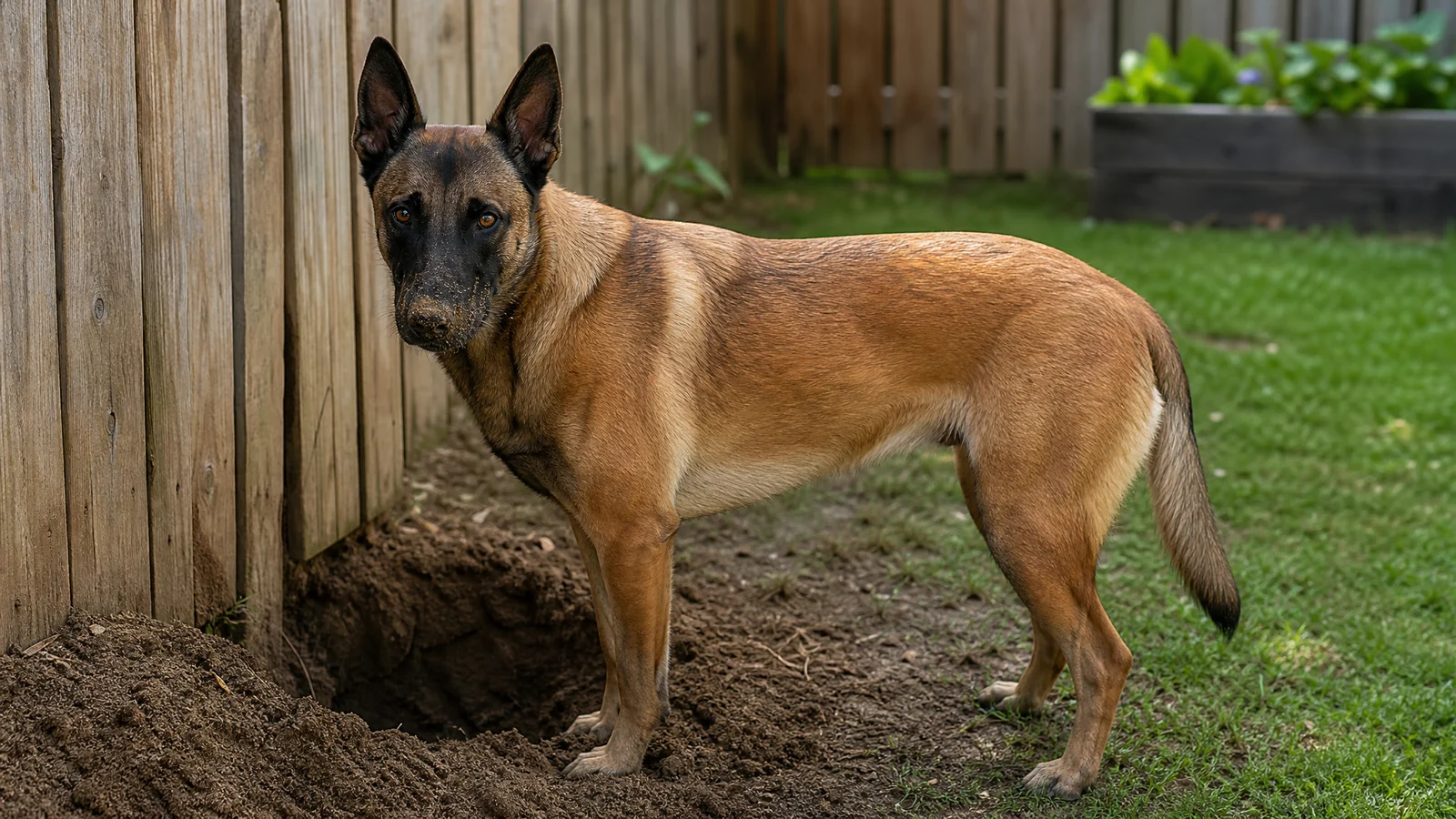 BehaviorWhy Is My Malinois Wrecking the House? Try Real Work