 Malinois
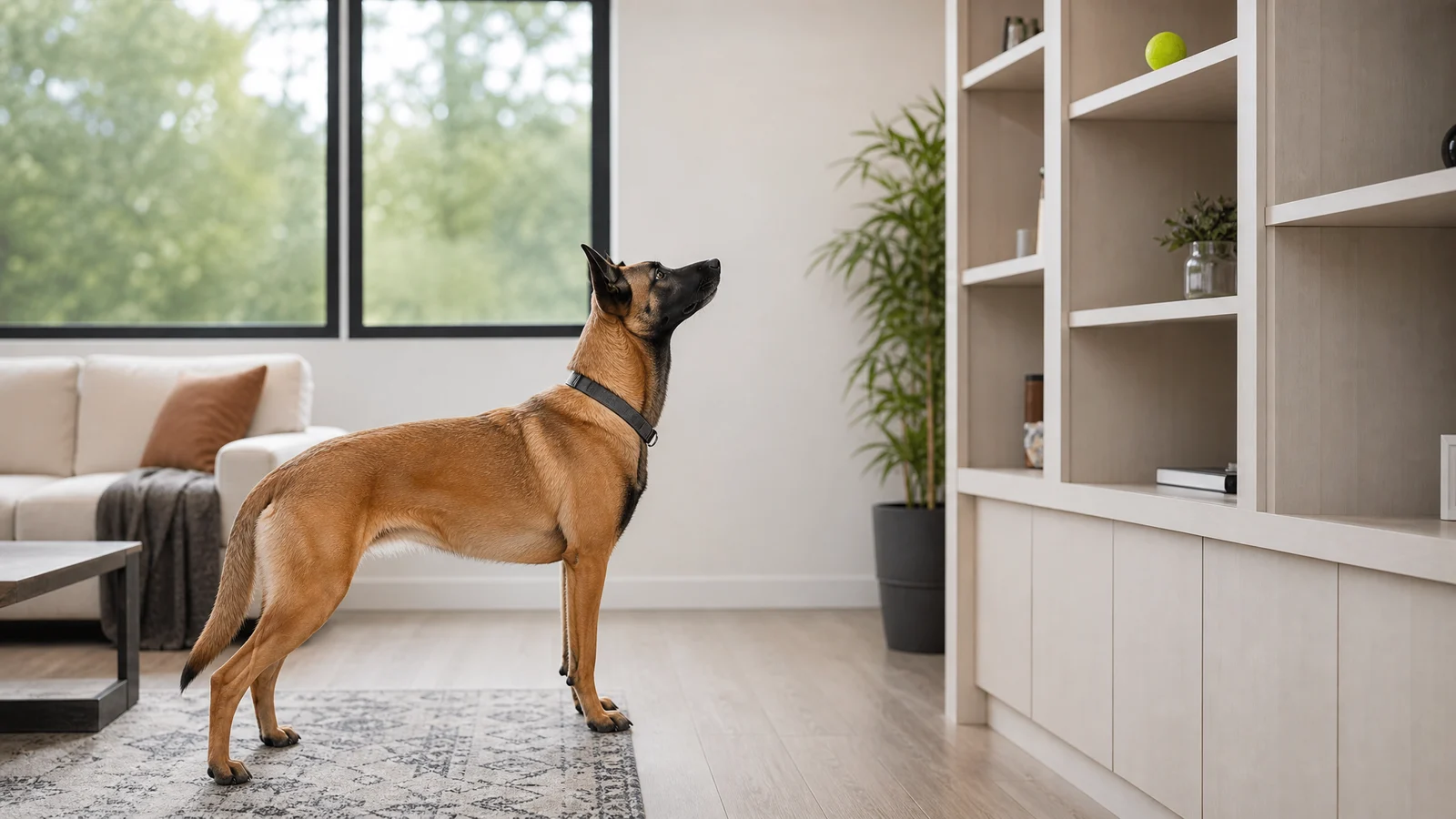
Leaving the ball out and throwing it until the dog is wild is a common way for play to tip into frenzy. Soon the Belgian Malinois stares at every hand and every pocket, and ending the game turns into a standoff. The fix is simple to say. Toys go away between sessions, and play runs in short, planned rounds that you start and you finish.
This article looks at ball and toy obsession in this breed. You will learn how to store toys, run timed rounds, and teach a drop and a settle, then how to adapt the routine if you live in an apartment, share your home with children, add another dog, or work long hours.
It matters because toy drive is the best tool you have. Handled well, it makes training bright and fast. Handled badly, it shows up as shaking, barking, jaw snapping and a dog who cannot switch off.
Toys Stay Put Between Short Ball Rounds
Management comes first because it works before the dog has learned anything. Many Malinois work harder for a ball, a toy or play than for food, so a toy lying on the floor is a standing invitation to demand a game. Drive does vary. Owners of show-line, rescue or older dogs often describe a mellower Malinois, though usually with notable prey drive, while others describe the most driven dog they have ever met. Plan for the driven end and you are safe either way.
Set the house up so the ball appears only on your terms. Use these controls from the start.
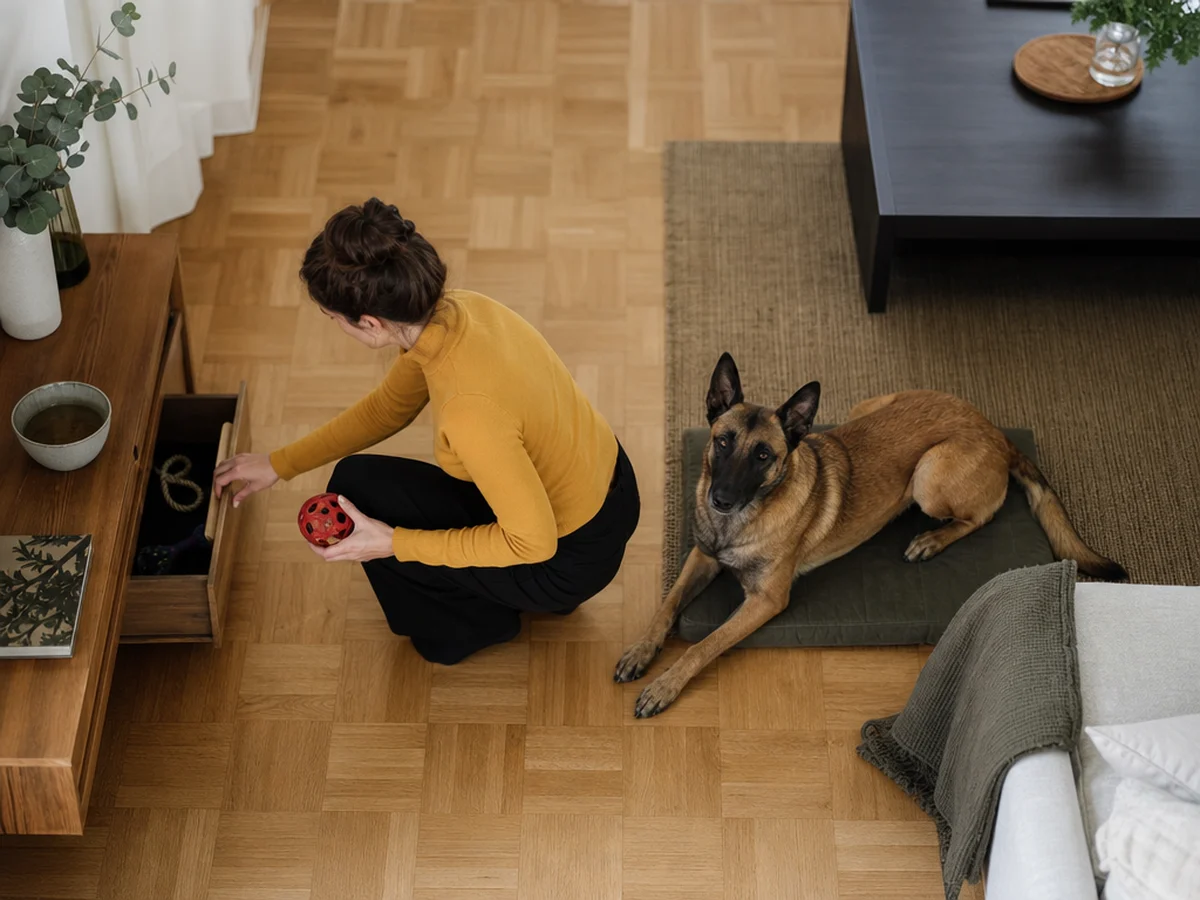
- Store every ball and toy in a closed bin or cabinet, out of sight, not on a low shelf the dog can study all day.
- Pick one favorite and give it special status. Owners who restrict access to the favorite report better focus when it does come out.
- Keep two matching toys, so you can trade one for the other instead of pulling anything from the dog's mouth.
- Leave out a few dull chews for independent time and keep the exciting items for play with you.
Then run the round itself. Decide the number of throws before the toy leaves the bin, ask for a sit, throw only when the dog is looking at you or the floor, and finish with a calm end.
Use a kitchen timer if you tend to keep going. Expect a little protest in the first days and simply wait it out.
Many Malinois are relaxed, even snuggly, in the house. The intensity shows up in play and exercise, and a dog who has had a real outlet usually settles well afterward. A planned round is that outlet, not an endless one.
Ball and Toy Obsession for a Belgian Malinois in an Apartment
Small spaces come first because fixation turns into pacing and staring so quickly there. The breed adds to it: the standard describes a marked tendency to move in a circle rather than a straight line, so a keyed-up Malinois in a living room tends to wear a track. A few owners report their dogs manage fine in an apartment or a small yard, but only when the work and exercise are real.
Keep Indoor Rounds Small
Indoor rounds should be shorter than outdoor ones. Roll the ball low down a hallway rather than lobbing it, and stop at the number of throws you chose. Endless indoor fetch is the common advice that backfires here, because it raises arousal faster than it tires the dog.
Put the big exercise outside. Owners report needing anywhere from about an hour of intense activity to 2–3 hours, and many find scent work, tracking or agility suits their dog.
Drop, Then Settle on a Mat
Every round ends the same way, in this order. Keep the sequence predictable.
- Ask for the drop. Trade the ball for a very good treat such as chicken, since many Malinois rate toys above food.
- Mark the moment the mouth opens, feed, and often give the toy right back so dropping never means losing it.
- Say your end word and put the toy in its bin before you do anything else.
- Send the dog to a mat and reward lying down with a chew or a few treats.
- Stay near until the body softens, then leave them to rest.
If the dog stares at the bin or paces afterward, go back to a shorter round. For tug versions of the same routine, see our tug game rules.
What Does Ball and Toy Obsession Look Like Around Young Kids?
A home with young children adds three worries: safe handling, kids who tease with the ball, and who is allowed to start or stop a game. A Malinois has a strong interest in moving objects, and a child running with a toy is a moving object. Split the rules so each side knows its job.
The Dog's Rules
The dog sits and waits before the toy moves, drops on cue and goes to the mat when the end word is said. Build the wait first, because owners who add a wait before the reward report calmer, more focused dogs. Toys never come out in a room full of running kids. Every round belongs to an adult.
The Kids' Rules
An adult starts and stops all play. Children never dangle the ball, hide it behind their backs to tease or chase the dog with it, and never pull a toy from the dog's mouth.
If the dog has a toy, the child walks away and tells an adult, who trades. Kids can help in small ways, such as tossing a treat to the mat after the adult cues the drop.
Teach children to notice when the dog has had enough. Signs of discomfort include tension around the face, a tucked tail and a lifted front paw, and a yawn can be the first one.
Any of these means the game stops. For the wider picture of dogs and children, see our guide to socializing with kids and strangers.
A Belgian Malinois and a Second Dog Over One Toy
When two dogs share a home, a single toy can spark chasing, guarding or a scuffle. The simplest answer is to remove the shared prize. Play with each dog on their own, with the other behind a baby gate in another room, and the toy never becomes something to compete over. Owners also report arousal around other dogs, including spinning and jumping, that eased gradually with calm handling and praise.
Use this order to build a household routine. Keep each step consistent across the family.
- Give each dog their own round, one after the other, with the waiting dog behind the gate or in a crate with a chew.
- Buy duplicates of favorite toys in different colors, so each dog has their own and no one inherits the other's.
- Teach each dog to wait on a mat while the other plays. Reward the waiting dog often for staying relaxed, at a distance where they can succeed.
- Pick up every toy at the end of the round, including the dropped ones, so nothing is left to claim.
- Only after weeks of calm, try a short round with both dogs in the room and a mat each.
Watch for stiffening and freezing over a toy. Dogs rarely bite without warning, so when you see a hard stare or a body locked around a toy, end the round calmly and give space. If it happens more than once, ask a qualified trainer for help in person.
Can Ball and Toy Obsession Ease When Nobody Is Home?
An owner who is away for long stretches often finds the ball becomes the only outlet, and the frenzy builds at reunion. The breed does badly with too little to do.
An underused Malinois is a frustrated one, and daily walks alone are not enough. The answer is not a bigger game when you walk in the door. It is a calmer door.
Calm Greetings
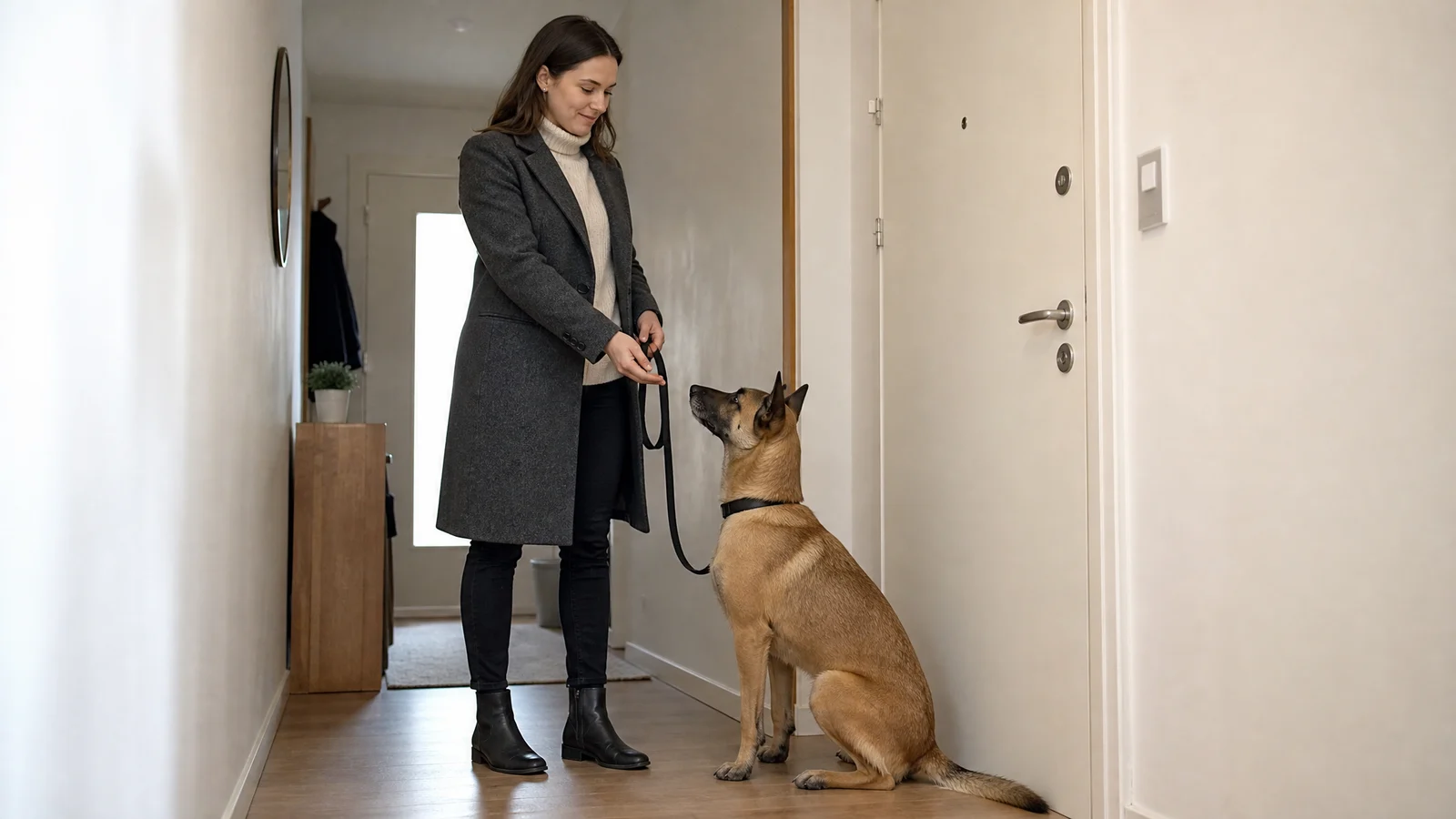
Walk in without the ball in view and keep the hello low-key. Wait for all paws on the floor, reward calm with a treat on the mat, and only then do a quick potty trip. Play comes later, as a planned round.
Scheduled Play Blocks
Put real exercise and training in fixed blocks, such as before work and after you settle in. Keep training sessions short, with rest between them, which owners say reduces excitement. A predictable schedule means the dog can stop waiting by the door for the ball to appear.
Puzzle Toys for a Limited Time
Puzzle-style toys and scatter-fed treats give the nose a job while you are out. Keep them easy at first, since a dog who cannot solve a puzzle may get frustrated rather than satisfied. Offer them for a limited stretch, then pick them up, so they do not become another thing to fixate on.
Keep up regular vet visits too, because sore joints or other discomfort can fuel restless behavior. If the destruction continues, our piece on real work for a wrecking Malinois has more jobs to add, and frustration barking covers the noise.
Two Weeks to Ease Belgian Malinois Ball and Toy Obsession
Whatever your household, the routine is the same and only the room changes. Week one is storage and short timed rounds. Week two adds the drop and the settle.
- Days one and two: put every toy in a closed bin. Choose the favorite and its twin.
- Days three to five: run short timed rounds, with a sit and a calm look before each throw and a firm end each time.
- Days six and seven: add a mat and a chew after every round. Note how long the dog stares at the bin.
- Days eight to ten: teach the drop with a low-value toy and chicken, then trade for the twin.
- Days eleven to thirteen: add a pause between the drop and the reward, and practice the settle after every round.
- Day fourteen: the final check. Mid-round, with the favorite toy, ask for the drop and see whether the dog can stop on the first cue.
Signs that a dog is relaxing around toys are easy to read. They look away from the bin, sit while you open it, drop on the first request and settle within minutes. If day fourteen goes badly, repeat the last stage rather than push on. Some Malinois go through a wild stretch in youth that fades with training and maturity, so patience pays.
The heart of it is that a Malinois wants work and a partner, and a planned ball game gives them both when you control the start and the stop. Put the toys away, keep rounds short, teach the drop and the settle, and the intensity you see in play becomes the relaxed housemate many owners enjoy.
 BehaviorBelgian Malinois: Frustration barking
 CareDo Malinois Shed a Lot? Make Brushing a Training Habit
 Puppy trainingWhy Do Malinois Puppies Bite So Much? Teach a Soft Mouth