 Malinois
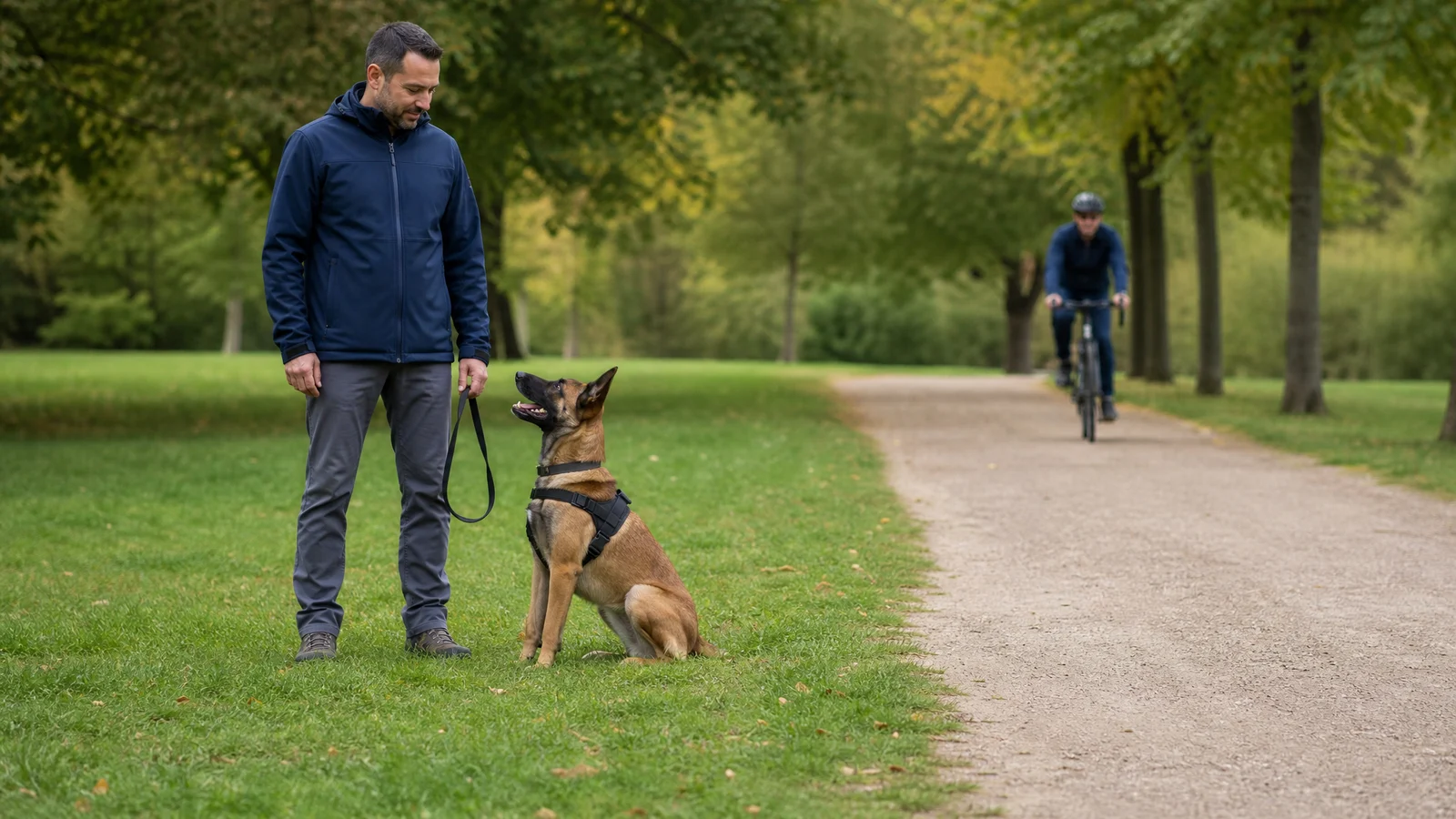
A calm evening walk, and then a bike whirs up from behind. Your Belgian Malinois freezes, stares at the spinning wheels, and lunges so hard you nearly lose your footing. Owners describe this scene in almost the same words, and the dog was usually relaxed a minute earlier.
This is not bad manners. Malinois are herding dogs with a strong interest in moving objects, and fast, steady motion switches on their herding and prey sequence. Every rehearsed lunge makes the next one easier, which turns dangerous near traffic. Handled well, the same dog learns to sit and look to you while wheels roll past.
This guide covers chasing cars and bikes, from the first stare at a wheel to a practice ladder that tells you when to step closer, with leash handling, lunging, heel nipping and bolting along the way.
Reading a Belgian Malinois Watching Wheels
The lunge is the last link in a chain, and it is the worst place to start working. The sequence runs in order: the dog orients to movement, fixes their eyes, tenses, then explodes. Herding adds a loop on top, which fits the breed standard noting a tendency to move in a circle rather than a straight line. Wheels never get caught, so no letdown ends the game, and each pass pays the dog.
The Signs, in Order
Catch the chain early and you can act while your dog can still think. Watch for these.
- A head snap toward the sound, often before you have seen anything.
- A freeze with weight tipping forward and the body dropping low.
- A closed mouth, still ears and tail, and a hard stare that does not break when you speak.
- A treat refused that was easy to take a moment ago.
- Quivering, whining or spinning at the end of the leash, which means the sequence is already running.
Drive Differs Dog to Dog
Distrust any single description of the breed. Some Malinois are mellower or medium-drive, often show-line, rescue or older dogs, though many still carry real prey drive. Others are extremely driven. Plenty are snuggly and quiet indoors and still explode at the roadside, because their intensity lives in movement.
A popular claim says to exercise them first and the chasing fades. Our verdict is half true. A tired dog is easier to work with, but some owners report poor listening outdoors even after heavy exercise. Exercise lowers the baseline. Only practice changes what happens when the bike arrives.
Distance and a Secure Leash Come First
Before any training, your job is to stop the chase from happening at all. Rehearsal builds a habit faster than you can teach a new one. Dogs pull out of excitement, eagerness to explore or habit, and a road full of wheels stacks all three at once.
Gear and Grip
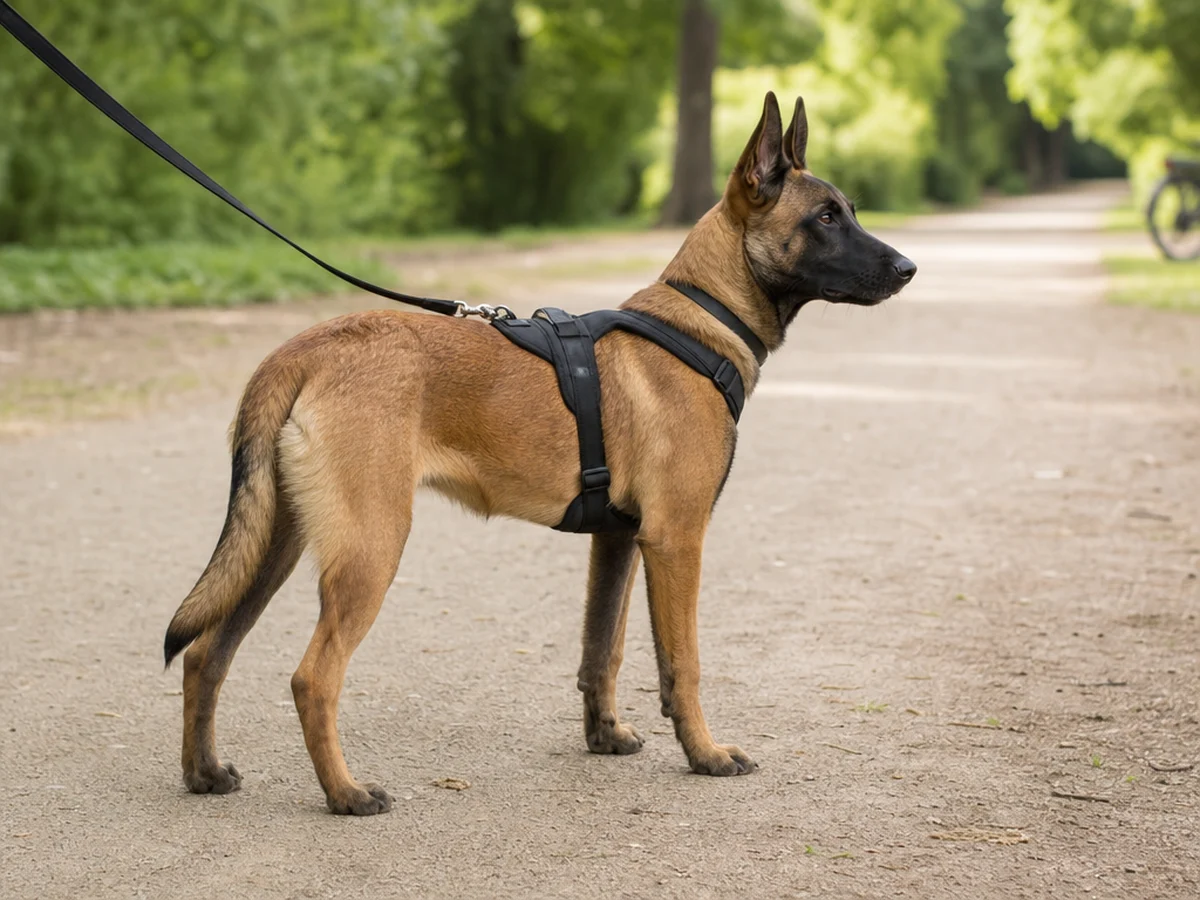
Use a snug harness your dog cannot back out of, and check the clip before every walk. Near a road, hold the handle in both hands with elbows bent and feet set apart. A Malinois covers ground faster than you can react, so a loose hold is the first thing to fix. A fixed-length leash gives you more control than a retractable one.
Routes and Distance
Walk on the side away from traffic and cross early when you spot a bike. Pick routes with a wide verge, a long sightline and room to retreat. Stay far enough back that food is still interesting to your dog, because that is the distance where learning happens. Off-leash time near any road stays closed for now. Some owners keep their dog leashed for fear of bolting and rely on an enclosed park for reliable obedience, which is sensible.
At home, check gates and the driveway edge. If your dog fixates on traffic through a fence, block the view. Watching from a window is rehearsal too.
Lunging and Barking Behind Chasing Cars and Bikes
Loud lunging looks like one problem but has three different causes, and each wants a different answer. Work out which you are seeing before you pick a fix.
Arousal
The dog barks, spins, pants and cannot stop, often shaking with adrenaline. Intense ball drive can feed this. The fix is more distance and a quieter mood. Put the toy away, feed slowly and end the session while your dog can still think.
Frustration
The dog wants to move and the leash says no. Leash frustration is agitation from feeling restricted, and it shows as barking and straining even at slow wheels. Give your dog room to move and reward every loose step. For the basics of walking without pulling, see our guide to loose-leash walking.
Thwarted Chasing
This one is quieter. The dog stalks, goes silent and then bursts forward, and barking may only start once the chase is blocked. Interrupt earlier, at the freeze, by turning away and paying your dog for turning with you. Never wait for the burst.
Why Does My Belgian Malinois Nip at Tires and Heels?
This is herding, and it surprises owners who expected only chasing. Herding dogs control moving things by getting in front of them and nipping at the back end. Your heels move and tires move, so your dog treats both as stock. Nipping is the breed's job description showing up on a sidewalk, so calm redirection works where frustration at the dog does not.
Interrupt calmly and early. Stop walking, stand still and let the movement end, which takes the fun out of it. Then ask for a sit and pay. If your dog nips at your ankles while a bike passes, step sideways so your feet go still and offer a tug toy held low to the ground. A toy gives the mouth a legal target.
Build a "wait" before the toy comes out so the redirect does not turn into a grabbing game. Some owners also manage drive by restricting the favorite toy and using two toys for fetch. For the wider picture, see how to give the herding instinct a job.
Steady Sit Practice to Stop Chasing Cars and Bikes
The sit is the cure, but only at the right starting distance. A steady sit does not mean a frozen stare. You are paying for relaxed watching, so a glance at the bike is fine as long as the body stays loose.
Find the Starting Distance
Stand well back from a path or quiet road, dog on harness and leash, with treats or a toy in hand. Ask for nothing and watch. If your dog notices the bike, looks away and eats, you are at a workable distance. If they refuse food or stiffen, add space. If they lunge, you started too close, so walk away calmly and begin again farther back.
Teach the Sit and the Look
Teach both indoors first, with a marker word such as "yes" to pay at the exact moment of calm. For the look, hold a treat by your nose, wait for eye contact, mark and reward, then add a short cue such as "watch." Use the cue only when a reward follows, because calling only when you will praise keeps a dog responding.
At the roadside, ask for the sit before wheels appear, mark the calm and feed through the pass. Release with a cue and finish with tug or a toss. Many Malinois work harder for a ball than for food, but a dog who ignores food can learn to value it. Hand feeding, scatter feeding and chicken give you a second reward.
The Practice Ladder
Change only the distance or only the speed in a session, never both. Cars are harder than bikes, so they sit on later rungs. Here is the ladder:
| Rung | What passes | Distance | Move up when |
|---|---|---|---|
| One | Slow bikes | Far | Loose sit, soft food taking, quick recovery |
| Two | Slow bikes | Somewhat closer | Same signs across several passes |
| Three | Faster bikes | Far again | Dog watches, then looks back to you |
| Four | Slow cars on a quiet street | Far | No locked stare, food still easy |
| Five | Normal traffic | Closing in gradually | Sit holds with the road in view |
Knowing When to Step Closer
Judge readiness by the body, not the calendar. Move up one small step after several settled passes with loose posture, soft taking and recovery within moments. A stare, a refused treat or shaking means the step was too hard. Return to the rung where food was easy. Keep sessions to 15-20 minutes with rest between rounds, because owners report that short sessions reduce excitement. Some dogs need many sessions on one rung, and that is normal.
What If My Belgian Malinois Bolts Chasing Cars and Bikes?
This is the worst case, and prevention does most of the work. A long line clipped to a secure harness gives your dog room to move while you keep control, and it lets you practice in open space without risking the road. Pick grassy ground away from traffic and let the line trail so you can step on it if needed.
If your dog does slip the leash, do not chase. Running after them turns it into a game and sends them faster toward the road. Follow these steps:
- Stop, and call in a bright, happy voice that promises a reward.
- Turn and move away from the road, since many dogs follow movement.
- Drop low or squat with a toy or treat to make yourself interesting.
- Reward them hugely when they arrive, even if the recall was slow.
Only call when a reward is coming, because a dog who gets told off on arrival comes less willingly next time. After any scare, book a check at your regular vet visit if you suspect injury. Some owners report good recall despite high prey drive, including stopping mid-chase when called, and they credit steady training.
A Look-At-Me Habit Outlasts Chasing Cars and Bikes
Management keeps your dog safe while a rewarded look-at-me habit replaces the urge to chase. Distance and a secure leash buy time, the steady sit pays for calm, and the glance toward you becomes your dog's own answer to wheels. Many owners see their dog start turning to them at the sound of a bike before any cue is given. That self-started look is the real goal, and it grows over months, not days.
Expect setbacks, especially in youth. Some owners report a rowdy, destructive phase early on or again near age two that eased with training and maturity. Treat a bad day as information about your distance, not as proof the work failed. Scent work, tracking, agility and dock work give the drive an outlet and make roadside practice easier.
By this point, owners may meet a few related problems. Handle each one separately.
- If the pulling continues all walk long, our walking guide covers a dog who circles and lunges.
- If you wonder whether recall can do the job alone, it cannot replace distance, but it adds a second layer, as turning back mid-chase explains.
- If the drive spills into the house, real work for a Malinois shows how to use it.
Whatever comes next, the habit that carries over is the steady sit. Keep the road at a safe distance, pay generously for a calm sit and a glance up at you, and a Belgian Malinois who once exploded at every wheel can learn to settle beside traffic and look to you first.
 CareHow to Make Nail Trims and Body Checks Easy for a Belgian Malinois
 BehaviorHome Alone Practice for a Belgian Malinois Who Shadows You
 BehaviorOne Alert Bark, Then Quiet: Belgian Malinois Barking Manners