 Malinois
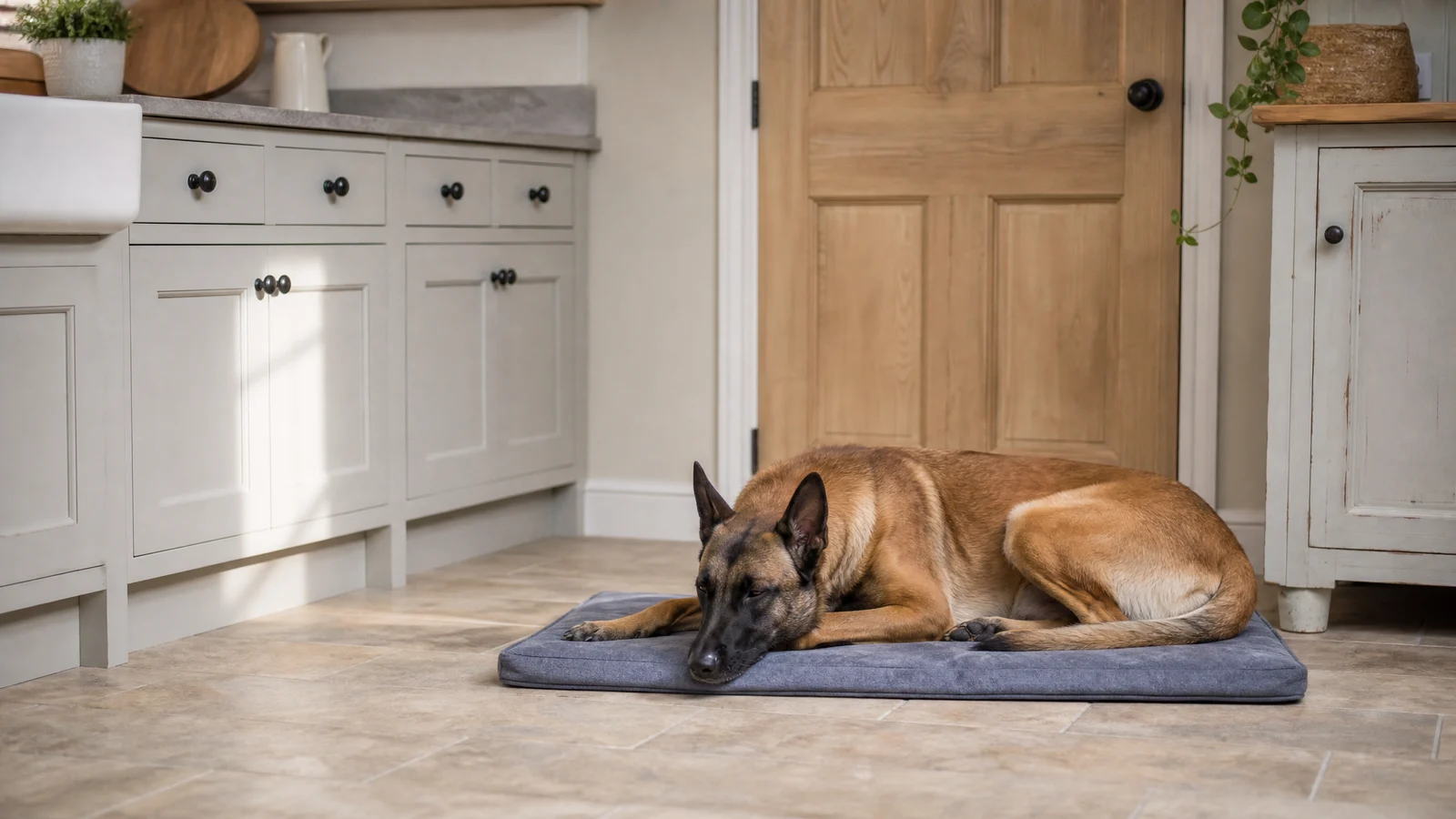
One Belgian Malinois naps on a mat in the kitchen while their owner cooks with the door shut. Another tracks every footstep, trails their person to the bathroom, and cries at the door until it opens. Both dogs adore their people. The difference is practice, not temperament. The calm dog was taught that being apart is safe and a little dull, and the clingy dog was never shown.
This matters for the breed. Bred as a close working partner, the Malinois attaches hard, and an unpracticed separation feels like an emergency that shows up as pacing, noise, and chewed trim. With practice, resting alone becomes an ordinary part of the day.
We'll walk you through why Malinois shadow, then four household case files (apartments, busy family rooms, multi-dog households, and workdays), and we'll finish with how to recognize progress and when professional help is appropriate.
Belgian Malinois Shadowing Explained
You carry laundry to the basement and your Belgian Malinois stands at the top of the stairs, staring at the spot where you vanished. Following is built into this breed. Breed descriptions call the Malinois a world-class worker who forms an unbreakable bond with their partner, and a partner stays close to the job. Herding breeds also track movement, and you are the most interesting moving thing in the house.
So shadowing alone is not the problem. What your dog does when following is blocked tells you what you are dealing with, and the next three parts sort it out.
Velcro Habit or Real Distress
Send your dog to a spot, close a door or gate for a few seconds while they have a chew, and watch. If they sigh, lie down, or keep chewing, you have a velcro habit, and reward can reshape it. If they pace, pant, drool, scratch at the barrier, or refuse the treat, you are looking at distress. Make every step in this article much smaller and read the last section before you begin.
The same split shows in the open room. A velcro dog follows you but lies down the moment you stop. A distressed dog cannot settle even with you beside them and rises whenever you shift. Both follow the same plan, but the distressed dog needs a slower version.
When Boredom Is the Driver
If your dog shadows hardest after a dull day, drops toys at your feet, and settles after real work, boredom is the likelier driver. Malinois demand active interaction with their owner, both mentally and physically. Walks alone are not enough for this breed, and a backyard is no substitute for time with you.
Exercise helps, but it cannot teach time alone by itself. A worn-out Malinois who never learned to settle may collapse, then wake up worried. Give sniffing, training games, and real exercise, then teach calm on top of them.
Open-Space Skills Used in Every Case
Four skills carry through every household below. The rewarded mat: lay a flat mat where the family spends time, wait for your dog to step on it, mark the step and place a treat on the mat. Then wait for a down and reward that. Short door-closed breaks: shut a door between you for a moment and reopen it before your dog fusses.
Quiet departures: make keys and coats boring, leave without a speech, and return without a party. The fourth skill is a stuffed chew or a sniff game, which gives your dog something good to do while you are out of sight.
One rule governs all of them. Add time only after your dog stays relaxed at the current level, meaning soft eyes, a loose body, chewing or sniffing, and a calm greeting. If tension shows, drop back to the last easy length. Also stop paying for the trail: reward resting anywhere in the room while you move about, and skip the chatter to a dog at your heel.
Time Alone in an Apartment
In a small apartment the mat is never more than a few steps from the front door, and the neighbors' footsteps are just beyond the wall. Those limits shape the plan. You have little room for distance work and no way to hide hall noise, so lean on short door-closed time and controlled sound instead.
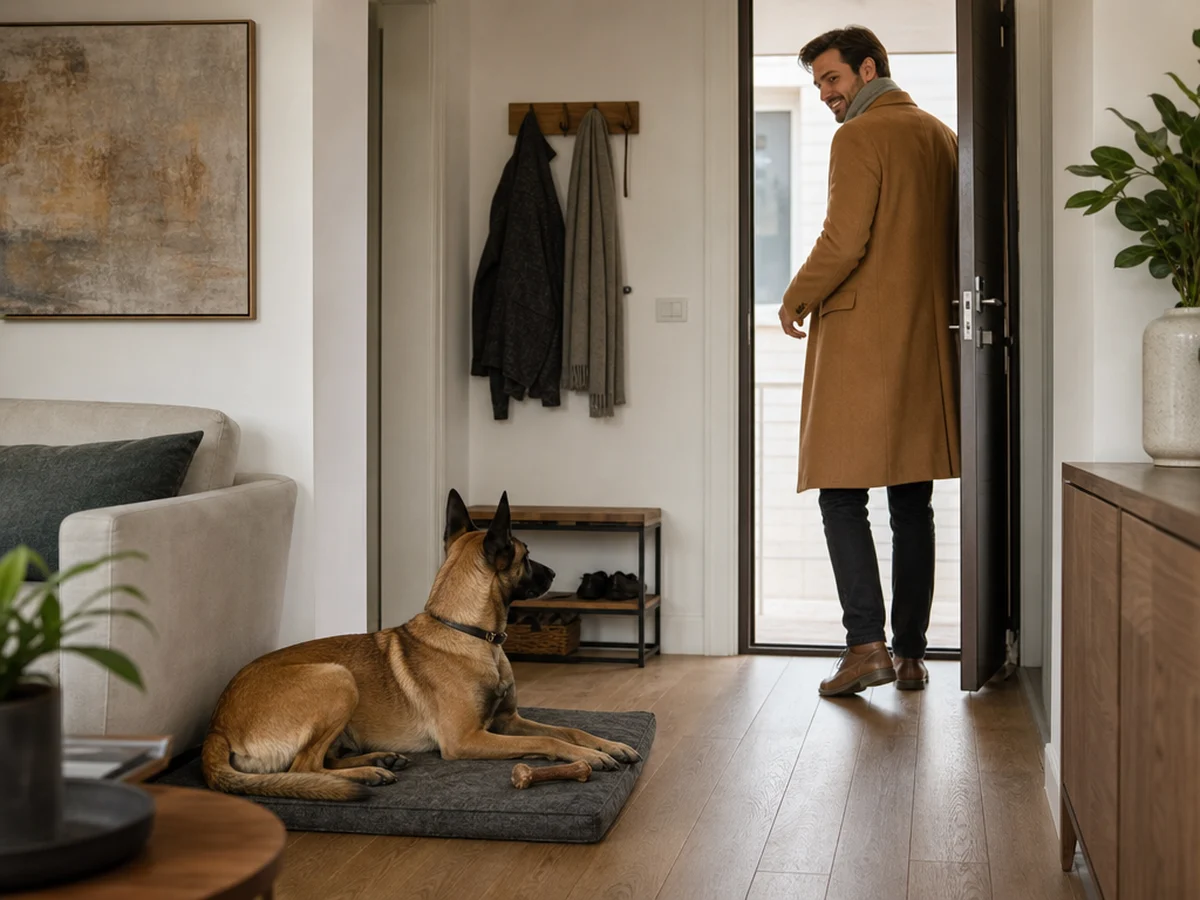
A Rewarded Mat by the Doorway
Place the mat near the bedroom or bathroom door, away from the front door where hall noise is loudest. Mark and treat each time your dog lies down on it, then stretch the gaps between treats and vary them so your dog cannot predict the next one. When they look soft-eyed and still, hand over a stuffed chew on the mat. If they pop up, the step was too hard, so return to the last length that worked.
A Five-Second Door-Closed Break
Send your dog to the mat with a chew, step through the door, close it for about five seconds, then come back and reward calm. Repeat several times per session. If your dog stays on the mat and keeps chewing when you reappear, add a little time. If they leave the mat or stop chewing to watch the door, return to the previous length.
Mix short and slightly longer breaks so the pattern stays unpredictable. If whining starts, wait for the first lull before you open the door, and make the next break shorter.
Quiet Sounds From the Hall
Footsteps, elevator dings, and neighbors' doors are the apartment version of a doorbell. Play a recording of hall sounds at very low volume while your dog is on the mat with a chew. Raise it a little over several days, and only while they stay soft. For real sounds, mark and treat the first quiet moment after the noise.
The Malinois is a natural watchdog, so a first alert is normal. If barking snowballs with every sound, lower the volume or move the mat farther from the front door. Our article on frustration barking helps you tell alerting from frustration.
Time Alone With Young Kids
A child runs past the mat with a toy, your dog's head snaps up, and the lesson is over. In a home with young kids the mat sits in the busiest room, so the risk is the traffic and the calling more than the absence. The breed does best around young children with supervision, so every step here assumes an adult is in the room.
Who May Walk Past the Mat
Everyone may walk past at a normal pace. No one reaches toward the mat, crouches over it, or calls the dog. Teach children that the mat is the dog's bed, the way their own bed is theirs. If your dog stands up every time someone passes, the mat sits on the main path, so move it to a corner.
The Baby-Gate Stage
If traffic is still too much, put the mat in a quieter room behind a baby gate. Your dog can see the family without being in the middle of it. Some dogs find a crate stressful, and a room behind a gate is the usual alternative. Do the same mat and chew work there, and open the gate once your dog rests while the family is busy beyond it.
Keeping Kids From Calling the Dog Off
Malinois follow movement, and running kids pull their attention. Our piece on the herding instinct covers why. If your dog leaves the mat whenever a child calls, the call has become the reward. Give children a different job instead: an adult cues them to toss a treat onto the mat from a distance when the dog is lying down. Chasing games happen away from the mat and never during practice.
Protecting Rest Times
A dog who is woken repeatedly cannot build the habit of resting. After active play, send your dog to the mat for a nap and make it a house rule that a sleeping dog is left alone. A dog who gets real rest has far more patience for the practice that follows.
Two-Dog Home Alone Time
Two dogs can look like a built-in fix, with the calm one teaching the clingy one. Sometimes the reverse happens and one dog's whining sets off the other. Test the idea before you trust it. Take the clingy dog out of the room for a brief break. If they settle with the buddy near but panic alone, the buddy has masked the problem and not solved it.
Separate Mats
Give each dog their own mat, out of reach of the other, in different corners or different rooms. Hand out chews at the same moment but in separate spots, so neither dog watches the other's food. Mark and reward each dog by name for resting on their own mat.
Practice Apart Before Together
Run the door-closed work with one dog at a time while the other is elsewhere with a chew or with a family member. Keep the breaks brief and swap. Only when each dog stays relaxed alone should you practice with both on mats and step out together. If you skip the solo stage, you cannot tell which dog is the worried one.
When the Buddy Becomes the Plan
Watch for copying. If one dog whines at the door and the other joins in, end the break early, reward the first quiet from each, and make the next attempt shorter. Do not lean on the second dog as the fix either. Dogs board at the vet, fall ill, and age, and the one left behind has never practiced being alone. Each dog needs solo breaks a few times a week even when the pair looks calm.
Belgian Malinois Workday Alone
You leave for work, and your Malinois is alone for most of the day. Open-space practice teaches a dog to rest through short and moderate absences, but it cannot carry an active working breed through a full workday by itself. Without enough to do, Malinois invent their own activities, and some of those turn destructive.
Practice sets the calm, and the day around it supplies the rest. If your dog also rests in a crate while you work, our crate and alone-time article covers those steps, so we won't repeat them here.
Building Up Departures
Make your cues boring first. Pick up your keys and sit on the couch. Put on your coat and cook dinner. Lace your shoes and watch TV. Repeat until your dog stops reacting, then attach a real exit.
When you leave, put a stuffed chew on the mat, walk out without a speech, and skip wild play beforehand. Come home without fuss, wait for calm, then greet quietly. Lengthen absences only after your dog stays relaxed at the current one, mix in short ones, and if they fall apart, shorten the next absence a lot.
Midday Help
If you are away most of the day, plan a break in the middle. Arrange a midday visit through someone your dog knows, a professional walker, or a calm daycare that allows real rest. Keep the visit calm with a sniff walk, a short training game, and a bathroom break, then return your dog to the mat with a fresh chew. If nobody can come, put more into mornings and evenings and watch closely for signs of panic.
A Realistic Daily Schedule
A plan that survives real weekdays looks like this. Keep the order predictable at first.
- Start with real exercise and a mental job, such as a sniff walk or a training game, so your dog has spent both body and brain.
- Send your dog to the mat with a stuffed chew, then leave quietly.
- Arrange calm midday help and put your dog back on the mat with a chew when the visit ends.
- Come home, wait for calm, and greet quietly before any play.
- In the evening, add a short mat and door-closed session while you cook or watch TV.
On days off, keep one short practice break so the skill does not fade. An easy repetition is enough to maintain it.
Judging Belgian Malinois Alone Time
Judge progress by how your dog behaves when you reappear as well as while you are gone. Continue regular veterinary care, because discomfort can look like worry and worry can look like discomfort. Look for these signs of progress:
- Your dog settles sooner after you leave the room and may fall asleep.
- They sleep on the mat even while the household is busy.
- They keep chewing or sniffing through the first moments of your absence.
- Keys, shoes, and coats get no reaction.
- Greetings are calm, without leaping, spinning, or crying.
A tense day means you drop back a step. Contact a qualified trainer or veterinary behaviorist if any of these signs appear.
- Panic that does not ease when you make the break much shorter.
- Any self-injury, such as broken nails, cut paws, or raw gums.
- Destruction around doors and exits that keeps escalating, which our piece on a Malinois wrecking the house helps you sort from plain boredom.
- Refusing food or treats whenever you are gone.
- No progress after weeks of steady, small-step practice.
Malinois are built for partnership, so calm time apart does not arrive on its own. It is a skill practiced in small steps, whether the home is a thin-walled apartment, a busy family house, a two-dog household, or an empty one all day. Keep exercise and mental work generous, and keep each step easy enough for your dog to win.
The one habit worth repeating every day is simple: send your dog to the mat with a stuffed chew, step out of sight, come back while they are still calm, and reward that calm. Done daily, that small ritual turns a dog who shadows you into a dog who rests.
 BehaviorOne Alert Bark, Then Quiet: Belgian Malinois Barking Manners
 Training basicsWhy Are Belgian Malinois So Smart? Trainability at Home
 Puppy trainingA Malinois Training Timeline From Puppy to Age Two