 Malinois
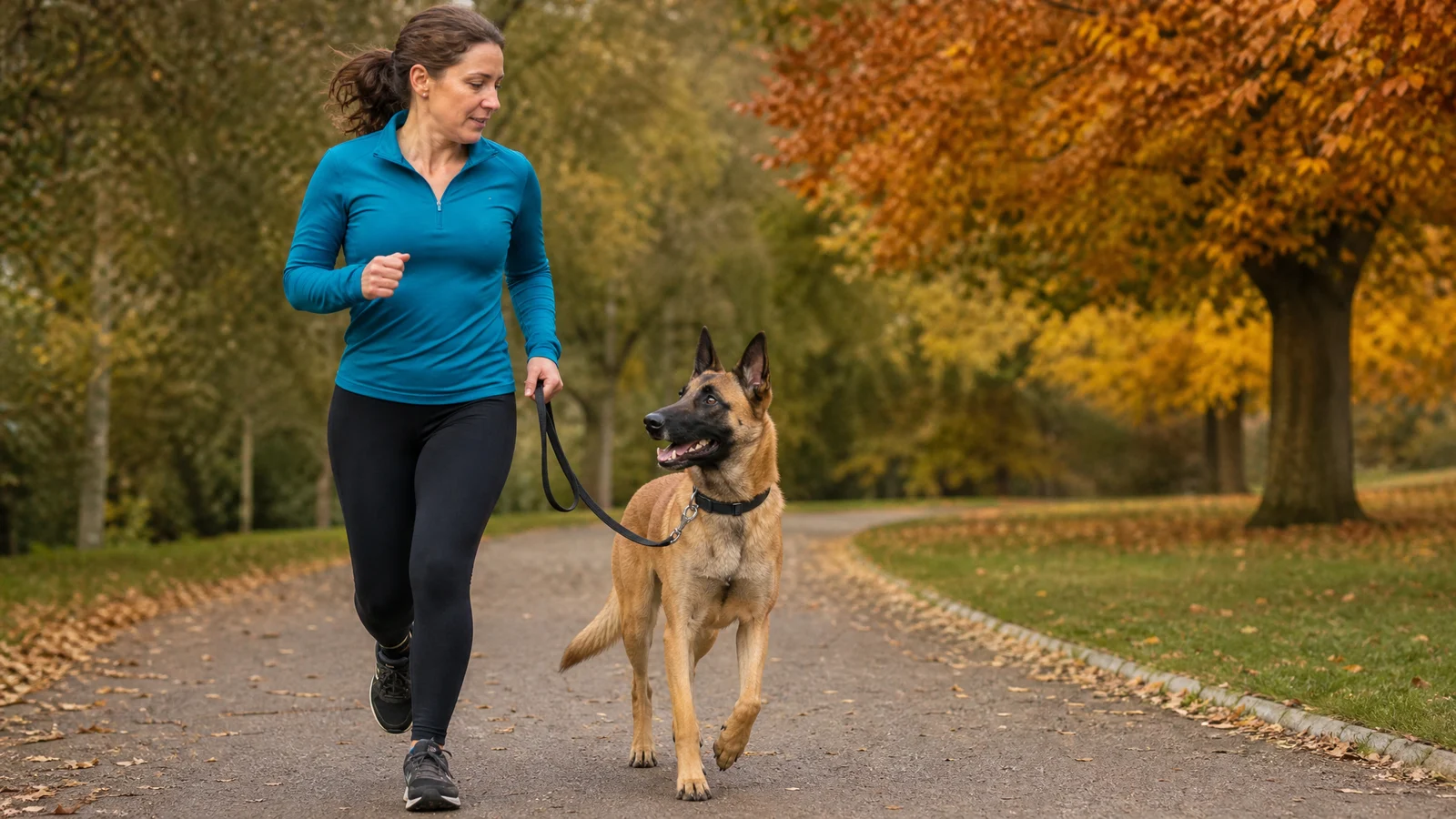
Can a Malinois be a regular family pet? The usual answer is yes, with enough exercise, and it sounds reasonable until you watch a Belgian Malinois come back from a long run and spend the evening following the family from room to room, still waiting for something to do.
Exercise is only part of the answer, because the parent club says the breed demands a commitment to active interaction from the owner. A dog bred to be given tasks will find their own when nobody supplies them, so the warmth in this household comes through shared work, and the number of people who share it matters as much as the miles.
We'll walk you through why socializing is a household job, how this breed shows affection and what a shared daily routine looks like, then who covers a busy weekday, whether a Malinois can settle for less than a job, and what the long years ahead will ask of you.
Socializing Is a Household Job, Not One Person's
The first principle we work from is that socializing a Malinois is never the job of the one person who wanted the dog. Early socialization and obedience training are musts for the breed, and a dog who learns the world through a single pair of hands tends to learn that only those hands count.
The breed is described as forming an unbreakable bond with a human partner. Share that bond early, before it narrows to one person.
That eagerness cuts both ways. Trainability is rated 5 of 5, eager to please, so the dog works hard for whoever asks clearly, and if only one person asks, only one person ever sees the dog's best effort while everyone else becomes background.
Reserve with people outside the home makes the sharing even more useful. Belgian standards describe a dog firmly loyal to those they know and love, with reserve with strangers, so the circle of familiar faces is the first thing to widen, and it widens fastest when each family member brings a different voice and a different walking style into the dog's day.
Think about what happens when one person carries every walk, every training session and every outing. A dog with several trusted people is likely to cope better when one of them is away, while a dog bonded to only one person may struggle on the days that person is gone, and that one person ends up carrying the whole load.
Belgian Malinois Affection Comes Through Active Interaction
The AKC rates the breed 3 of 5 for affection with family, which sits at friendly and well short of lovey-dovey. Plenty of people hear that number as a warning, but it reads better as a description, since the warmth arrives as attention, steady eye contact and a dog who wants to be wherever the work is.
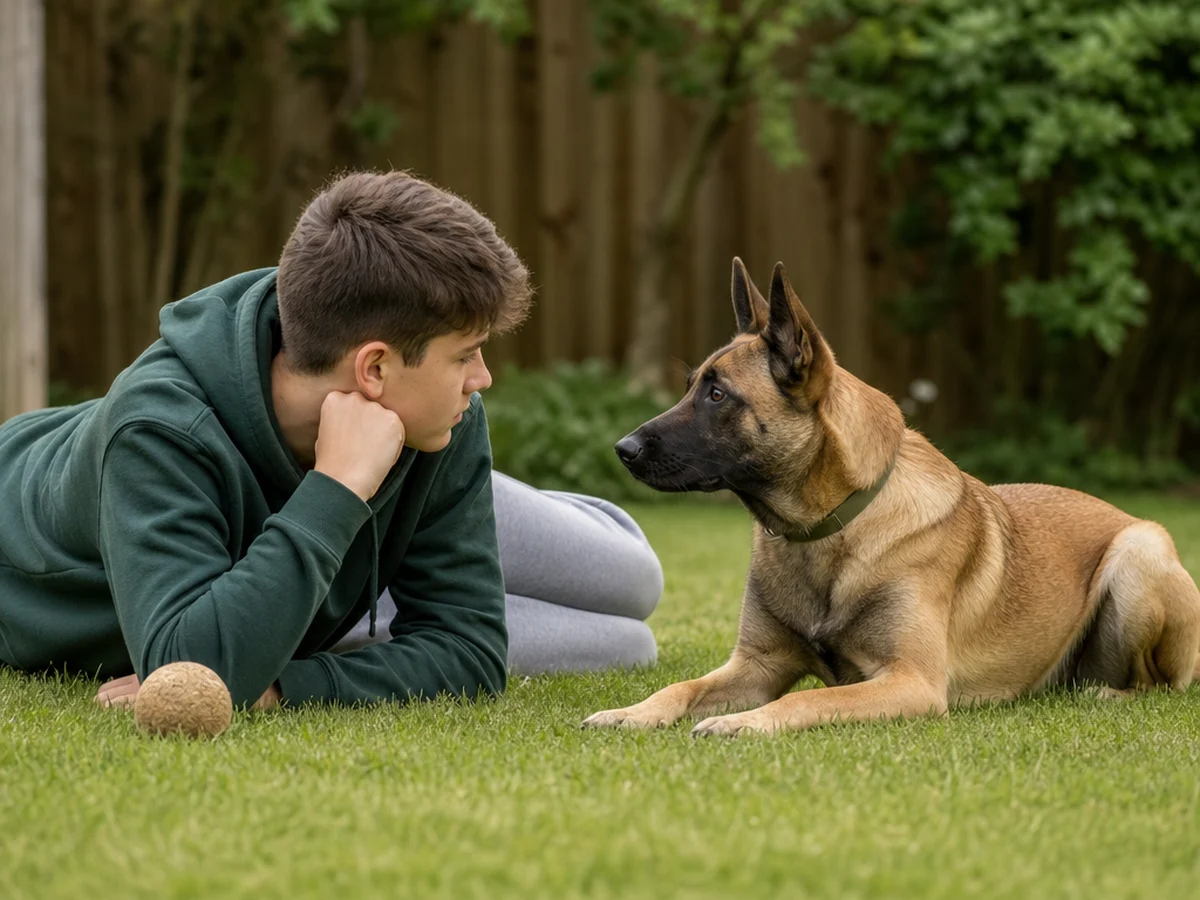
Malinois want to be actively engaged, mentally and physically, so a training game or a shared task does for them what a lap does for other breeds. Playfulness sits at a moderate 3 of 5, which means some days the best affection is a calm lean against your leg and other days it is a sprint after a toy.
That is also why a backyard and a daily walk are not enough. A dog like this wants a partner, and a yard offers none.
Everyday behavior shows whether the bond is getting what it needs. These are the signs of a Malinois whose days hold enough shared attention.
- They check in with you on walks and settle after a session instead of pacing the room afterward.
- They ask for play or a task at fairly predictable times rather than all day long.
- They rest nearby and relax around everyone in the home, not only a favorite person.
- Chewing, digging and scratching at doors stay rare because the day already holds enough to do.
Reserve with outsiders belongs to the same loyalty and is not coldness. Openness to strangers sits at a middling 3 of 5, so some Malinois greet new people with interest and others simply watch, and watching is a perfectly good answer from a dog with this breed's watchful makeup.
A Shared Socializing and Training Routine
A routine works because it removes the question of who is responsible, and for this breed training belongs in it every day. A daily training routine gives the mind steady work, sharpens the cues the dog already knows, heads off boredom and strengthens the tie between dog and family, which puts it at the center of a Malinois's day and not at the edge.
Below, each part of the day goes to a different person, with the same cue words and treats throughout. Rotate the assignments from week to week so rewards never come from only one set of hands.
Morning Sessions Set the Tone
Morning belongs to training, and it should go to the person with the clearest head, because a dog this responsive to direction notices every wobble in how a cue is given.
Name games, sits and a favorite trick, paid for with treats and praise, do more good than a rushed walk, and the dog finishes with the focused look of a worker who has been given a start.
Let a different adult or older child run the session on different days, always with the same marker word. By the end of a week the dog has heard it from everyone.
After Work Brings Engagement Blocks
When the first adult gets home, the dog has usually spent hours waiting, and this is the window for engagement: a scent game around the house, a toy chase that starts and stops on cue, or a little sport practice. Keep each block short on purpose, since a Malinois who stays wound up for too long learns to stay wound up.
Structure matters because chasing is built into the breed. Like most herding breeds, Malinois have a strong interest in moving objects, and that interest can turn toward children, vehicles or other animals unless training gives it somewhere acceptable to go, as our notes on training a prey-driven Malinois explain.
Evening Is for Settling Together
Evening is when the family practices the skill that surprises people most, which is doing nothing. Reward the dog for lying on a mat while the family eats or watches television, and let a different person drop the treats each night so settling becomes something the Malinois does around everyone and not only beside a favorite.
A dog rated 4 of 5 for energy will not settle by accident. If pacing starts anyway, the earlier blocks held too little real work, and our piece on pacing and circling quirks shows what to adjust.
Who Handles Socializing on a Busy Weekday?
Schedules collide, and on a busy weekday the real question is not who has time but who has the next opening, since the dog will not wait politely for a better moment. Settle the answer the night before, post it where everyone can see it, and treat it with the same seriousness as a school pickup.
Consistent cues matter more than who steps in. Keep a short sheet of cue words, hand signals and treats on the refrigerator, because a dog who hears sit from one person and something else from another learns that cues are negotiable. These handoff rules keep the day connected from one person to the next:
- The person leaving tells the next person, aloud or in a shared message, what the dog has already done, so nobody repeats a long outing or skips a needed one.
- Whoever takes over uses the same marker word and the same treats, which lets the dog respond to the new person straight away.
- Children and teens run short rewarded sessions with an adult within reach, because the rating for young children is 3 of 5, meaning with supervision.
- New people and new places go into the plan on purpose and a little at a time, with the dog free to look and take treats at a comfortable distance.
Share the Handoff
Our guide to socializing with strangers goes deeper on widening that circle, and our supervision rules with kids spell out how to keep children and dog safe together. Neither replaces the habit of handing the dog from person to person on purpose, which is what keeps one favorite from forming.
Weekday traffic at the door needs its own plan, because a dog rated 4 of 5 for watchdog nature notices every delivery. Give one person the door and send the dog to a mat with a chew.
On the worst days, shrink the routine and never delete it. A rewarded settle, a few cues practiced in the hallway and a puzzle toy still tell the dog that the household is paying attention, and the next day can be a fuller one without anyone having to rebuild the habit from scratch.
Can a Belgian Malinois Settle for Less Than a Job?
A Malinois can be a companion in the family sense, as long as the word is allowed to include work. The question is how much work, and what happens when the answer is none.
What Happens With No Outlet
Without intensive, long-term training, Malinois create their own activities, and those activities can be destructive. This is no act of spite, because these dogs were bred to be taught and assigned tasks and to perform them at a high level, which means an underused Malinois is a frustrated one and a frustrated dog makes a poor housemate.
Restless pacing, chewing and a dog who follows the family from room to room without ever resting are common early signs. They respond best to more engagement before the habits harden.
Scale the Work, Don't Drop It
A smaller household or a tighter schedule calls for smaller work, not none. Swap a long sport session for scent games indoors, trade a long outing for several short rewarded cue sessions, and hide treats in puzzle toys, since this breed's need for mental stimulation rates 4 of 5 and the mind needs as much work as the legs.
Adaptability sits at a middling 3 of 5, so a change of schedule is manageable but never effortless. Keep the family in the scaled-down routine, since one tired person running it alone leads back to a frustrated dog.
Shared Socializing Keeps Your Belgian Malinois Steady for Years
Expect the work to change shape without ever ending. Attention will wander at times and the dog may seem to know less than before, so keep the routine steady, and lean on the shared cues, the rotating handlers and the settling practice to carry the family through those stretches.
Adulthood brings the payoff. The standard describes a dog energetic and ready for action yet highly responsive to the owner's direction, and that responsiveness is something you keep earning.
That is far easier when several people have been earning it all along. Keep widening the circle of new people and places too, so reserve stays easygoing watchfulness and does not harden into suspicion.
In the later years the pace softens, with shorter outings, more rest and closer attention to stiffness, and regular veterinary visits are the natural place to talk about what the dog's body can still enjoy. The dog still wants a task, a game and company, scaled to what they can comfortably do.
So the expectation to carry home from the first week is that the routine never ends, and that it gets easier and more rewarding as it becomes simply the way your household lives. A Malinois is a good family dog for the family who keeps showing up together, training in turns, playing in turns and settling side by side, and the dog stays steady because nobody is ever the only one holding the arrangement up.
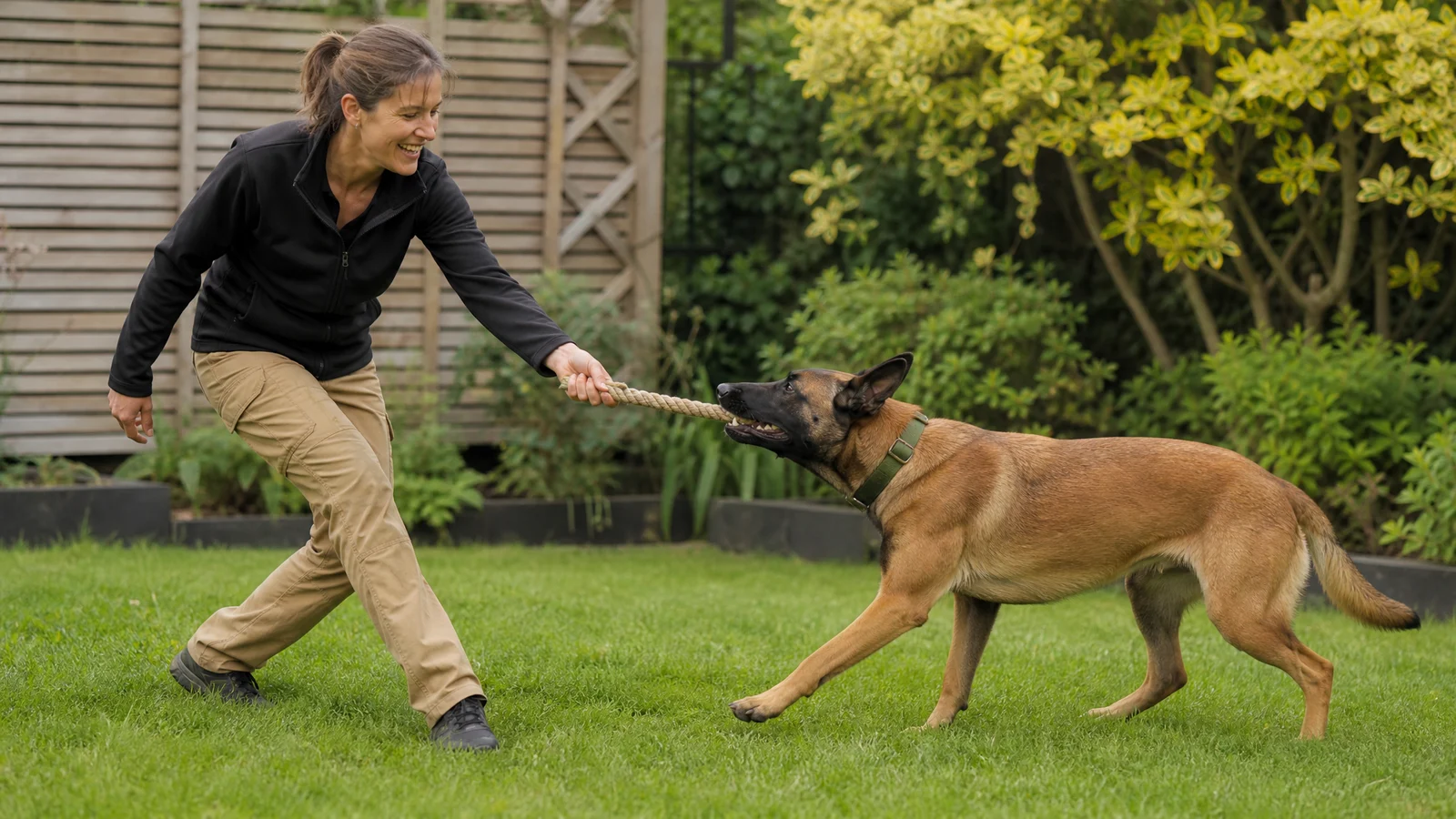 BehaviorBelgian Malinois Tug Games With Rules for a Strong Grip
 BehaviorA Steady Sit for a Belgian Malinois When Wheels Go By
 CareHow to Make Nail Trims and Body Checks Easy for a Belgian Malinois