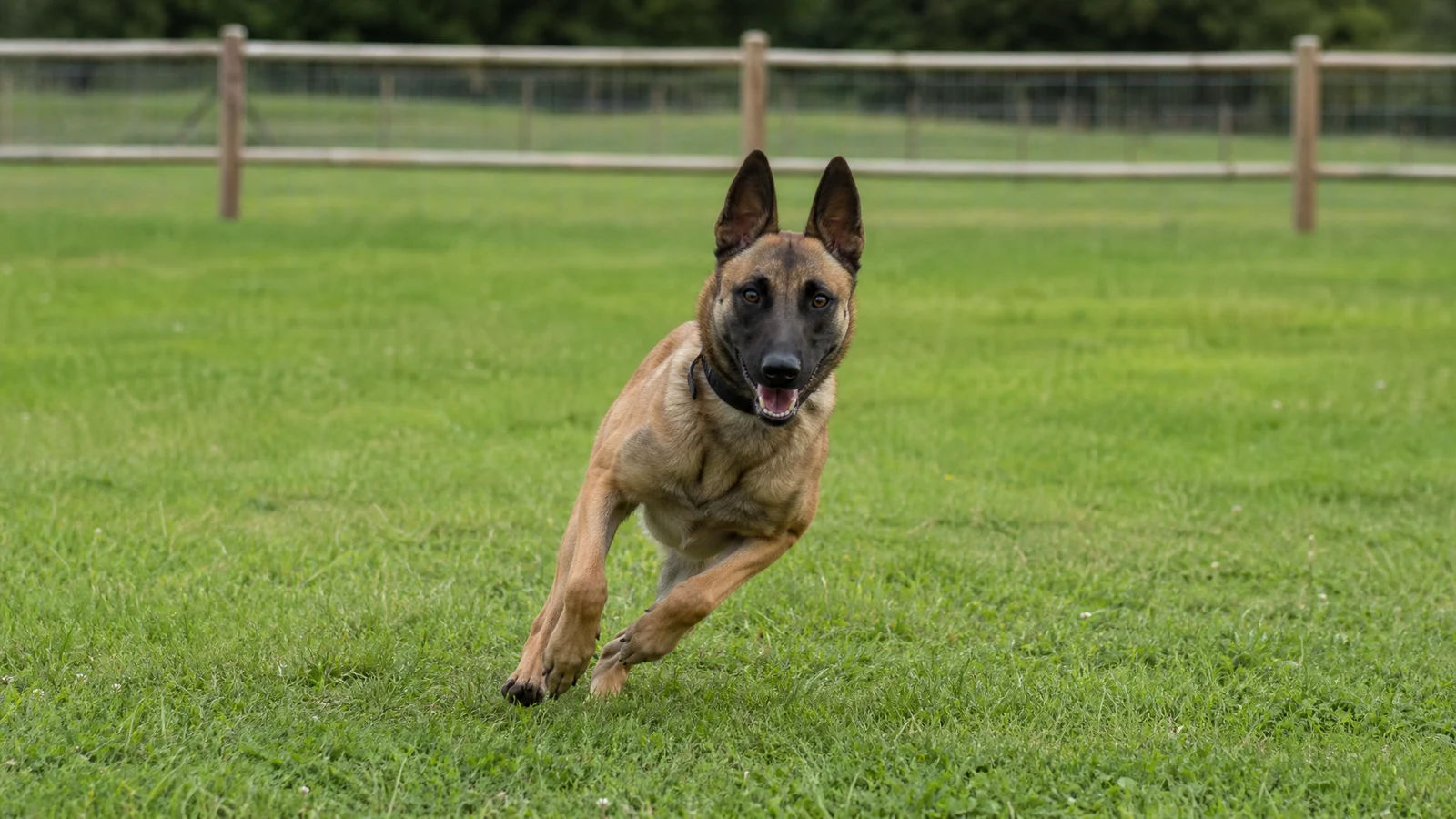
 Malinois
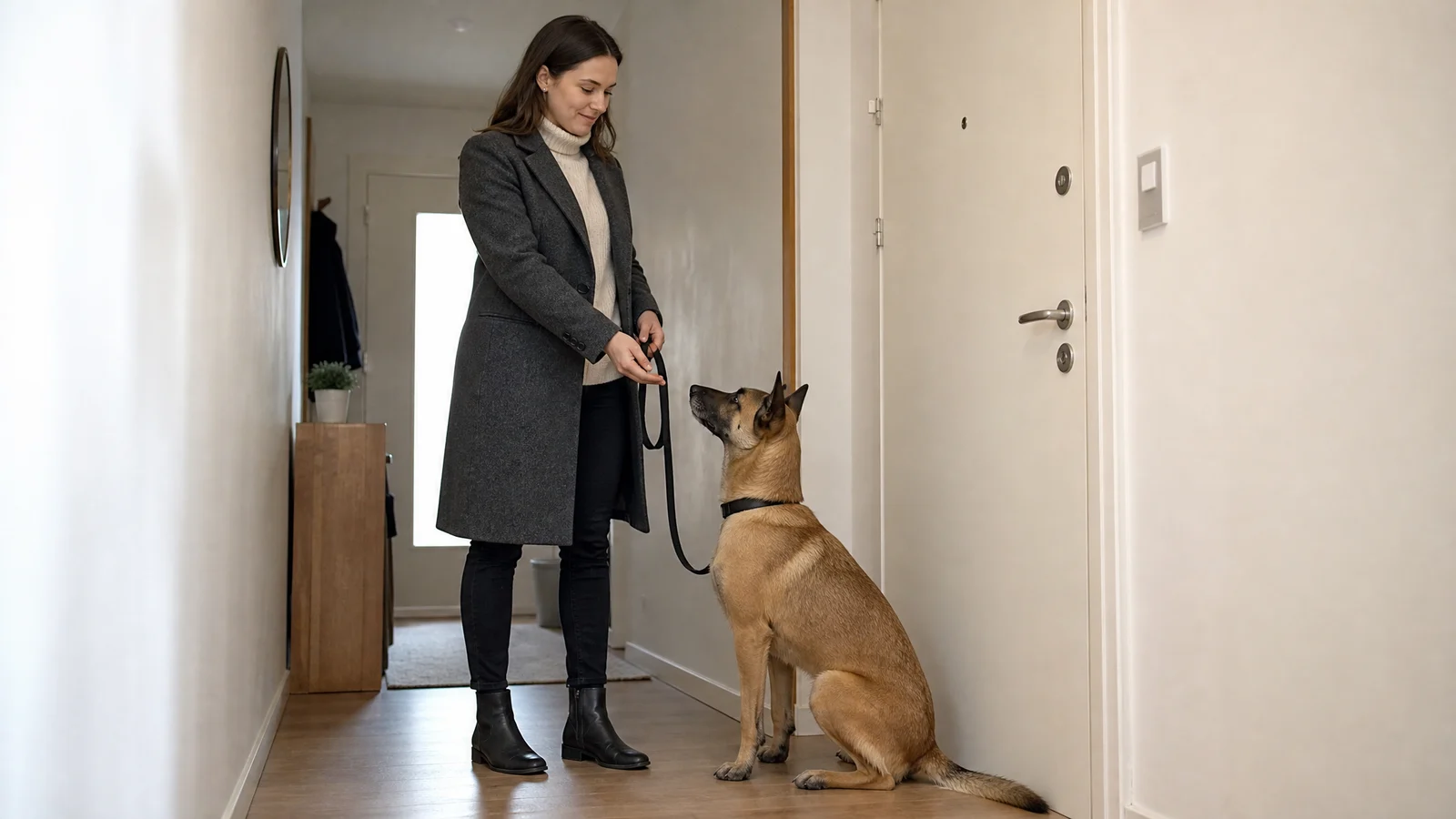
How do you make a Belgian Malinois stop barking? The usual answers are to ignore it or to say quiet, and both fall short when the barking comes from frustration. A dog who barks at a closed door, a toy in your hand, or a slow walk is not asking for attention. They are venting a want that has nowhere to go.
Malinois were built to take on tasks, so any delay becomes pressure quickly, and every loud burst that pays off gets rehearsed. With the right approach, that same drive produces a dog who waits, settles, and checks in with you.
This guide covers frustration barking, from the everyday scenes that set it off to the signs that call for a vet or behavior professional, with prevention, skills, and a practice plan in between.
Common Barking Patterns
Frustration barking shows up in a handful of scenes that look different but share one cause. Naming them helps you see why the barking keeps working.
Doors, Toys, and Waits
The dog barks at a closed door they want opened, at a toy in your hand that has not been thrown yet, and while waiting at the car, the gate, or the food bowl. A leash, crate, or window that holds them back brings the same noise. In every scene, something the dog wants sits in plain view and out of reach for a moment, so they reach for the tool that has worked before.
Why the Barking Works
Doors open, toys fly, and leashes clip on right after a loud burst, so the dog learns that noise shortens the wait. That is why saying quiet or turning away rarely helps. You are up against a habit that pays, not a one-time outburst, and a quick learner picks such a habit up fast.
Breed ratings put barking at 3 of 5, which means occasional. A Malinois who barks relentlessly can be telling you something about their day, their routine, or the waits built into it.
The Need Underneath
Malinois are bred to be taught and assigned tasks and to perform them at a high level, and breed descriptions say an underutilized dog is a frustrated dog. Add a body built for action and a mind that keeps scanning, and every delay feels like a small crisis. The reassuring part is that the pattern is predictable, starts at a recognizable moment, and eases once the dog learns a better way to get what they want.
Belgian Malinois Frustration Triggers
Once you know the trigger, you can act before the first bark. For this breed the triggers fall into a few groups, and each traces back to a dog who is ready for action. The breed standard describes a dog alert and ready for activity, with a marked tendency to move in a circle, so a fixed stare, a tense body, or circling often comes first.
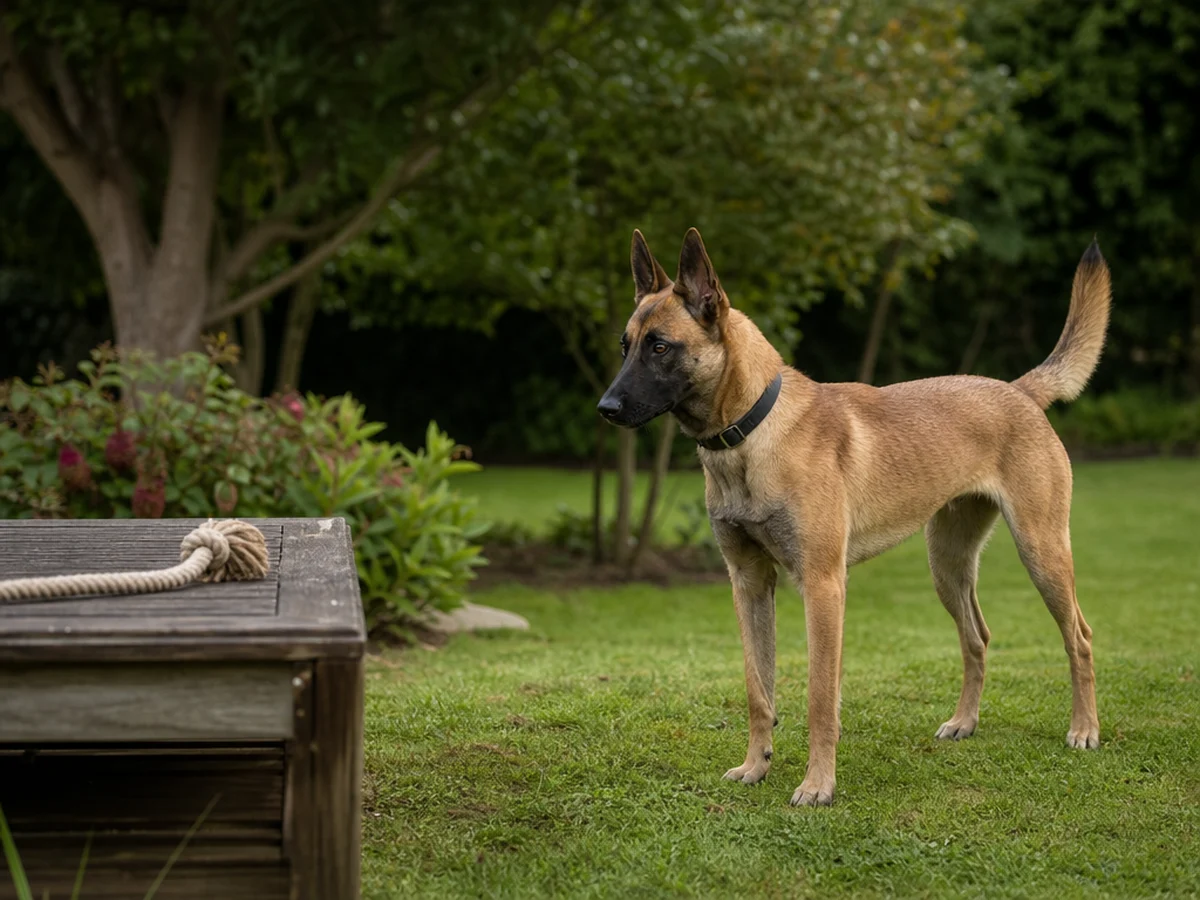
Waiting and Anticipation
Waits are a common trigger, since a quick learner soon links the leash or door with what follows. A dog who knows the leash comes before the walk will start barking at the leash itself, and doors, car hatches, food prep, and the pause before a thrown toy work the same way.
The standard also calls the dog energetic yet highly responsive to direction. That responsiveness is what you will build on later, because a wound-up Malinois is often one who is ready to listen.
Held Toys and Interrupted Play
A toy held up and not yet released is a classic. The breed has a high prey drive and a strong interest in moving objects, so the whole body locks onto the toy while your hand stays still. Ending a game suddenly, or pausing it to answer the phone, creates the same gap, and barking becomes a way of asking for the next move.
Barriers and Passersby
Closed doors, gates, windows, and leashes all say you cannot get there. For a breed rated 4 of 5 for watchdog and protective nature, a barrier is also a front-row seat to every passerby, which mixes frustration with alerting. If most of the noise is aimed at things going by, our guide to Belgian Malinois barking manners covers the alerting side.
Empty Days
A thin day makes every other trigger worse. The breed rates 4 of 5 for both energy and mental stimulation needs, and a yard or a daily walk alone does not cover it.
A tired body is not the same as a satisfied mind. Add short training sessions, food puzzles, and shared jobs to the day, and the barking at other triggers tends to soften because less pressure builds up behind it. That lowers the baseline, so every later wait starts from a calmer place.
Immediate Barking Prevention
We have trained and studied this breed's behavior for many years, and the lesson that holds up is to change the setup first and teach second. Every rehearsal strengthens the habit, so the first job is to stop practicing the barking while skills grow. Prevention is not a permanent crutch. It buys quiet weeks in which new behavior can take root.
Change the Setup
Start with the setup around each trigger, since the right change removes the reason to bark. Most homes can use some mix of these.
- Keep toys in a closed bin and bring one out only when you are ready to play, so a held toy never turns into a waiting game.
- Clip the leash on in a calm room instead of waving it at a dog who is already wound up.
- Put a baby gate across the hallway so visitors reach the door without the dog rushing to meet them.
- Block the window view or move the dog's resting spot if passersby set off the barking.
Add Distance
If the dog barks when you lift the leash, start by touching it across the room. If the street sets them off, move their resting spot away from the window. Distance is where your dog can still think.
Catch Calm Early
Learn your dog's earliest signs of a coming bark, such as a stiff stance or a fixed stare. Catching them gives you time to ask for a sit or a down, then reward it right away. If barking has already begun, use a recall or a look-at-you cue to bring them away from the trigger, and reward that instead.
Reward calm early. Say yes and drop a treat at the first soft body, a glance at you, or a long breath out, long before the noise builds.
Barking Skills Training
Management holds the line, and skills do the long-term work. Everything here is reward-based training: you pay the dog for the behavior you want, and that behavior becomes more likely. Malinois are rated 5 of 5 for trainability, so they pick this up fast. For frustration barking the core is impulse control, meaning wait, sit, and stay before getting access to walks, play, or other fun.
Wait at Doors and Gates
Hold the door handle and wait for the dog to sit. Open the door a crack, and if they stay, say a marker word and give a treat, then release them through with a word like okay so that the outing itself becomes the reward.
If they surge or bark, calmly close the door and try again. Begin with the door barely open and build up gradually, so success comes easily at first.
Settle on a Mat
Reward the dog for lying on a mat, starting with any contact and building up to longer stays while you move around the room. Practice before the exciting events, not during them, so the mat already means calm when the toy comes out.
If your dog also shadows you from room to room, the same settling skills carry over. Our home alone practice guide builds them step by step.
A Job Instead of Noise
Frustrated dogs need something to do with their mouths and minds. Teach a simple alternative, such as carrying a toy to the door, touching your hand with their nose, or looking at you on cue. Pay generously and early, then ask for the behavior just before the usual trigger.
A Malinois is bred to take on tasks. A small job during every wait gives them somewhere to put that drive, which silence alone cannot do.
Belgian Malinois Practice Plan
A good plan gives the dog an easy win at every step, with the next step only a little harder. Run brief sessions and stop while they are still eager for more, then repeat them several times across the day. Adjust a single variable at a time: distance, duration, or distraction.
Start in Quiet Rooms
Begin where nothing exciting happens, such as the living room after a walk. Practice an inside-door wait, the mat, and your alternative behavior, paying fast for each success. Move on once they feel boringly easy.
Add Mild Excitement
Now bring in a little of the real thing. Pick up the leash, hold a toy at chest height, or put your hand on the front door, and ask for a sit before anything happens. Reward the sit, then give the dog what they were hoping for. If barking starts, you stepped too far, so go back to a lower level of excitement and build up again.
Practice in Real Life
Take it to the places where barking usually lives: the gate, the car, the park, and the sidewalk. Start well away from the busiest spot and move closer as the dog stays thoughtful. Because the breed is often reserved with strangers, give them room around new people and dogs, and see our guide to socializing with strangers and dogs for how to build that comfort.
When to Move Up
Move up when the dog succeeds easily across several sessions and on different days, and step back a level when they are tired, hungry, or having a bumpy day. Progress rarely moves in a straight line, and a step back is part of the plan, not a failure.
Keep a short note of what worked each day. Patterns show up quickly, and they tell you which trigger to tackle next and which step needs more practice.
Barking Progress and Red Flags
Progress with frustration barking is easy to miss because the bark rarely vanishes overnight. Look for shorter bursts, a faster recovery once the trigger passes, and quiet before the trigger even arrives, such as a dog who sits at the door and looks at you instead of starting to shout. You may also see them pick up a toy or touch your hand without being asked.
Keep up regular vet visits too, because a dog in discomfort has less patience for waiting. Your vet can rule out simple physical causes before you blame training.
Some barking deserves more than a training plan. Ask a professional if you notice any of these.
- Barking that is constant and no longer tied to a trigger.
- Barking that comes with distress, such as panting, trembling, or pacing that will not stop.
- Self-injury on doors, crates, or fences while the dog tries to get through.
- A sudden change in the pattern, which can point to pain, or repetitive barking that looks anxious or compulsive.
If you need a specialist, start with your vet, then consider a board-certified veterinary behaviorist. Only veterinarians who hold that certification may call themselves behaviorists, while trainers face no such rule, so ask any professional to explain their methods and expect them to be reward based.
Underneath all of this sits one idea about the breed. The Malinois is made to work alongside a person, and a dog who gets regular tasks, active daily engagement, and clear ways to ask for what they want has far less reason to shout about waiting. Keep the setup easy, pay for the calm you want, and meet the need for work every day, and the barking tends to fade because the frustration does.
 CareDo Malinois Shed a Lot? Make Brushing a Training Habit
 Puppy trainingWhy Do Malinois Puppies Bite So Much? Teach a Soft Mouth
 Training basicsTeaching a Belgian Malinois to Turn Back Mid-Chase